
U.S. Sixth Gen. Fighter May Have Customisable Range For Asian and European Theatre Requirements
Military Watch Magazine Editorial Staff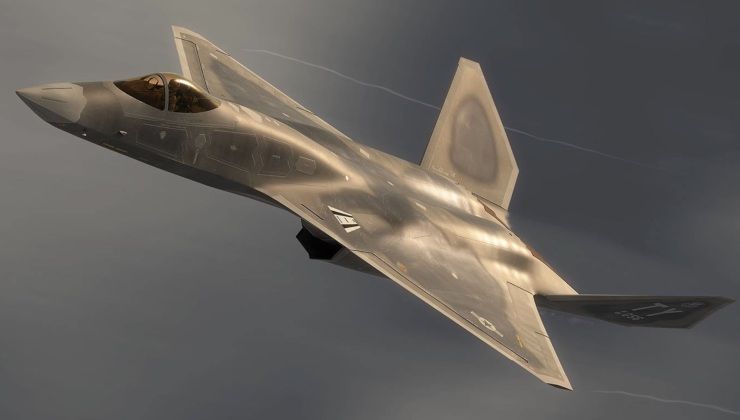
American Next Generation Fighter - artwork
Hangar B Productions LLC
New details regarding the development of a next generation fighter jet for the U.S. Air Force have emerged indicating how the aircraft could accommodate the requirements of operations in both the European and East Asian theatres. The aircraft is expected to enter production in the mid-late 2020s, with a technology demonstrator having already flown. The U.S. and China are currently considered to be in a race to develop the world’s first fighter jet with sixth generation capabilities, although Russia is developing a sixth generation interceptor under the MiG-41 program and testing the integration of sixth generation technologies onto its fifth generation Su-57 fighter.
American officials have warned that there is a significant chance of China gaining a lead, with the two being the only countries in the world to field indigenously developed fifth generation fighters at squadron strength (the Russian Air Force has only a single Su-57, and will have five by the end of 2021, which does not even make up half a small squadron). While during the Cold War advanced American fighters such as the F-15 were tailored to the needs of the European theatre, and the country’s current top fighter the F-22 which began development during the Cold War was also built with combat in Europe in mind. The rise of China as one of the world’s two leading military powers, and of East Asia as the centre of the global economy, have led the U.S. to place a much greater emphasis on the requirements of the Pacific theatre for its upcoming fighter generation.
The primary difference between the East Asian and European theatres is the distances involved, with the former being much more vast and forcing countries to place a much greater emphasis on naval and aerial warfare due to the seas and oceans separating the major powers. America’s current top-end fighters the F-22, F-15EX, F-35 and F-18E all have ranges and endurances which are poorly suited to operations in the theatre, and all rely very heavily on arial refuelling in planed conflicts against China or North Korea - the Western Bloc’s two primary adversaries in East Asia. This presents vulnerabilities, namely the risk that costly and vulnerable tankers could be shot down, as well as additional costs and logistical burdens to air operations in the region. America’s next generation fighter is expected to overcome this issue by having a much higher endurance through a combination of more efficient engines and a higher fuel capacity.
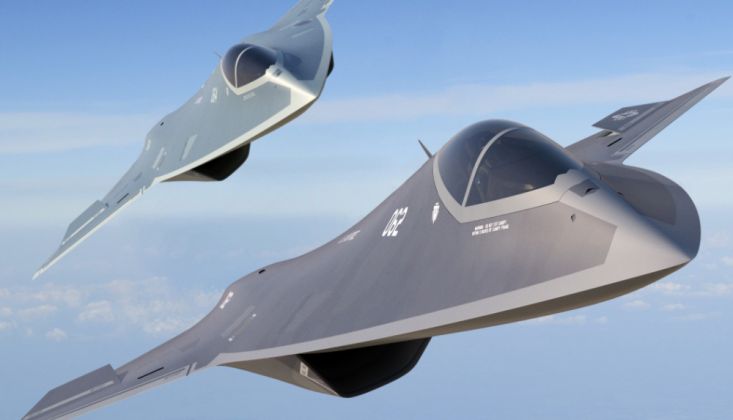
It remains uncertain whether the new fighter will come in separate variants for short and long range missions, or whether it will have a modular design allowing it to accommodate more fuel tanks internally possibly in place of some of its weapons carrying capacity. The latter would avoid the logistical difficulties of two separate fighters and allow production lines to better benefit from economies of scale, while also ensuring that fighters can transfer between the two theatres as needed. The new aircraft will reportedly carry more long range air to air missiles than the F-22, which deploys only six, and will likely carry the new AIM-260 air to air missile which is expected to bridge the performance gap with the latest generations of Chinese missiles.
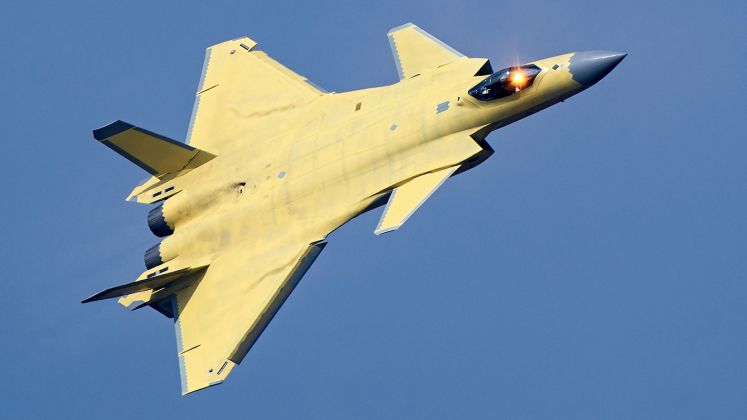
The F-22, for its part, is scheduled for a very early retirement once the sixth generation fighter enters service in large enough numbers, with issues with the Raptor program including excessive maintenance needs having caused 75% of planned orders to be cut and orders to close production lines given less than four years after the fighter entered service. The new next generation fighter replacing the F-22 is expected to have the capability to deploy standoff air to ground weapons, which is something the Raptor cannot do but newer fighters such as the F-15EX can. Ultimately the next generation fighter is expected to be built with countering China’s J-20 and Russia’s Su-57 in mind, both of which are in many ways more advanced than the much older F-22. The J-20, unlike the F-22, remains in production and continues to receive significant upgrades, with thee new J-20B variant having entered production in 2020.
