
America’s Sixth Generation Fighter Will Emphasise Electronic Warfare Prowess Over Stealth or Speed - Reports
Military Watch Magazine Editorial Staff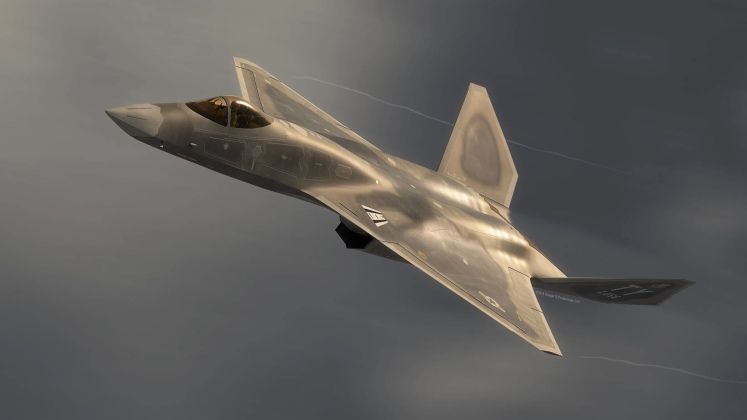
American Next Generation Fighter - artwork
Hangar B Productions LLC
Speculation regarding the capabilities of America’s upcoming sixth generation fighter jets have been widespread for over a decade, and have grown considerably in light of the announcement in September that the Air Force had already test flown an early prototype of such an aircraft. At least two sixth generation jet are currently under development, one for the Navy to replace its F-18E Super Hornets, and the other for the Air Force to succeed the Lockheed Martin F-22A Raptor in frontline service in the 2030s. The fifth generation Raptor has served in the Air Force since December 2005, but is expected to see an early retirement. Where the primary technological breakthroughs of the fifth generation of fighter aircraft included active electronically scanned array radars and radar cross section reducing stealth airframes, the first sixth generation fighters could have a very different emphasis. Improvements in sensor technologies are increasingly threatening to undermine the viability of stealth and outpace the rate at which stealth technologies can provide countermeasures to being detected and locked onto. As a result, America’s next generation fighter could well be much less stealthy than expected, and instead place a much greater emphasis on electronic warfare to remain survivable.
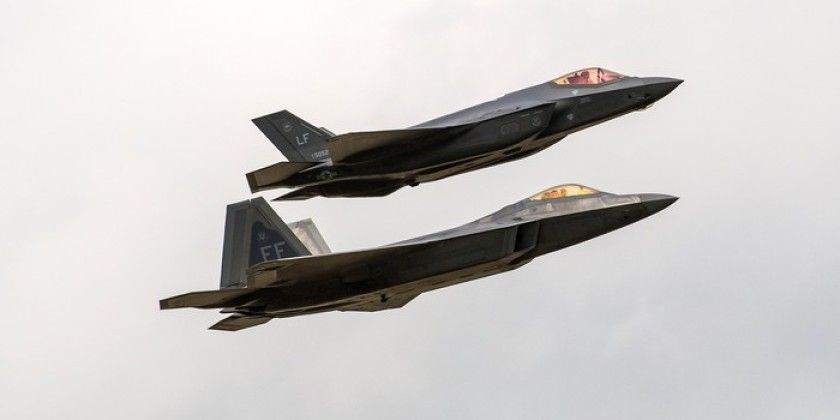
Attesting to the growing limitations of stealth technology, referring to the only Western stealth fighter in serial production today the F-35, Israel’s former Defence Minster Moshe Arens stated: “anti-stealth technology is being developed and may yet neutralise what is being advertised as the aircraft's major advantage before delivery or within its operational lifetime.” Arens had instead advocated that Israel focus on developing its indigenous Lavi lightweight attack jet, which not only came at a much lower cost than the F-35 but also placed an extremely heavy emphasis on electronic warfare and had no stealth capabilities whatsoever. Speaking specifically regarding America’s sixth generation fighter program, the Chief of Naval Operations Jonathan Greenert stated that the jet would need to focus on suppressing enemy air defences rather than outrunning them or hiding from them with a high speed or stealth airframe. “You know that stealth maybe overrated. I don’t want to necessarily say that it’s over but let’s face it, if something moves fast through the air and disrupts molecules in the air and puts out heat – I don’t care how cool the engine can be – it’s going to be detectable…. It has to have an ability to carry a payload such that it can deploy a spectrum of weapons. It has to be able to acquire access probably by suppressing enemy air defences.”
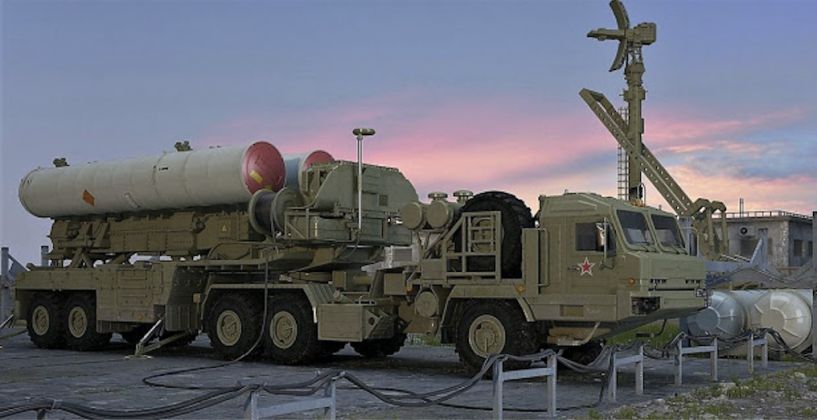
Greenert notably also dismissed the possibility of using faster aircraft to evade enemy defences, something the Soviet Union fielded successfully in the final two decades of the Cold War with the highly survivable MiG-25 Foxbat interceptors - later variants of which also relied heavily on electronic attack capabilities to operate in highly contested airspace. “I don’t think it’s going to be super-duper fast, because you can’t outrun missiles,” the official said regarding the new aircraft. China has notably demonstrated a capability to intercept hypersonic targets using its Russian-supplied S-400 air defence system, a platform which has been in service since 2007, and the upcoming S-500 system and its Chinese analogues will be able to lock onto and destroy even faster targets at longer ranges still. The U.S. Air Force is nevertheless separately investing in hypersonic aircraft for both bombing and reconnaissance missions, while Russia is developing a hypersonic sixth generation interceptor capable of operating in space under the MiG-41 program. Although the MiG-41 may well prove viable, due to its purely defensive mission and dedication to space warfare, conventional sixth generation fighter jets are unlikely to prioritise either stealth or speed if they seek to operate offensively in highly contested airspace.
