
U.S. Air Force Claims First Sixth Generation Fighter Prototype Has Already Flown
Military Watch Magazine Editorial Staff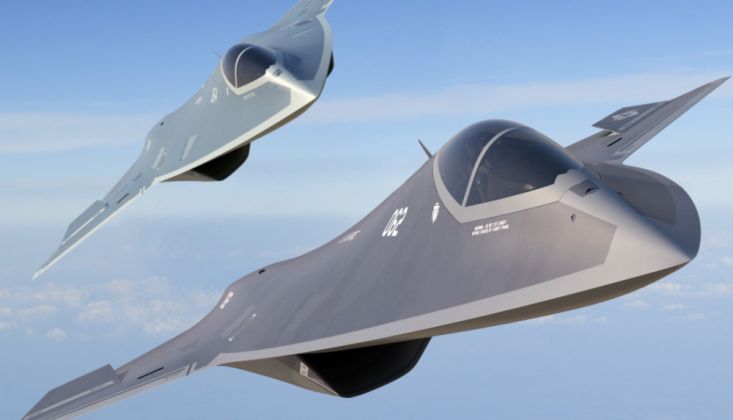
American Sixth Generation Fighters - concept art
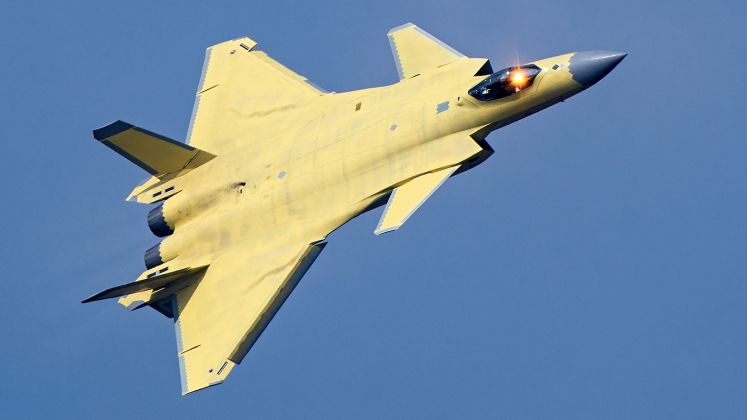
The U.S. Air Force has recently issued a statement claiming that a prototype of the country’s first sixth generation fighter jet has performed its first flight - after having been secretly built some time near the end of the last decade. Head of Air Force acquisitions, Will Roper, revealed the existence of the new jet which was developed under the Next Generation Air Dominance (NGAD) project, stating: “NGAD right now is designing, assembling, testing in the digital world, exploring things that would have cost time and money to wait for physical world results… NGAD has come so far that the full-scale flight demonstrator has already flown in the physical world. It’s broken a lot of records in the doing.” Although several sixth generation technologies such as advanced artificial intelligence and laser weapons are still very far from being applicable to a frontline fighter, the fact that the U.S. Air Force is already flying a sixth generation combat jet indicates that it remains intent on keeping ahead of the competition. China’s People’s Liberation Army Air Force inducted its first fifth generation fighter into service in 2017, which has a number of significant performance advantages over its American counterpart the F-22 Raptor including integration of distributed aperture systems, helmet mounted displays and AESA radar guided missiles. Russia, meanwhile, has continued to test sixth generation technologies on its Su-57 airframe - which appears to be intended primarily as a sixth generation aircraft although early variants currently in production will still be classified as fifth generation.
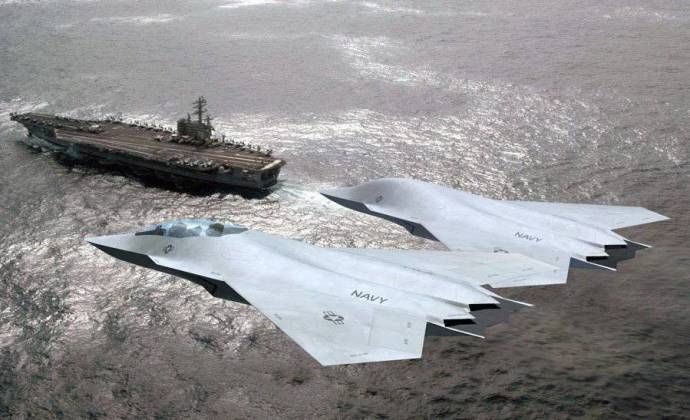
The U.S. is currently developing at least two sixth generation fighters, with a third unconfirmed program for the Air Force being intended specifically to escort bombers for long range missions. With America’s F-22s and F-15s increasingly outmatched, new aircraft are expected to be heavily oriented towards air superiority missions as well as to maintaining survivability against advanced surface to air missile networks such as those of Russia, China and North Korea. Acquisition head Will Roper noted regarding the importance of digital technologies to the new fighter program: “Digital engineering is lowering overhead for production and assembly [so] you do not have to have huge facilities, huge workforces [and] expensive tooling.” Roper further stated in a video conference call with reporters after his presentation: “It is letting us take aircraft assembly back to where we were in the [19]70s and prior to it — back when we had 10 or more companies who could build airplanes for the United States Air Force, because you could do it in hangar-like facilities with small, but very good teams, of engineers and mechanics. We're going back to that. It's super exciting.” Roper declined to give additional information on the next generation fighter, but explained that part of the reasoning for disclosing that it had been to prove that combat aircraft could be fully designed and tested on computers before being physically built.
Both China and Russia currently have sixth generation fighter programs under way, the most notable being China's Dark Sword unmanned fighter and Russia’s MiG-41 interceptor and yet unnamed ‘Su-57 advanced’ which are currently taking shape. With the new American fighter being developed primarily with waging war in the Pacific theatre in mind, it remains to be seen how many fifth and sixth generation fighter classes will enter service in the coming years - and what kind of air defence systems will be deployed to counter the new fighter classes. The exact parameters which would define an aircraft as sixth generation have yet to be defined, as does whether fifth generation aircraft will be able to 'jump' to a sixth generation level by integrating new weapons, avionics and sensor technologies. This had been the case for second and third generation aircraft which often jumped a generation or two by integrating new avionics, arms and sensors - although the fifth generation’s requirement for a stealth airframe meant that upgraded fourth generation designs could only be termed ‘4+’ or ‘4++ generation.’ Only three fifth generation fighter classes are in service in the world today - including the F-22 and F-35 developed in the United States and the J-20 developed in China.
