
No Stealth - But Still Deadly: The Active Fourth Generation Jets Most Dangerous in Air to Air Combat
Military Watch Magazine Editorial Staff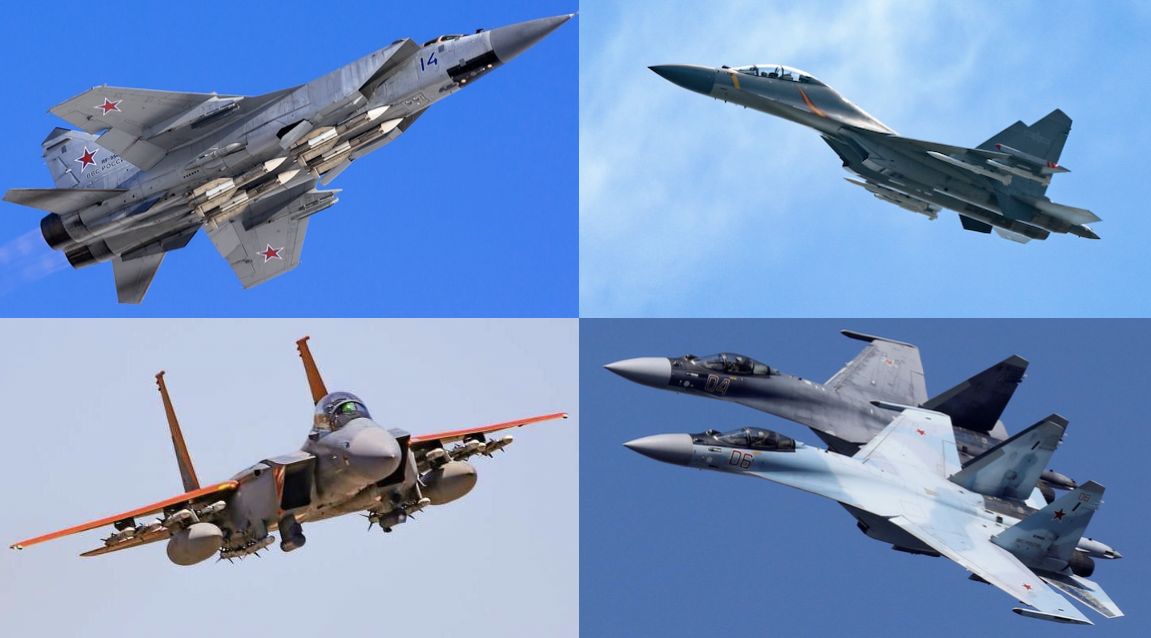
(clockwise from top left) MiG-31, J-16, Su-35, F-15SA
Approaching fifteen years since the first fifth generation fighter jet, the F-22 Raptor, entered service in the U.S. Air Force in December 2005, the vast majority of modern fighter jets today are still classified as fourth generation aircraft. These make up the bulk of nearly every country's air fleet, with the exception of poorer countries such as Brazil and Iran which still rely on third or even second generation aircraft. With only three fifth generation fighters having entered service - one in China and two in the United States, most countries appear to have instead focused on developing what have come to be known as '4+ generation' and '4++ generation' combat jets - many of which are capable of seriously challenging fifth generation jets in their strike and air to air capabilities. With a stealth airframe remaining a prerequisite for an aircraft to be considered fifth generation - the vast majority of new fighters developed since 2005 have been '4+' or '4++ generation' designs. Some of these such as the Russian Su-35 have integrated more conservative stealth capabilities, others such as the F-16V none at all, but all have benefitted from the application of other next generation technologies such as AESA radars, thrust vectoring engines and more capable air to air missiles.
With fifth generation aircraft fielded in limited numbers by a small number of countries, and the most widely produced the F-35 still very far from combat ready, fourth generation fighters will play a key role in determining the outcome of any potential conflict for the foreseeable future. The Russian Military in particular appears to have placed a low emphasis on stealth, and has thus emerged as a leading developer of '4++ generation' aircraft with a lead in many technologies such as thrust vectoring engines and hypersonic air to air missiles. An assessment of the most capable active fourth generation aircraft in terms of their air to air combat capabilities is given below. This assessment excludes upcoming fourth generation designs which are yet to enter service such as the F-15X, F-15QA and J-11D, jets which never moved beyond the prototype stage such as the Su-37 and retired designs such as the F-14D.
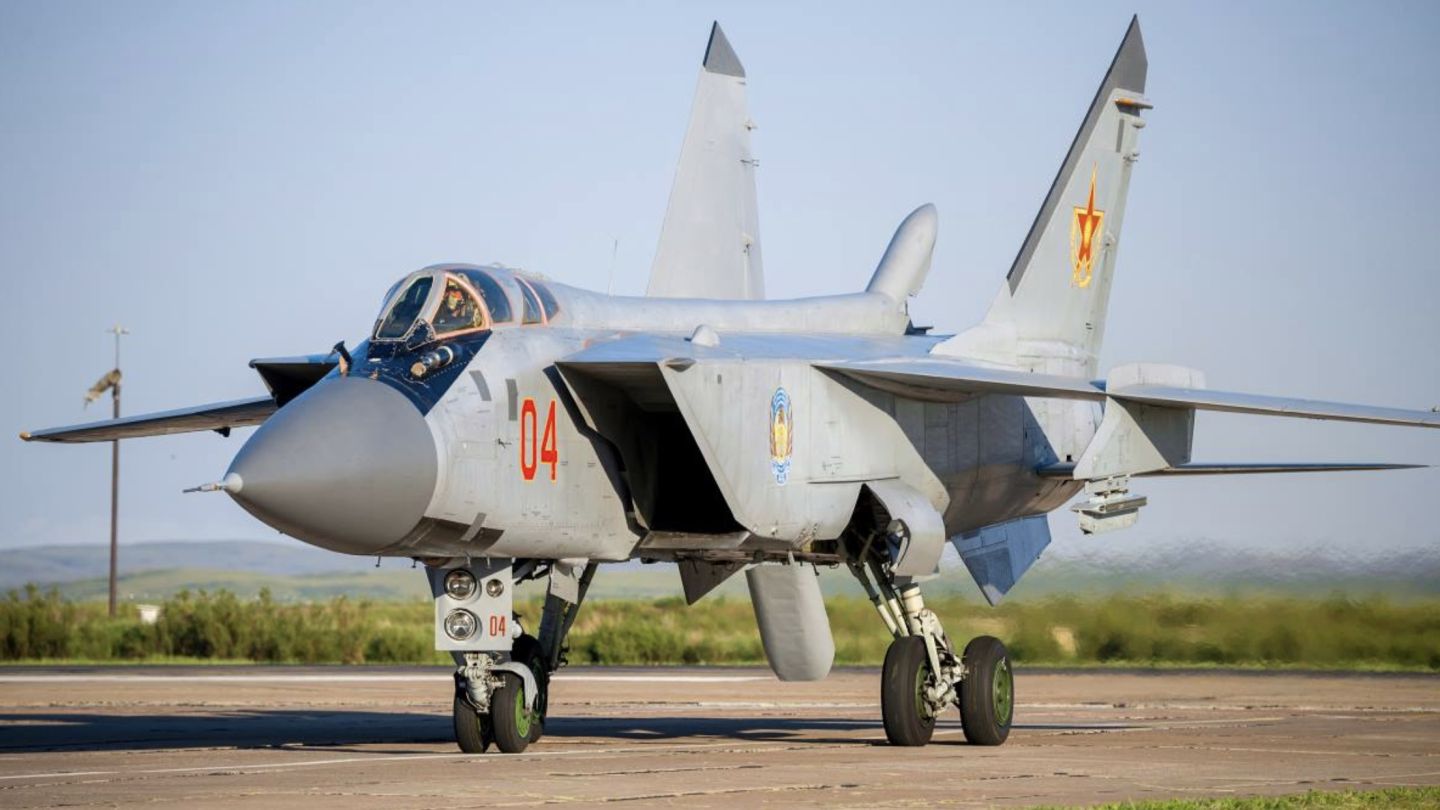
MiG-31BSM
The MiG-31BSM represents an extensive enhancement of the original MiG-31 Foxhound heavyweight interceptor, which was designed to patrol Soviet territory and engage enemy bombers and missiles at extreme ranges. The aircraft integrates a radar an order of magnitude heavier than those found on many modern fighters, the Phazatron Zaslon-AM passively scanned array radar, which provides excellent situational awareness allowing the aircraft to serve as an airborne warning platform if needed. The MiG-31BSM is equipped to engage targets at extreme ranges of up to 400km at hypersonic speeds with the R-37 missile, and can track up to 24 targets simultaneously. These missiles carry massive 60kg warheads, approximately three times the size of those carried by standard air to air missile designs such as the AIM-120 and PL-12, which makes them extremely difficult to evade. The aircraft is capable of operating at extreme altitudes and is the fastest modern combat jet in the world, allowing it to impart more kinetic energy onto its air to air missiles than any other serving combat aircraft. Although costly and requiring considerable maintenance to operate, the Foxhound’s capabilities in beyond visual range air to air combat make it a very potent combat jet which in its most enhanced form is considerably more capable than its older Cold War variants, with new technologies serving as highly effective forces multipliers. Even before the enhanced BSM variant was developed, the Foxhound was been termed by Russian airmen as an analogue to the American F-22 Raptor - and though it lacks the Raptor’s manoeuvrability or its stealth capabilities it partly compensates with a capacity for a much larger radar, a far greater weapons payload, superior missiles and with a higher speed and altitude.
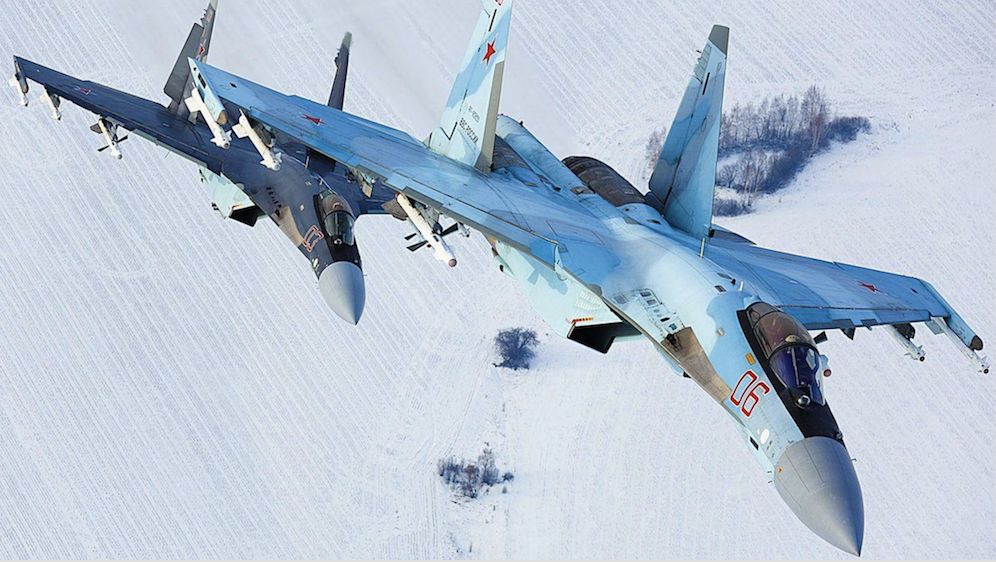
Su-35
Developed as a heavily enhanced derivative of the Su-27 Flanker, the Su-35 entered service in 2014 was the first new single seat dedicated air superiority platform to enter mass production since the Soviet era. The fighter integrated a wide range of next generation technologies to allow it to go head to head with the latest Western fifth generation fighters. These included the new Irbis-E radar - with a detection range of over 400km against fighter sized targets and over 80km against stealth targets, a new infra red tracking system, a range of new munitions including the R-37M hypersonic air to air missile, and high use of composite materials for a lighter and more robust airframe. The aircraft also integrated new and more powerful AL-41 engines with three dimensional thrust vectoring capabilities for supermanoeuvrability, and benefitted from a reduced radar cross section under a third that of the original Flanker. The fighter’s avionics, electronic warfare systems and sensors are all state of the art and comparable to those of fifth generation fighter jets, benefitting from technologies developed for Russia's MiG 1.44 and Su-57 fifth generation fighter programs.
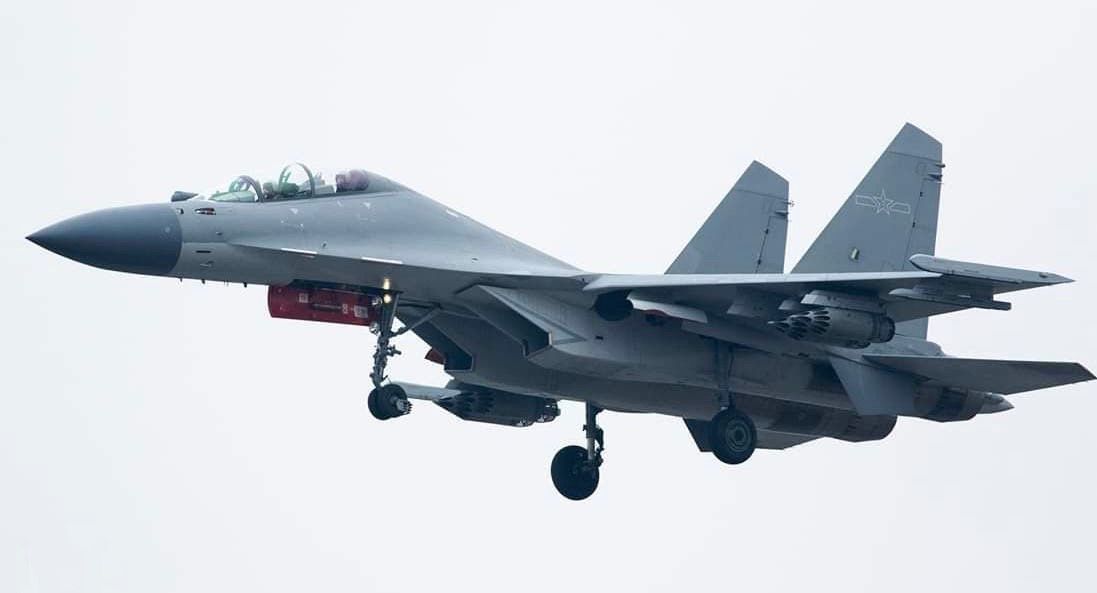
J-16
Entering service a year before the Su-35 in 2013, the J-16 is a very well rounded derivative of the Flanker design capable of delivering a range of advanced air to ground missiles at both close and standoff ranges, but also integrates advanced capabilities for beyond visual range air to air combat. The fighter is currently the only serving Flanker derivative to integrate an AESA radar, which combined with sophisticated stealth coatings and new PL-15 air to air missiles makes it lethal in beyond visual range combat. The J-16 is one of three state of the art jets which have formed China’s new generation of fighters - alongside the heavier fifth generation J-20 and the lighter J-10C which entered service from 2017 and 2018 respectively. The aircraft has a capacity for a much larger and more powerful radar than rival heavyweight fighter designs such as the American F-15E and Japanese F-15J, which combined with the sophistication of its sensors will provide a considerable advantage in situational awareness. The Chinese People’s Liberation Army Air Force has capitalised on its long detection range by developing a specialised ‘AWACS killer’ extreme range missile - designed to neutralise high value enemy support aircraft at hypersonic speeds and extreme ranges exceeding 400km.
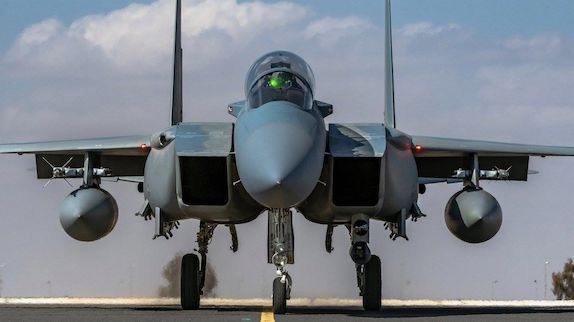
F-15SA
Delivered to the Royal Saudi Air Force from December 2016, the F-15SA represents the most capable derivative of the F-15 Eagle air superiority fighter in service - a design which first joined the U.S. Air Force in 1976. The fighter is based on the F-15E Strike Eagle variant designed for the U.S. Air Force, and is more sophisticated and versatile than the original platform with a superior air to ground capabilities and greater endurance. The fighter features additional hardpoints allowing it to carry at least a dozen AIM-120C air to air missiles, and new and more powerful F110-GE-129 engines. The fighters integrate an AN/APG-63(V)3 active electronically scanned array radar, providing greater situational awareness and resistance to jamming and a lower radar signature. The F-15SA benefits from the high flight performance inherited from the original F-15 design, including a very high Mach 2.5 maximum speed, a high operational altitude and high manoeuvrability when flying fast. The aircraft’s new fly by wire system allows it to deploy a considerably greater payload than the original Eagle, and it also features an infra red search and track system not found on older F-15 variants. The design has formed the basis of further evolution of the F-15 - with Boeing subsequently developing the F-15QA and F-15EX based on it. Neither of these newer designed have entered service.
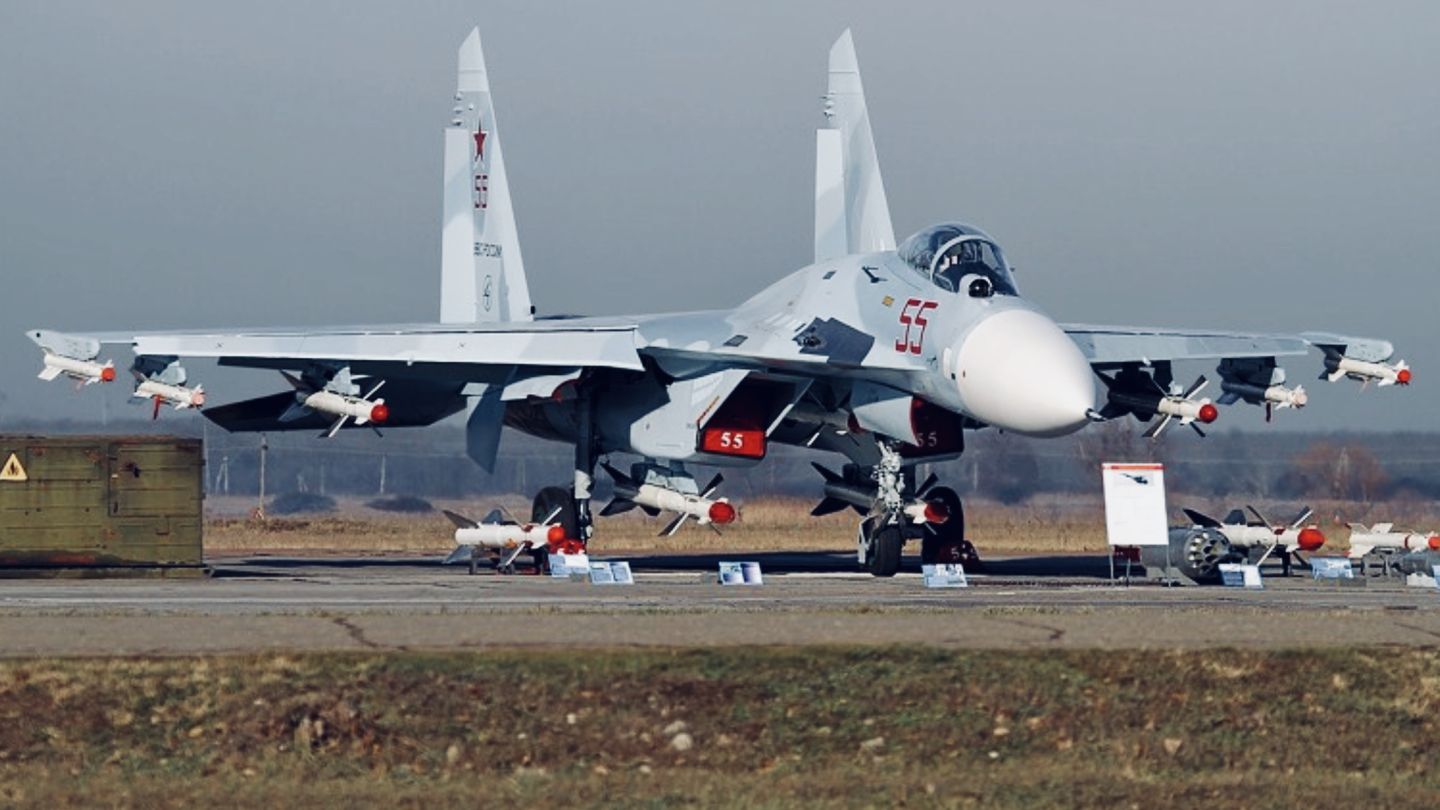
Su-27SM3
The most advanced variant of the Su-27 Flanker, the Su-27SM3 represents an upgrade to a ‘4+ generation’ standard using technologies developed for the Su-35. Most significantly, the fighter integrates the Su-35’s Irbis-E radar - among the most powerful platforms designed for air to air combat in the world. The radar can detect most fighter sized targets at ranges of over 400 kilometres, and can track up to 30 airborne targets simultaneously ranges engage up to eight. The fighter also deploys advanced electronic warfare systems and avionics to bring it up to a similar standard to the Su-35, and can carry more munitions than the original Su-27 including up to 12 air to air missiles. New more fuel efficient AL-31F-M1 engines increase the aircraft’s endurance and manoeuvrability, and also considerably reduce the overhaul time and thus increase the sortie rate. The cockpit was has also seen comprehensive modernisation to full glass, with the thirteen Cold War era arrow indicators discarded in favour of four multifunctional displays. A new radio complex was also integrated to facilitate more secure communications. While considerably cheaper than the Su-35, and retains many similar capabilities, it faces a number of disadvantaged relative to the newer fighter. The AL-31F-M1 lacks the power of the Su-35’s AL-41 or its three dimensional thrust vectoring capabilities. This combined with a heavier airframe due to much lower use of advanced composite materials restricts manoeuvrability. The fighter also lacks the Su-35’s radar cross section reducing profile, meaning it can be detected more easily at range, and is restricted to carrying just twelve missiles at a time where the Su-35 can carry 14.
