
Did China Just Unveil the World’s First Sixth Generation Combat Jet? ‘Dark Sword’ Unmanned Fighter Dubbed a ‘Nightmare’ For the United States
Military Watch Magazine Editorial Staff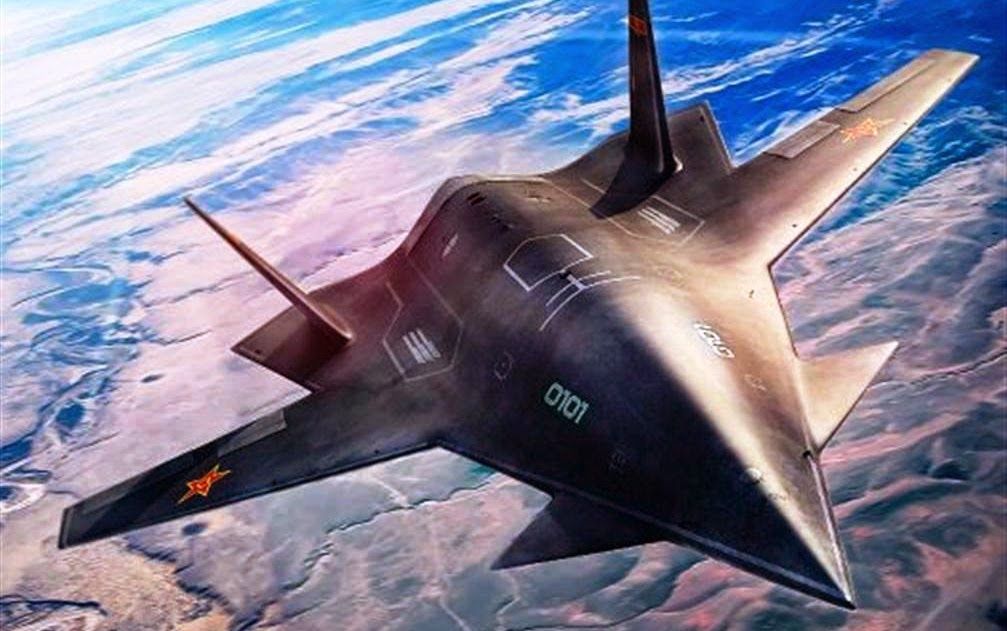
Chinese Dark Sword Unmanned Fighter Artwork
Little over a year after China’s first fifth generation fighter, the J-20 heavy air superiority platform, entered service and made the country the second in the world after the United States to develop such an aircraft, China’s People’s Liberation Army has unveiled an upcoming next generation platform thought to be the world’s very first sixth generation combat aircraft. Though Chinese military aviation was until the mid 2000s well behind its Russian and American counterparts technologically, the pace at which it has developed has left it on par with the two long established major producers and Chinese fifth generation fighters threaten to far surpass both their Russian and American equivalents qualitatively as well as quantitatively. Both Russia and the United States have invested heavily in developing a sixth generation air superiority fighter, with Russia planning to integrate next generation technologies onto future variants of its Su-57 stealth fighter while also developing entirely new fighters and interceptors for the role while the U.S. seeks a much needed replacement for the prematurely cancelled F-22 Raptor program - currently under development under the “Air Dominance Initiative.” China for its part appears to potentially have a lead over its two prime competitors, and it remains highly possibly that its next generation platform could enter service sooner and with superior technologies than its Russian or American counterparts.
China’s new fighter aircraft, unveiled as an unmanned combat platform, has been called the Dark Sword and is set to enter service alongside the country's growing fleet of next generation manned combat aircraft in the near future. While the Untied States previously experimented with an unmanned fighter in the early 2000s, with Northrop Grumman developing the X-47B technology demonstrator as an advanced carrier based platform for the U.S. Navy, the program saw little success and was promptly cancelled. U.S. and Russian sixth generation fighters are likely to be able to operate in both manned and unmanned configurations, and the Dark Sword program may well include both variants or else be an unmanned fighter planned to be fielded alongside manned platforms. Operating a fighter unmanned exposes it to a number of vulnerabilities, namely electronic attacks, but also comes with a number of benefits including far greater degrees of manoeuvrability which would otherwise kill pilots of manned combat aircraft. The Dark Sword is also likely to carry the most advanced Chinese made air to air missiles and be able to operate at several times the speed of sound over extreme ranges, making it a lethal threat to hostile platforms across the South and East China Seas and a potentially invaluable asset. Reconnaissance, ship hunting and long range strike missions remain other potential roles for the platform.
One significantly possibility is that the Dark Sword, as an early sixth generation platform, will be used both as a testbed for next generation technologies and is planned as a lighter and less costly support aircraft to be fielded alongside heavier fighters - including the J-20 and its sixth generation successors. While the features which will define a sixth generation combat aircraft are yet to be determined, they are likely to include laser weapons, defensive anti missile systems using lasers, and new engine technologies giving aircraft faster speeds and longer ranges. Assuming a range similar to that of the U.S. Navy’s Triton heavy surveillance drone, thought the Dark Sword is likely to significantly surpass even this, the fighter would be able to attack hostile targets well beyond the country’s shores in Japan and much of South East Asia from airbases on the mainland - significantly strengthening China’s already formidable anti access area denial capabilities in the East and South China Seas. With China's carrier fleet fast expanding, development of the unmanned fighter for carrier operations to enhance the PLA Navy's power projection capabilities remains another significant possibility.
