
F-22 Celebrates 22 Years; Was the Raptor Program a Success?
Military Watch Magazine Editorial Staff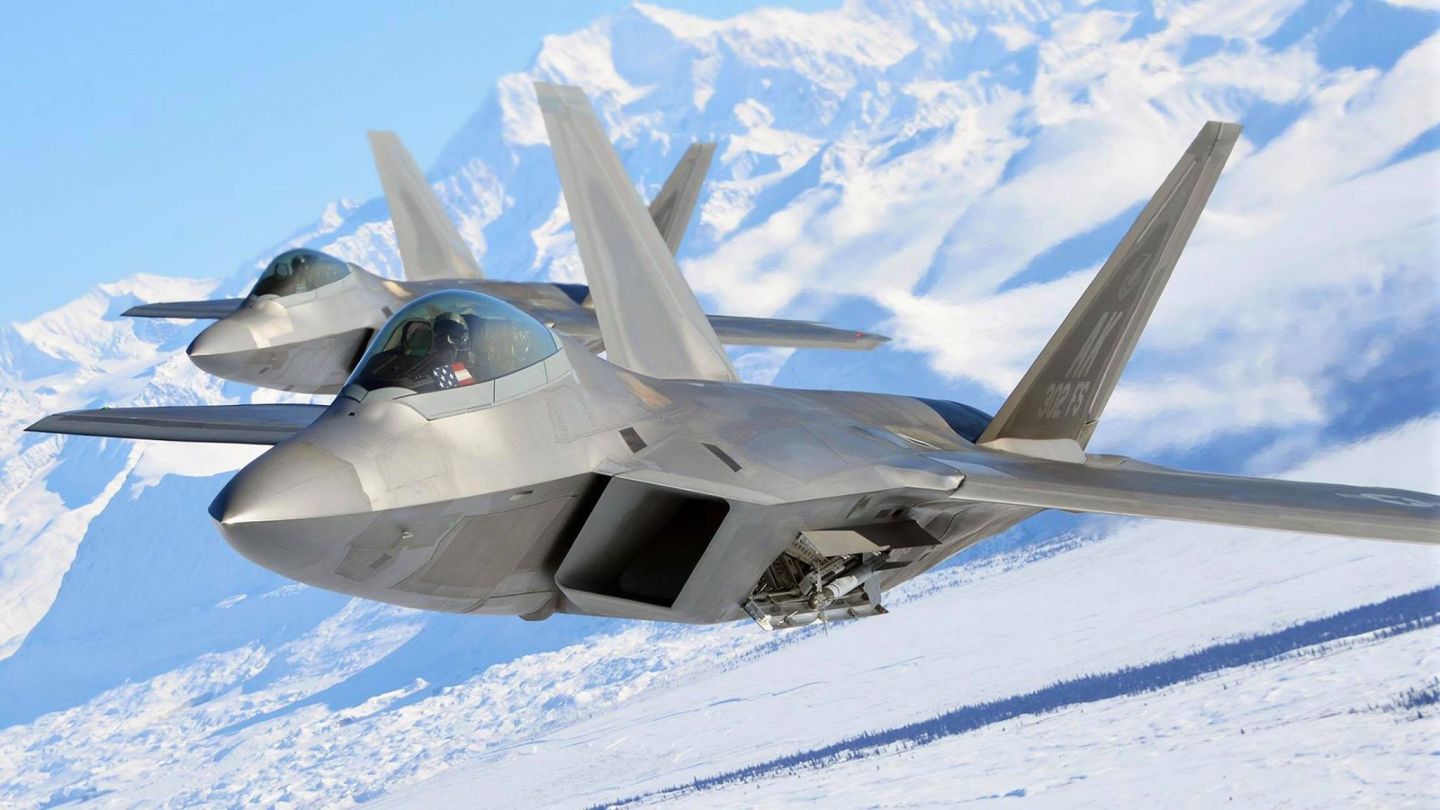
U.S. Air Force F-22 Raptors
On April 9th 1997 the first F-22 Raptor ‘Spirit of America’ left the production line of the world’s first fifth generation fighter plant, owned by Lockheed Martin in Marietta. The Raptor took well over two decades to develop, and was intended to surpass the capabilities of the Soviet Su-27 Flanker air superiority fighters - which in turn were developed to outperform the American F-15 Eagles which entered service in 1976. The Raptor inherited many of the Eagle’s advanced specifications, including its high operational altitude, high speed, high manoeuvrability, long range, powerful sensors and a high weapons payload of eight air to air missiles. While the Raptor was slightly slower than the Eagle, it integrated a number of advanced next generation technologies including a radar cross section reducing stealth profile - which to this day is the most advanced in the world, a powerful AESA radar, radar absorbent coatings and new AIM-120C air to air missiles. The aircraft also integrated advanced two dimensional thrust vectoring systems for enhanced manoeuvrability - a technology first pioneered by the Russian Su-30 air superiority fighters.
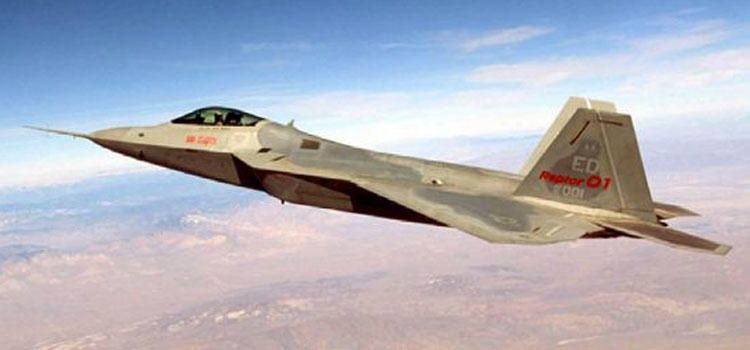
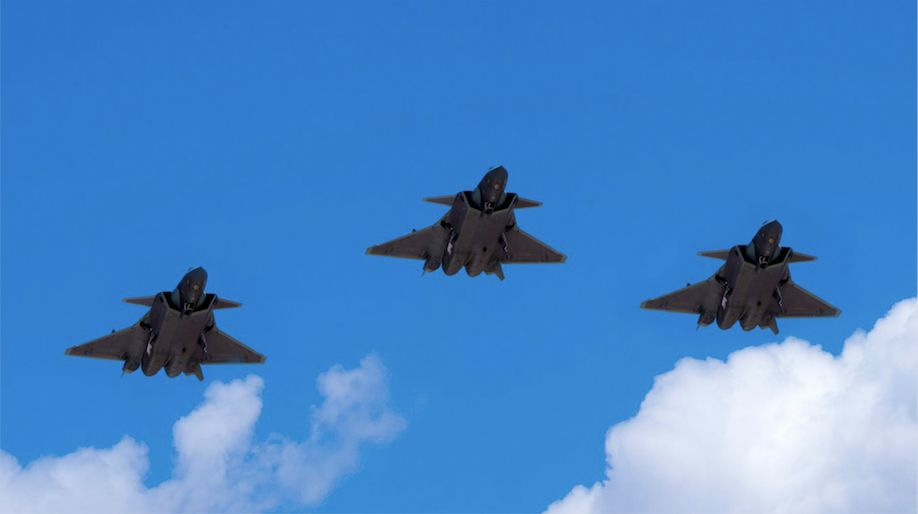
The F-22 was vital for the Western Bloc to retain parity as Russia’s advanced Su-27 derivatives, including the Su-30, Su-35 and J-11B, began to proliferate widely. This was particularly critical as all these aircraft were capable of considerably outmatching the F-15. The F-22 remained in a league entirely of its own until 2017, when China’s People’s Liberation Army Air Force inducted its own fifth generation air superiority fighter the Chengdu J-20 - with many similar capabilities. The F-22’s presence in the Asia-Pacific has since become particularly vital to counterbalance the J-20 - which is entering service in fast growing numbers. High end air superiority fighters which lacked stealth capabilities, dubbed '4++ generation' fighters, have also emerged as potential challengers to the Raptor's dominance - compensating for a higher radar cross section in sectors such as manoeuvrability, weapons payload and sortie rate. The Russian Su-35 and Chinese J-11D are primary examples of such platforms.
The F-22 program, though it succeeded in producing what was at the time by far the world’s most capable air superiority fighter well over a decade ahead of all competition, did have a number of failures. Foremost among these were its maintenance requirements, as while the fighter had initially been conceptualised as a platform capable of operating with at lower costs and with less maintenance than its predecessor the F-15, the opposite came to be true. The Raptor is today by far the most costly fighter in the world to operate, and requires several days of maintenance for each combat sorties it flies. At under $200 million per fighter, the Raptor was already a costly fighter to acquire - but its maintenance costs meant that each fighter would set the Air Force required more than $700 million to operate over its lifetime. This was a key factor leading the U.S. to terminate production at just 187 fighters down from a planned 750 - a 75% reduction which as left the Raptor fleet seriously overstretched. The fighter’s ageing computer architecture meanwhile makes it extremely difficult to upgrade - unlike its lighter counterparts the F-35 and Chinese analogue the J-20 - which has made integration of new munitions and implementation of software updates extremely difficult.
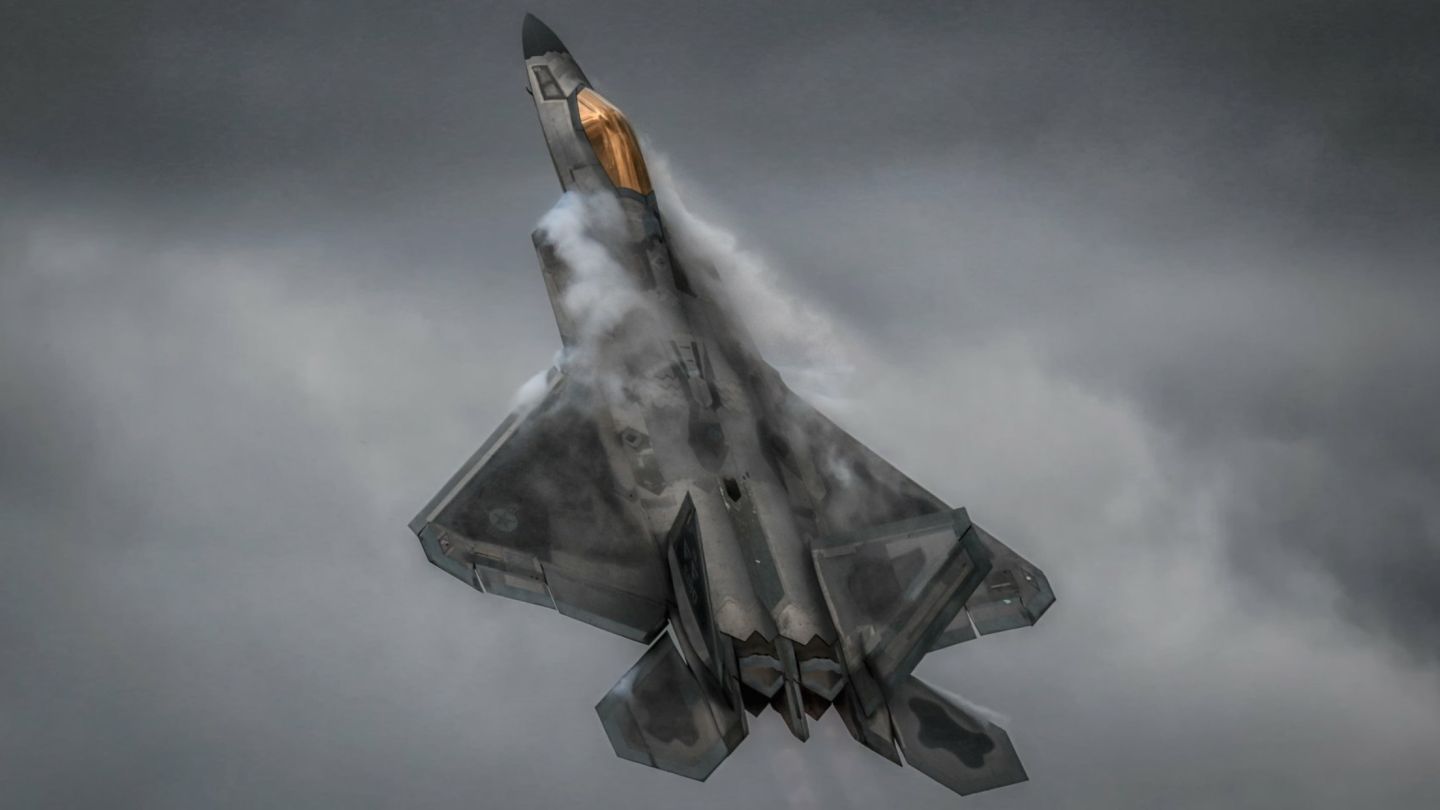
How long the F-22 will remain in service, and what aspects of its design will be carried forward onto its successor the sixth generation Air Dominance Fighter, remains to be seen. The fighter would enter service over eight years after initial production began in December 2005, in part due to the complexity and high ambitions of the design which made it very costly and time consuming to finalise. A number of technologies initially planned for the aircraft, including cheek mounted radars, were also cancelled - in part to reduce costs and allow the aircraft to enter production more quickly. Many of the Raptor’s design successes have been applied to the newer F-35, which though slower, less manoeuvrable, less well armed and less stealthy is considerably cheaper and will have a far larger production run. The U.S. Air Force has recently placed orders for F-15X air superiority fighters, ‘4++ generation’ platforms designed to fulfil a similar role to the Raptor and integrating many similarly advanced technologies - but operating at a fraction of the cost. Difficulties operating the Raptor's 1990s computer architecture, and issues with integrating new weapons and electronic warfare systems as a result, have further increased the appeal of the F-15X to supplement it in modern aerial combat. To what extent the F-22 program was a success given its excessive maintenance needs, the premature termination of production and the eventual reliance on the F-15X as a result, remains open to interpretation.
