
Fighting the G Force Limit: Russia’s Unconventional Plans to Make Its New Su-57 Fighter Extremely Manoeuvrable
Military Watch Magazine Editorial Staff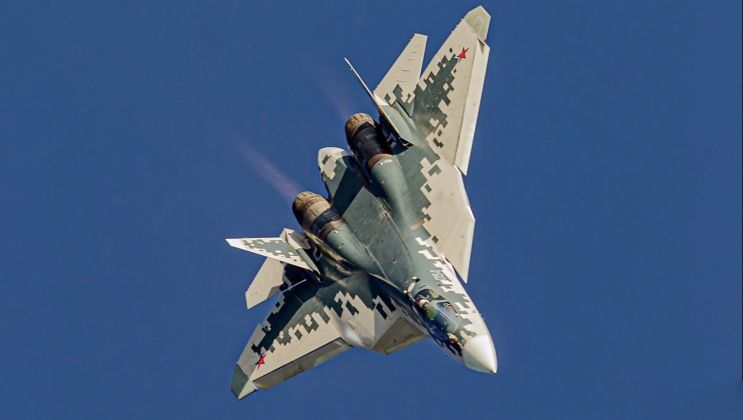
Su-57 Next Generation Heavyweight Fighter
Although it entered serial production in July 2019, the Russian Su-57 next generation heavyweight fighter remains very much a work in progress with considerable research and development efforts under way to further enhance the design. Examples range from work on new Saturn 30 engines the development of miniaturised variants of the Kh-47M2 hypersonic ballistic missile. Two of the often overlooked but potentially revolutionary new technologies being developed for the fighter are intended specifically to increase its manoeuvrability - something Russian designs have stressed since its first fourth generation fighters saw their first flights in the mid 1970s. Early Su-57 variants built on the manoeuvrability of their ‘4++ generation’ predecessor the Su-35, which previously held the record by a considerable margin as the world’s most manoeuvrable fighter jet, and the newer fighter's flight performance will only further improve with the integration of new and more powerful engines and more advanced and lighter composite materials which will improve its thrust/weight ratio. Plans to increase the Su-57’s manoeuvrability, however, are much more revolutionary and go a lot further. They involve circumventing one of the key constraints on the ability of manned combat aircraft to manoeuvre - the maximum g force pilots are able to endure.
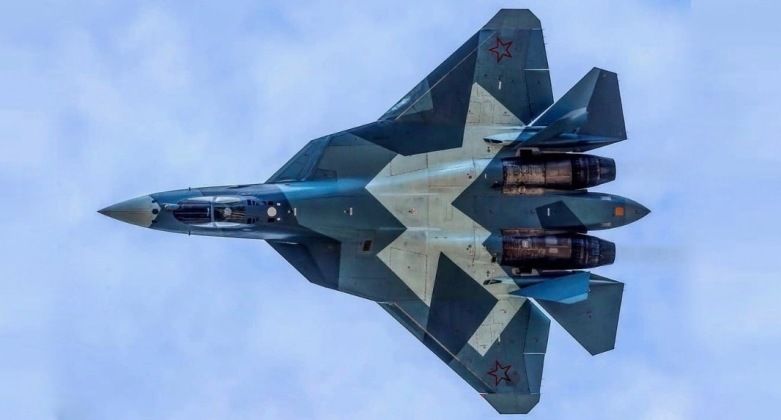
From an early stage in the Su-57 program, shortly after the first prototypes had started flying but before the aircraft had received its official designation, it was reported that the design would be developed into both manned and unmanned versions. More recently in May 2020 reports emerged that the Russian military had begun for the first time to test Su-57 prototypes for unmanned flight. While a pilot was still present and is thought to have performed more difficult tasks such as takeoffs and landings, the aircraft would be controlled from the ground while in the air with the pilot relegated to monitoring the aircraft’s systems. Aside from the possibility that Su-57 fighters either operated as drones or piloted by artificial intelligence would reduce requirements for pilot training and widen the range of missions it could perform, it would also seriously contribute to manoeuvrability. Without the need for pilots the fighter could pull extreme manoeuvres at over 9g which would leave a human operator unconscious. When paired with advanced thrust vectoring engines and the platform’s already integrated laser defence system and electronic warfare systems would make the aircraft extremely difficult to hit at all ranges.
Another more unconventional approach currently being tested to allow pilots to pull more extreme manoeuvres and exceed the 9g limit is to train pilots to breathe an oxygen-rich liquid instead of air when flying. This liquid breathing technology is currently under development by the Russian Foundation for Advanced Research Projects, and has been funded since 2016. This technology also has applications in allowing submariners to avoid decompression sickness if ascending too quickly from under water, but its potential when applied to fighter pilots is considerable and could allow manned aircraft to rival the flight performance of unmanned ones.
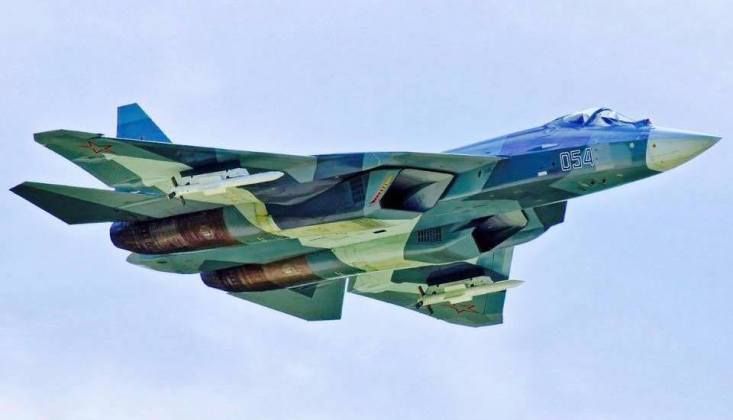
The premium placed in Russian military aviation on manoeuvrability has a number of causes. One is that long range air to air missiles from all countries may not prove reliable in a major war, particularly when all sides begin to employ their most capable countermeasures suites, which means that particularly after a conflict’s early stages more and more engagements could well occur within visual range where manoeuvrability will play a decisive role. Disruption of communications, the destruction of satellites, and cyber attacks, meanwhile mean that aircraft may not be able to necessarily identify which fighters are allied and which are adversaries at range and, much as was the case for the U.S. Air Force in the early stages of the Gulf War, this would force pilots to visually identify their adversaries before targeting them. Should engagements occur primarily at visual range, the fleet with the more manoeuvrable fighters will have a major advantage. Additionally, manoeuvrability improves survivability in long range engagements, and a fighter that can turn more sharply and quickly has a greater chance of evading enemy missile attacks from both air defences and other aircraft.
