
Why Russia’s Elite Su-35 Fighter Might Be a Weak Performer On Export Markets
Military Watch Magazine Editorial Staff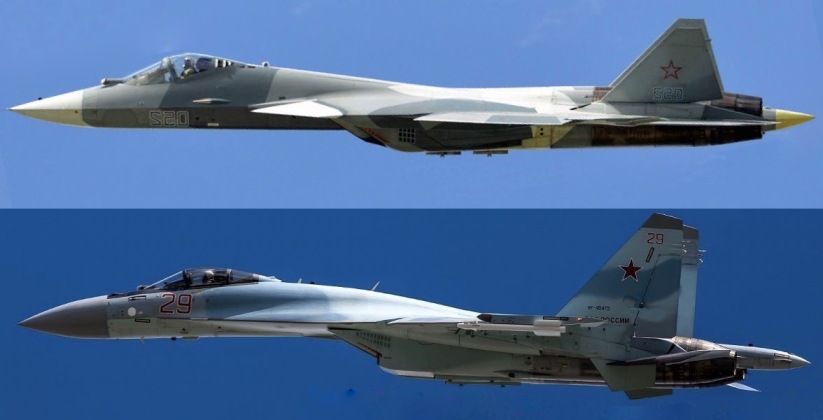
Su-57 and Su-35 Heavyweight Fighters
Since its entry into service in 2014 Russia has sought to market its Su-35 heavyweight fighter abroad as a premier ‘4++ generation’ air superiority jet, which with its American rival the 5th generation F-22 Raptor banned from export was widely considered the world’s most capable aircraft of its kind on world export markets. The fighter was derived from the Su-27 Flanker of the Cold War era, but was heavily enhanced with a high composite airframe, a reduced radar cross section, new more powerful AL-41 engines and a new sensor suit built around the Irbis-E radar. The new Flanker boasted a much higher endurance, superior avionics and electronic warfare systems, and an air to air engagement range over three times as long as the original Su-27. Despite its advanced capabilities and relatively modest cost, with the aircraft exported for around $1 billion for each unit of twelve, the Su-35 has secured only two export contracts in over half a decade on offer. These included a deal for the sale of 24 fighters to China signed in 2015, and another deal for the sale of an estimated 26 fighters to Egypt signed in 2018 - meaning only around 50 of the aircraft have been sold.
The Su-35 was offered to India for license production under the MMRCA tender, which would have seen at least 114 of the aircraft built for the Indian Air Force, although the cancellation of the tender in 2020 means sales of the jets to the South Asian state are unlikely. Even before the cancellation, however, India was expected to favour a smaller aircraft with a lower operational cost such as the MiG-35 or French Rafale. Venezuela also reportedly showed an interest in the waning years of the Hugo Chavez administration in acquiring two dozen Su-35 fighters to supplement the same number of older Su-30MK2 jets in service, although economic crisis in the country and a poor outlook for global oil prices means such a deal is unlikely to materialise. Indonesia was also seen as a leading client early on, albeit for a small batch for 11 jets with the possibly for followup units, and a deal was deal signed in early 2018. The threat of American sanctions on Jakarta, however, has delayed the implementation of a deal and could well see it cancelled entirely.
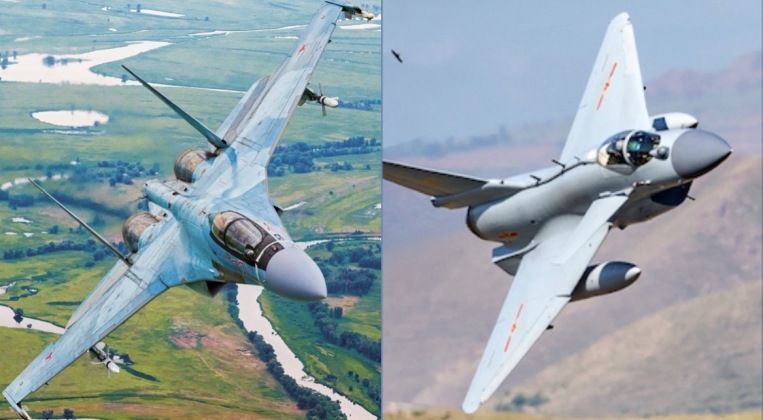
Although the Su-35 is still a relatively new design, its prospects on world export markets may well be rather bleak looking forward as more attractive competing jets infringe on the market share it may have otherwise had. As a result, it is far from unthinkable that the Su-35 will gain no further major export contracts beyond the sales to Egypt and China. One major reason for this is the growing sophistication of China’s defence sector which has technologically eclipsed that of Russia in many fields. China was the leading export client for the Su-27 and the second biggest export client for the Su-30 other than India - both by a considerable margin. Although Russia tried to market further squadrons of Su-35s to the country to follow on from the original deal for two dozen jets, possibly including a deal for license production, the fighter is no longer attractive considering that China’s own indigenous fighters are in many ways more capable.
A notable example is China’s J-16 fighter, which is also based on the Flanker heavyweight airframe and entered service a year before the Su-35. The fighter benefits from an AESA radar, stealth coatings, and AESA radar guided long range missiles - all features the Su-35 lacks - as well as a more advanced electronics suite. Based on what is known of the J-16, the Su-35’s only notable advantages are its range and manoeuvrability. China’s upcoming J-11D fighter is expected to have more similarities to the Su-35 in terms of role, but will likely be much more capable across the spectrum due to the growing discrepancy in the two countries’ technological bases. Reports that China’s J-10C ‘4++ generation’ lightweight fighter won overwhelming victories over the Su-35 in combat simulations underlined this discrepancy, and a comparison of the fighters' respective capabilities indicates that such an outcome was far from implausible.
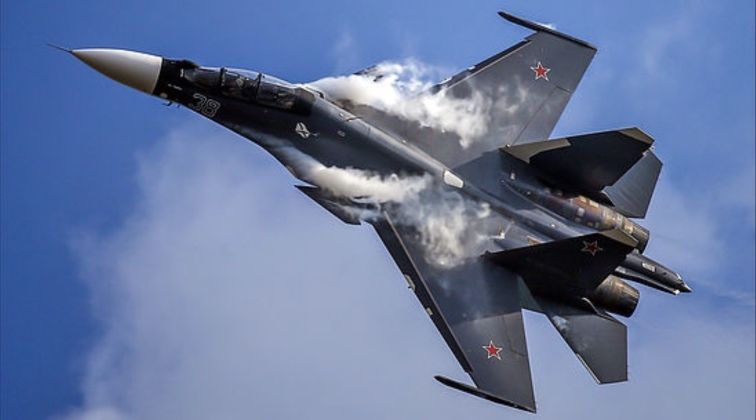
While China's defence sector has effectively edged the Su-35 out of the country’s own market, the country notably does not offer medium or heavyweight fighters for export to compete with the Su-35 abroad. Newer Russian aircraft which have entered service since 2014, however, can potentially prove more attractive to potential foreign clients and take much of the market share the Su-35 would otherwise have taken. The first of these is the Su-30SM, which has been sold far more widely including to Kazakhstan, Myanmar, Belarus and Armenia. The Russian Air Force has itself commissioned the Su-30SM at a faster rate than the Su-35. The aircraft were acquired at a rate of approximately 18 per year from 2012 to 2018, and around 12-14 per year afterwards, making them Russia’s favourite fighters in terms of the numbers being purchased. Although the Su-30SM is also based on the Flanker design, it is more well-rounded and less specialised in air to air combat that the Su-35. This means that the fighter deploys a wider range of air to ground and anti-ship weapons and has a second seat for a weapons systems officer, but it uses weaker engines, two dimensional rather than three-dimensional thrust vectoring, a less advanced radar and a lower composite airframe.
The Su-30SM is considerably cheaper than the Su-35, and even in air to air combat its capabilities are more than sufficient to provide an advantage against the majority of challengers. Offering the Su-30SM as a separate, cheaper, but in many ways similar fighter to the Su-35 has undercut the latter's export potential, and the development of more advanced Su-30 variants is expected to only further this trend. The new Su-30SM2, for example, integrates the same AL-41 engines as the Su-35 which largely narrows the flight performance gap, while future Su-30 variants are widely speculated to use the Su-35's Irbis-E radar which will close the gap in situational awareness. India, for one, has been highlighted in the past as a potential client for upgrades to enhance a portion of its large Su-30MKI fleet with AL-41 engines an Irbis-E radars, and its ability to do so largely undermines the attraction of purchasing Su-35s separately. Future potential clients such as Iran, which may have initially preferred the Su-35, could similarly favour the Su-30SM/SM2.
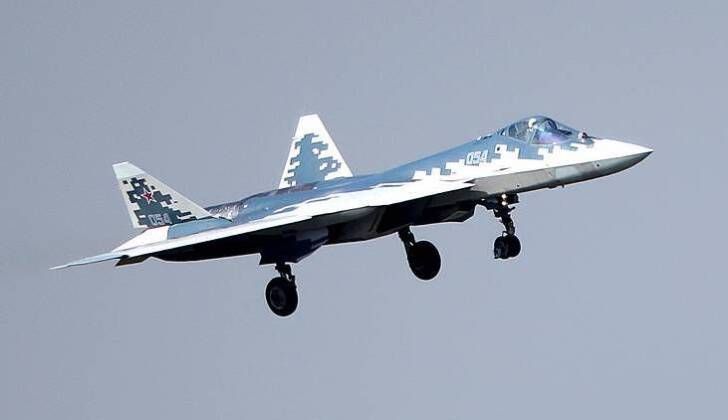
At the higher end, the entry into service of the Su-57 next generation fighter in the Russian Air Force from December 2020 is expected to further undercut Su-35 sales, with the new fighter boasting significantly superior capabilities to the Flanker at only a modestly higher price. The Su-57 may well be considered a more cost effective aircraft by potential clients for heavyweight Russian aircraft, as the jet is expected to remain in production much longer, receive many more options for upgrades over time, and present a much greater threat to potential adversaries. A much greater number of countries have shown interest in the Su-57 than the Su-35, including Myanmar, India, Vietnam and Turkey among others.
The second largest client for Russian arms after India, the Algerian military, notably did not purchase the Su-35 despite investing in acquiring almost all other classes of high end Russian fighter jet for decades. It is instead widely reported to have invested in Su-57 purchases, with multiple indicators that an order may have already been placed. Had the Su-57 not been available, it is likely that Algeria would have instead turned to the Su-35 or possibly an enhanced variant of the MiG-31 interceptor in its stead. The country is hardly expected to be the only one to 'skip' over the Su-35 and move straight to the Su-57. Ultimately with the Su-35 occupying a position between the Su-30SM/SM2 and the Su-57 in terms of both price and performance, its market share is expected to be crowded out by the other two fighters which many operators, including the Russian Air Force itself, will likely find more cost effective.
