
Japan Rejected Plans to Replace F-2 Fighters With Unmanned Aircraft: Sixth Generation Manned Fighter in the Works
Military Watch Magazine Editorial Staff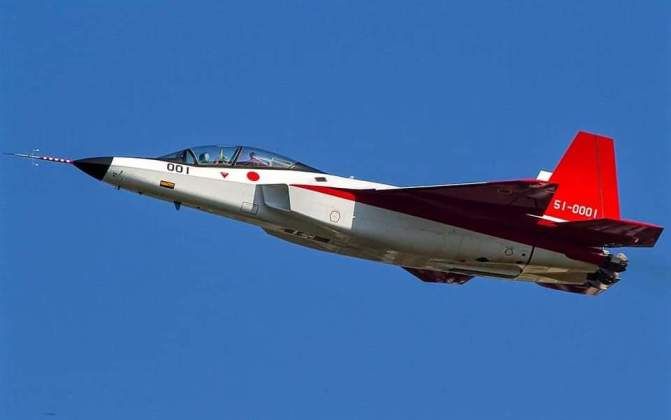
Japanese X-2 Next Generation Fighter Technology Demonstrator
The Japanese Air Self Defence Force, the official name for the country’s air force, surprised a number of analysts by rejecting a proposal to eventually replace its Mitsubishi F-2 ‘4+ generation’ lightweight fighter jets with unmanned combat jets. The proposal was reportedly suggested by former Defence Minister Taro Kono, who stood down in September, to cut costs for the service. The F-2 was until recently the most modern of three fighter classes in Japanese service, alongside the F-15J heavyweight jets which entered service from the early 1980s and the older F-4EJ Phantoms which date back to the late 1960s. Japan has since activated its first unit of F-35 fifth generation fighters and plans to acquire over 100 of the aircraft - enough to fully phase out the F-4 which will be fully retired from service in 2021. The F-35s will also replace approximately half the F-15 fleet - with remaining F-15s set to undergo extensive upgrades and integrate a range of fifth generation technologies. Japan is planning to develop an indigenous sixth generation fighter to eventually replace the F-2 and remaining F-15s from the mid-late 2030s, which is the program it was suggested could be developed from the outset as a purely unmanned jet.
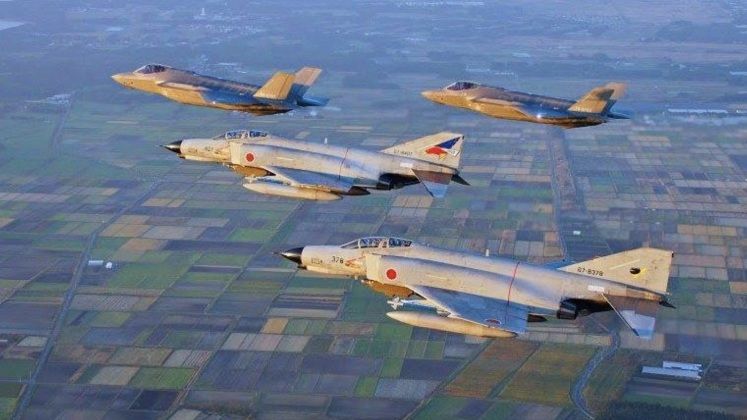
The first to report that Japan was considering developing a new unmanned fighter was the Kyodo News Agency, which indicated that Japan’s Ministry of Defense had quickly turned down the idea. The news agency did not offer specific details regarding the requirements for the proposed drone program, but it notably came at a time when a growing number of countries such as Russia, China, the U.S. and Britain are developing either unmanned fighters or sixth generation fighters with options to fly unpiloted. Japan is the world’s most powerful military which does not deploy drones, although it is currently considering acquiring three RQ-4 Global Hawk Block 30 unmanned aircraft which could be its first investment in the field.
Little is known about how the proposed Japanese drone would have performed, but the country notably also rejected plans for joint development of a sixth generation fighter jet with a foreign partner earlier in the year meaning whatever does eventually replace the F-2, it is likely to rely overwhelmingly on indigenous Japanese technologies. Japan has not developed an indigenous fighter since the Second World War, although it has gained licenses to domestically manufacture all its currently fielded fighter classes including the F-4E, F-15 and the F-35. The F-2 was initially intended to be an indigenous fighter, but to cut costs the program instead evolved into a joint program with the U.S. for a heavily modified variant of the F-16 lightweight jet - of which only around 100 were produced where previously a production run over twice as large was intended.
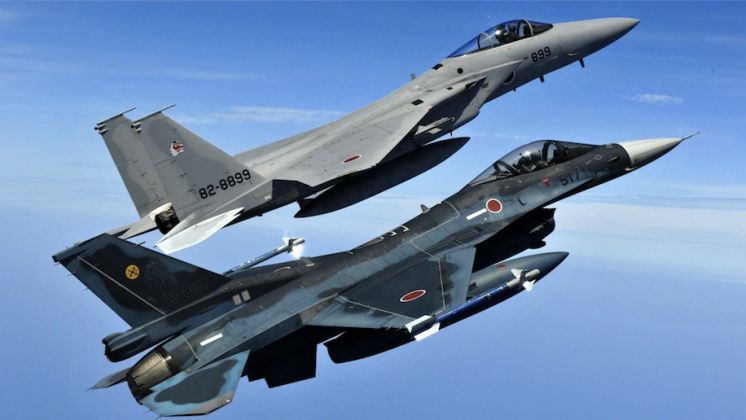
The F-2 program demonstrated a number of advanced achievements which Japan’s defence sector could boast of, including being the first fighter in the world with an AESA radar, deploying the world’s only AESA radar guided air to air missiles outside China, and making use of world leading composite material technologies for its time. The fighter has been in service since 2002, and is currently set to integrate a new and more capable AESA radar and a new class of anti ship cruise missile. Based on the advanced technologies integrated onto Japan’s Shinshin X-2 sixth generation fighter prototype, the F-2’s successor is expected to be even more impressive.
