
Japan Commencing with Major Next Generation Upgrades to F-15J ‘Super Samurai’ Fighter
Military Watch Magazine Editorial Staff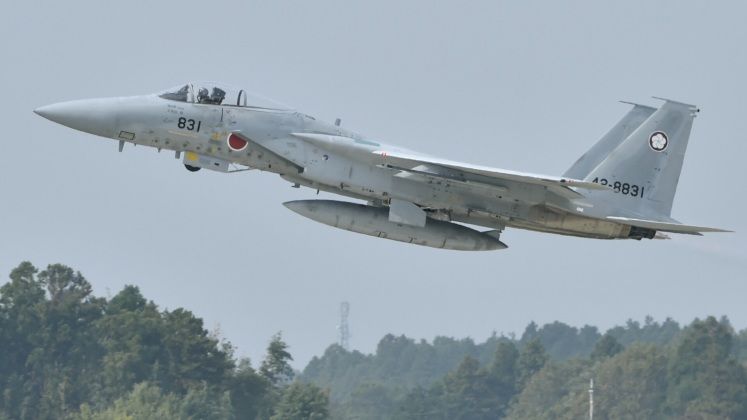
F-15J Heavyweight Fighter
Following reports that Japan planned to upgrade half of its F-15 fleet with a wide range of next generation technologies, Boeing announced a Direct Commercial Sale agreement in partnership with Japan’s Mitsubishi Heavy Industries - with the two firms initially manufacturing the fighters jointly in the 1980s. Although it was a prime air superiority fighter for its time, the F-15J increasingly finds itself outmatched by aircraft fielded by neighbouring countries, including not only J-11B and Su-27SM3 fighters from China and Russia respectively, but also more dangerous newer designs such as the Chinese J-16, J-20 and Su-35 which are all much heavier and more sophisticated than the F-15 boasting a range of next generation technologies such as AESA radars and reduced radar cross sections. Under Japan’s agreement with Boeing, which will set the country’s defence ministry back $4.5 billion, Boeing will supply Mutisbishi with “retrofit drawings, ground support equipment and technical publications for the upgrade of the first two F-15J aircraft to the Japan Super Interceptor configuration,” with upgrades including “state-of-the-art electronic warfare and weapons,” and an “all-new advanced cockpit system, running on the world’s most advanced mission computer, will deliver pilots enhanced situational awareness.”
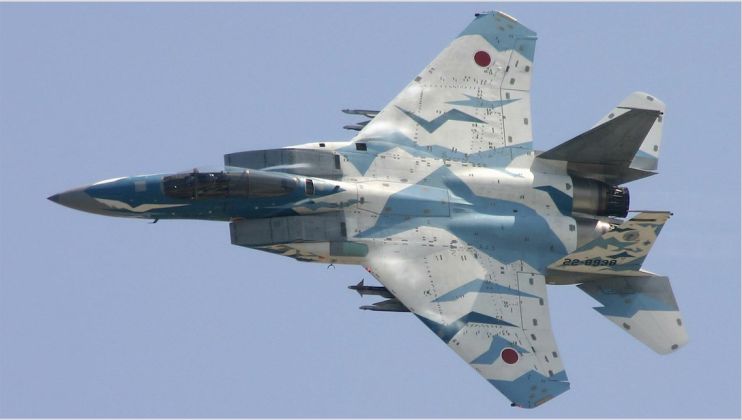
The majority of upgrades for the F-15J will affect the fighters’ electronics, with Boeing having invested in research and development for the F-15 over time and today producing the F-15EX and F-15QA variants for the U.S. and Qatari air forces respectively. While Japan will upgrade around half the fleet - 98 airframes - the remainder will reportedly be phased out in favour of newer F-35 fighters. Japan initially sought to replace the F-15 with the American F-22 Raptor, a direct successor to the design from the fifth generation, although export controls and an early termination of production prevented this leaving the country’s frontline fighters at a growing disadvantage against those of its neighbours. The F-35 is notably a very different kind of fighter to the F-15, and although it comes from a new generation it is much lighter as it is configured as a single rather than a twin engine platform. The F-35 is primarily designed for an air to ground role, as opposed to the F-15 which emphasises air to air, and it is notably significantly slower, lower flying, less manoeuvrable and carries only half the missile payload of the older fighter. A number of reports have indicated that Japan’s next generation F-15 variant could see its weapons payload doubled with new missile racks, which would allow the fighters to carry 16 AIM-120D air to air missiles with long ranges estimated at 160-180km. F-15s currently in service primarily deploy near obsolete AIM-7 Sparrow missiles, although some have been upgraded to deploy the AIM-120C which has a range of around 105km. The fighters will still be comfortably outranged by Chinese aircraft which have a 250-300km engagement range using the new PL-15 air to air missile.
