
Why Britain Owes Iran Half a Billion Dollars For Undelivered Weaponry: Will it Pay?
Military Watch Magazine Editorial Staff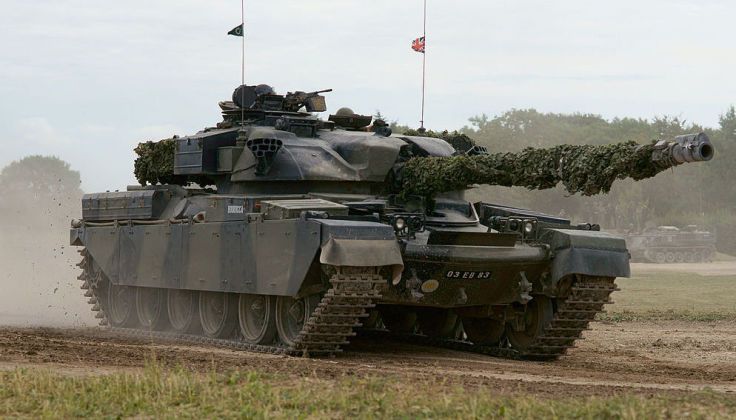
British Chieftain Battle Tank
A number of recent reports have indicated that Britain may repay Iran for undelivered military hardware purchased by the Iranian Defence Ministry in the 1970s. Iran was the world’s leading client for both British and American weapons at this time, and acquired among other systems around 900 of its Chieftain battle tanks - considerably more than the British Army was itself receiving at the time. Iran was also reportedly considering acquiring Harrier Jump Jets and Invincible Class carrier warships, and was considered the Western Bloc’s closest defence partner in the Middle East and a bulwark against both Arab Nationalism and the Soviet Union. Following the overthrow of the Western aligned Pahlavi Dynasty in 1979, and the establishment of the Islamic Republic of Iran which has remained outside the Western sphere of influence ever since, the country would emerge as a leading client for North Korean and Chinese arms - phasing out the Chieftain from frontline units for the Korean Chonma Ho following the British tank’s very poor performance against Soviet built T-62 and T-72 tanks during the Iran-Iraq War. The country has since developed a leading defence sector of its own, producing a wide range of hardware from long range air defence systems to battle tanks and even surface destroyers, and has not shown an interest in acquiring Western armaments. After 1979, however, the country was still owed considerable quantities of equipment by both Britain and the United States which had been paid for under the Pahlavi dynasty but were never received.
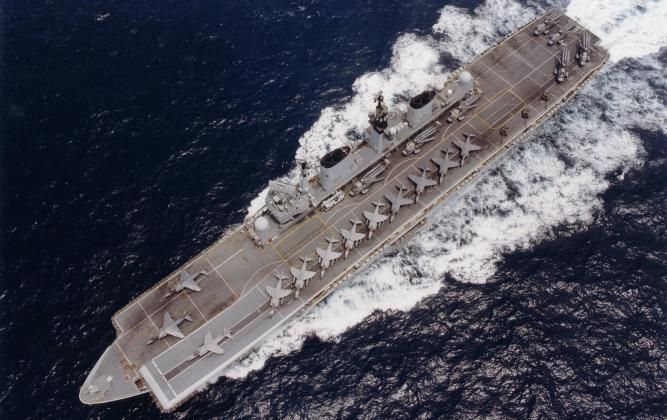
Britain’s then-Foreign Secretary David Owen explained the importance of arm sales to the country as follows: “In order to offset the revenues that we were having to put out in order to purchase oil, and a lot of it Iranian oil, we needed offset arrangements, and he [Mohamed Reza Shah] was ready and wanted to buy British military equipment... So we were in the market for trying to sell the maximum amount we could to him, and [we found it] particularly important to sell him tanks.” Sales to Iran were particularly critical for propping up the British defence sector, and the successors to the Chieftain tank the Challenger and Challenger II would see very few foreign sales and as a result be produced on a much smaller and less efficient scale. France, too, would take major losses - cancelling its Mirage 4000 fighter program as the prospects of Iranian sales to subsidise research and development costs disappeared. A number of America’s leading weapons programs including the world’s heaviest and most expensive fighter the F-14 Tomcat lost a leading client - with Iran expected to have been the only export client for the upcoming F-14D heavyweight combat jet. Iran was also planning to purchase F-16 and F-18 fighters, offering to heavily subsidise research and development costs for the latter, which would have made its Air Force the only one in the world, including the U.S. Air Force itself, to deploy three separate classes of American fourth generation fighters in a frontline role.
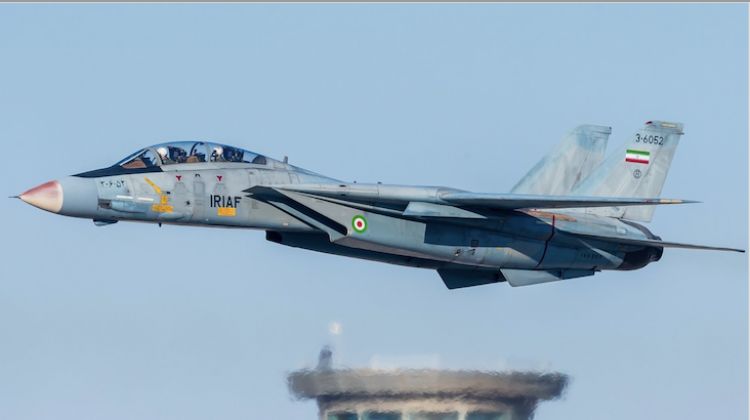
American debts to Iran were notably paid under the Barak Obama administration following the signing of the Joint Comprehensive Plan of Action (JCPOA) nuclear deal, which included, among other things, the price of a single F-14A fighter after Iran purchased 80 of the jets and only 79 were delivered. Iran had planned to acquire 80 more F-14s, alongside 300 F-16s and 250 F-18s - making it by far the largest foreign client for all three jets. Orders for 160 F-16s had already been placed by 1979, with the aircraft entering service in the U.S. Air Force from 1978 four years after the F-14. Britain, however, never compensated Iran for the undelivered weapons - including around 600 Chieftain tanks which were never received out of a total order of 1,500. Britain’s debt of around $520 million made headlines when Defense Minister Ben Wallace said the British government was actively looking into ways to repay Tehran - although at a time of mounting American economic pressure on the country it remains uncertain how this could be achieved without provoking a rift with Washington.
