
Mirage 4000: France’s Failed Attempt at a Heavyweight Rival to the American F-15
Military Watch Magazine Editorial Staff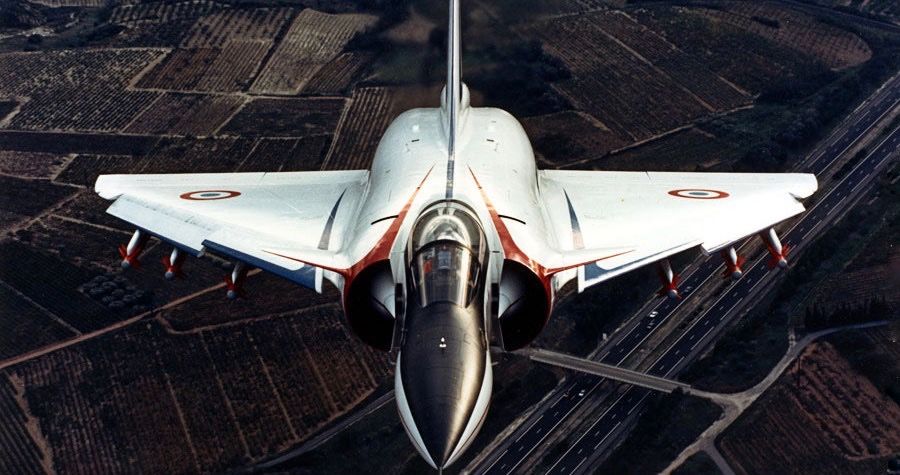
Mirage 4000 Heavyweight Air Superiority Fighter
With the advent of fourth generation fighter aircraft, it became apparent that due to far higher acquisition and operational costs major air powers would need to develop multiple combat aircraft in differing weight ranges to optimise their war fighting capabilities. While the United States Navy and Air Force had supreme confidence in their F-14 and F-15 heavyweight air superiority fighters, to have fielded these exclusively would have forced them to limit the sizes of their fighter fleets to an unacceptably small number - while ruling out the vast majority of export clients from purchasing new aircraft. Thus cheaper and less capable lightweight fighters, the F-18 and F-16, were developed to serve in complementary roles. In the Soviet Union, this same ‘high-low’ combination was seen in acquisitions of the complementary Su-27 - an analogue to the F-15, and the MiG-29 - an analogue to the F-16 and F-18. Most other producers restricted themselves to a single class of light or medium weight fighter, lacking the capacity to develop a similar high-low combination of their own. Taiwan, India, Sweden and Europe were prime examples. China would later attempt to field two complementary fighters from different weight ranges from the early 2000s, but only after sufficiently modernising its military aviation industries and expanding its overall economy to be able to support this. France however, despite the relatively small size of its military and its economy, was willing to invest in a high-low combination of aircraft during the Cold War itself - the only one state to do so other than the two superpowers.
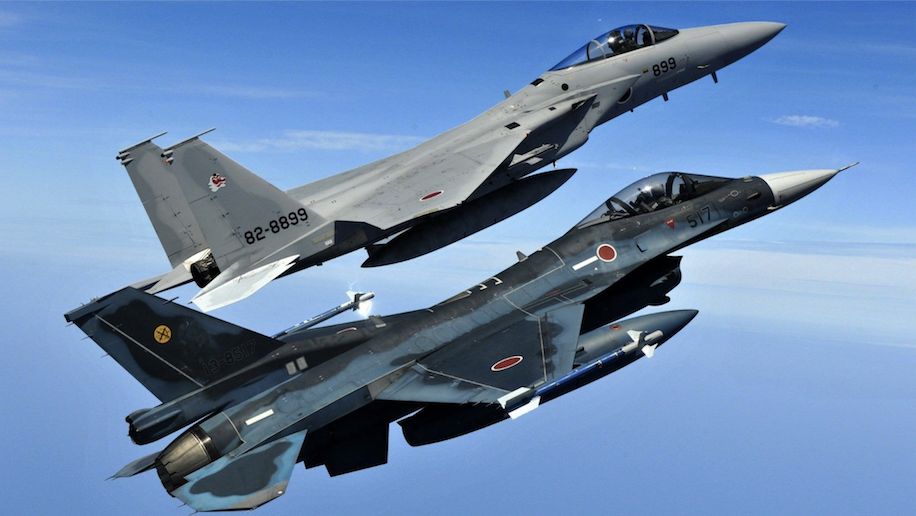
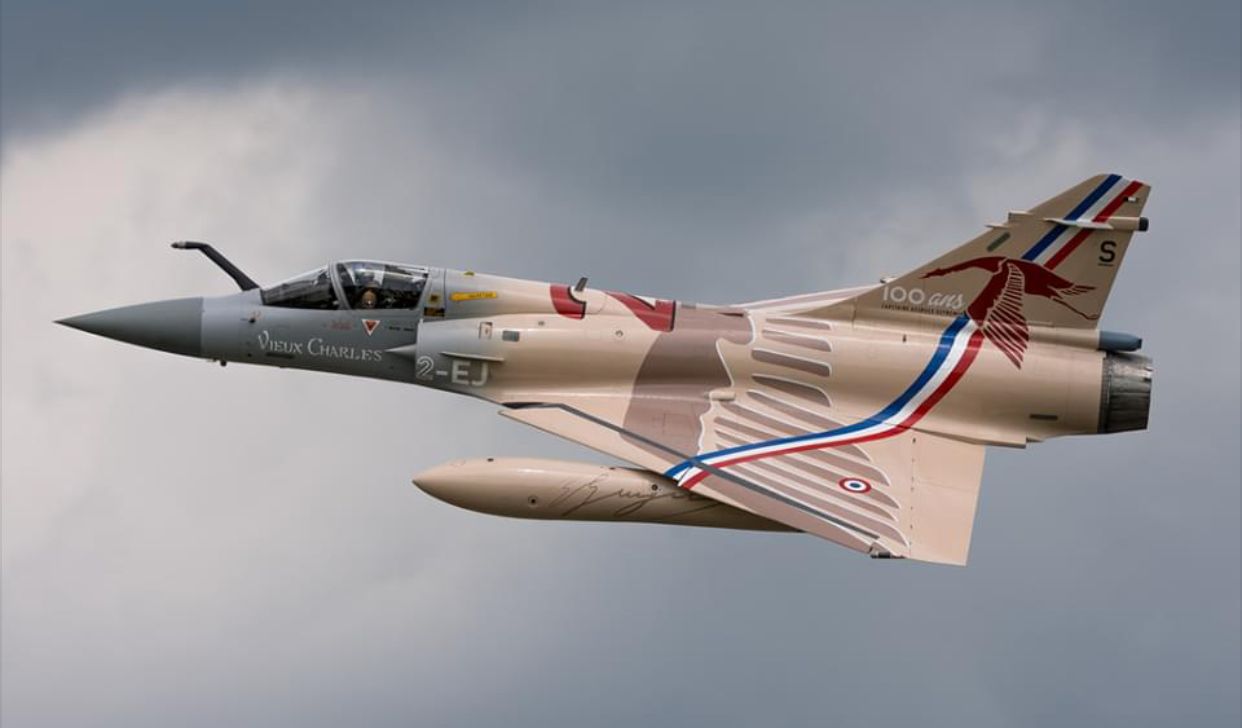
Unlike the United States, which developed high end fighters first and then looked to create lighter analogues, France notably invested in development of a lightweight single engine fighter first before looking to a heavier aircraft. The Mirage 2000 was developed as an analogue to the American F-16 Fighting Falcon and had comparable though slightly inferior capabilities. The aircraft would prove less durable and requiring of higher maintenance, while lacking the American jet’s prowess in air to air combat and eventually being further left behind following the integration of new air to air munitions onto the F-16. With France unable to match the performance of the American F110 engine, something it has yet to do to this day, the Mirage 2000's own M53 engine was approximately 28% less powerful - placing it a significant disadvantage. The inability to produce the aircraft in large numbers, combined with higher cost of inputs in France relative to the United States, meant that although it was less capable the Mirage 2000 was more expensive than the F-16.
The French aircraft was nevertheless a capable fighter for its time, and entering service in 1984 at a time when fourth generation fighters were relatively scarce it saw some limited export successes. Seeing that the Mirage 2000 was overwhelmingly outmatched by the latest heavyweight U.S. and Soviet fighters such as the Su-27, France’s Dassault Aviation moved to do to the Mirage 2000 what American manufacturers had done to the F-16 - integrate the same technologies onto a heavier and higher performance aircraft with twin engines. Thus the Mirage 4000 was intended as a heavier analogue to the Mirage 2000 which would use the same M53. engine and armaments but was faster, flew higher, had a longer range and integrated more powerful sensors.
Dassault notably self financed the development of the Mirage 4000, hoping that the aircraft would see sales to the Middle East in particular. Strict American export restrictions on the F-14 and F-15, in particular to Arab states due to significant Israeli influence in the U.S. Congress, meant that Western clients in the region would have cause to turn to France for a high end fighter - even if it did not measure up to its American counterparts. The Mirage 4000 made extensive use of composite materials to reduce its weight and improve its resistance to fatigue - the latter a particularly severe issue with the Mirage 2000 which its operators have noted develops cracks after some years in service. The new fighter's use of twin M53 engines between them gave double the thrust of the Mirage 2000, and by keeping the aircraft's weight relatively low the new platform was considerably more manoeuvrable and had a superior thrust/weight ratio than its lighter counterpart. The first Mirage 4000 flew on March 9, 1979, and exceeded Mach 2 in testing - although it was still slower than the Su-27 and F-15.
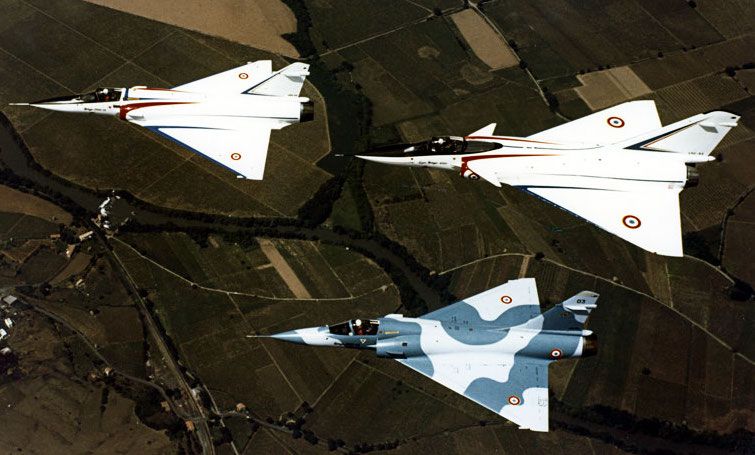
Ultimately a number of factors prevented the Mirage 4000 from entering serial production. The French Air Force appeared only willing to acquire the jets in relatively small numbers due to high acquisition and operational costs, meaning moreso than Soviet and American programs that the Mirage 4000 was from the outset extremely reliant on export orders to become viable. While Iran and Saudi Arabia were both courted as potential clients, these potential deals fell through when both were offered more capable aircraft by the United States. The F-14 Tomcat was acquired by Iran and had an engagement range which French missile producers have yet to match to this day - over four times that of the Mirage 4000 at the time. This coupled with more powerful sensors and the capability to intercept extremely fast and high flying targets made the F-14 the ideal fighter for Iran - which bordered the Soviet Union at the time.
Saudi Arabia would later be granted permission to purchase the F-15, in part in response to a British withdrawal from the Middle East and a need to strengthen Western client states against threats to the regional order. Saudi Arabia did not have a significant history of purchasing French weapons, which combined with the significant political benefits and superior capabilities which came with the F-15 made it a more suitable choice. The fact that the American Eagle was. already operational and had its technologies tried and tested was another factor in its favour. France would ultimately shelve the Mirage 4000 program, and would later replace the Mirage 2000 with a medium weight twin engine fighter comparable to the American F-18C and Russian MiG-29M - the Rafale. Thus prospects for a European state developing a high-low combination of fighters effectively died with the Mirage 4000 program, and are likely to reemerge as consecutive fighter generations become more expensive to develop and produce. For its next generation fighter, France would abandon the idea of a fully indigenous platform entirely and has begun a joint program with Germany to develop a single class of sixth generation jets.
