
Franco-German Joint Sixth Generation Fighter Program Could be Over Before it Ever Truly Begun
Military Watch Magazine Editorial Staff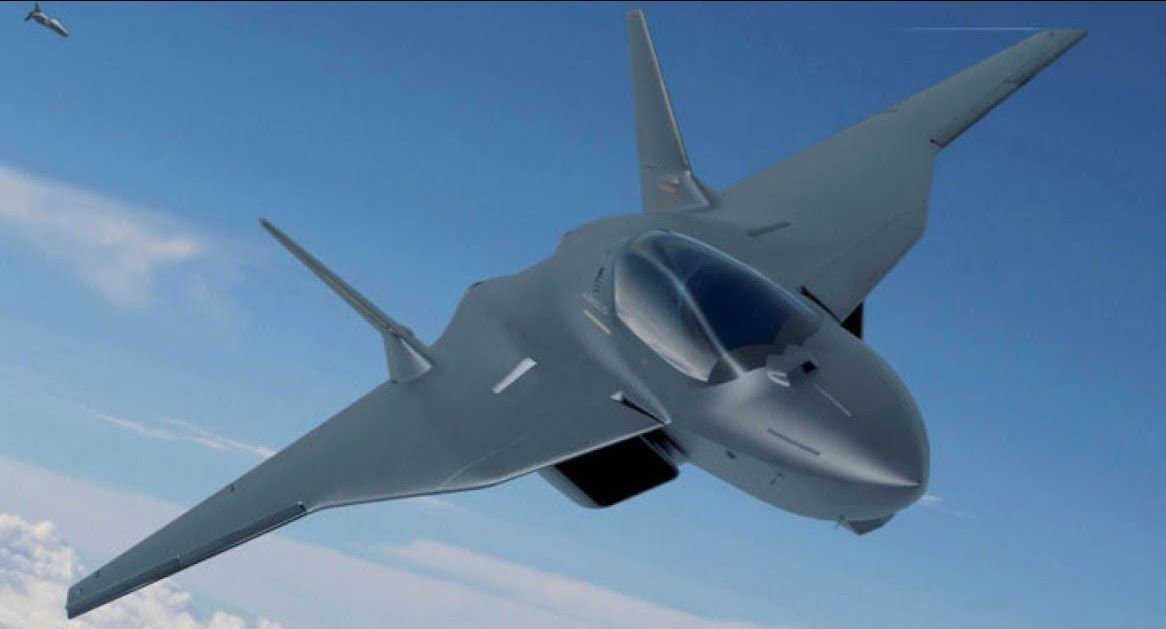
European Sixth Generation Fighter Concept Design
Following the announcement in June 2018 than France and Germany were set to jointly develop a sixth generation fighter jet to modernise their combat fleets - intended to replace the '4+ generation' Rafale and Eurofighter used by each state respectively, signs have emerged that the program could soon come to an end in favour of separate development by each party. Much as the Rafale and Eurofighter had initially been developed under a single European program, which France exited prematurely in favour of independently pursuing the Rafale as a separate aircraft due to differences with other European partners, so too does it appear increasingly likely that European countries will fail to decide on a plan for the future of the sixth generation fighter program that is agreeable to all parties. A particular sticking point during early negotiations has been the export policy for the new jet - with Paris demanding free and unrestricted exports globally while Berlin stood for a high level of scrutiny over deliveries to non European countries. Germany has historically been highly averse towards exporting military equipment to countries with political systems considered unfavourable by Europe, with its stronger economy able to afford reduced exports due to its far lower reliance on defence exports relative to its Western neighbour. France by contrast has exported arms to almost any party willing to pay, from sales of nuclear technologies and fighter jets to Saddam Hussein's Iraq at a time when the country was using chemical weapons against its Kurdish minority to sales to a number of African and Middle Eastern states today.
The head of Airbus, Tom Enders, a participant in the sixth generation fighter program, has slammed Berlin's hard line on export restrictions as impeding greater European cooperation. With a joint Franco-German project already likely to struggle against foreign competition due to its lack of the economies of scale enjoyed by larger and more efficient manufacturers such as the United States, Russia and China, a split into two separate programs is likely to spell the end for any export prospects outside of Europe due to the very small scale on which each European state could produce the combat jets - which would lead to a far higher unitary cost than it would under a joint program. Belgium's apparent disinterest in participating in the program, in favour of acquiring more cost effective American fighter jets, and Britain and Sweden's plans to develop combat jets independently, have previously dealt considerable blows to the prospects of a pan-European fighter which Berlin and Paris are currently pursuing. A split between the two parties would likely represent the final nail in the coffin of the plan.
The sixth generation European fighter, currently known as the Future Combat Air System (FCAS), is expected to cost considerably more than the American F-35 or current European fighter jets - very likely exceeding $200 million per fighter given the ambitious technologies planned for the aircraft and the relatively small scale on which it will be manufactured. The United States and China are already well on their way towards developing sixth generation fighters, with Russia also having tested a number of sixth generation technologies on its Su-57 and likely planning a next generation advanced variant of the platform for entry into mass production in the late 2020s. Whether European manufacturers may start to look outside the EU for partners in the fighter program, possibly to states such as South Korea or Turkey which are currently developing fifth generation combat jets, remains to be seen - but it could provide a much needed boost to the program's progress.