
The End of British Armour? Challenger 2 Deemed ‘Obsolete’ as UK Plans to Retire All Tanks Under New Defence Cuts
Military Watch Magazine Editorial Staff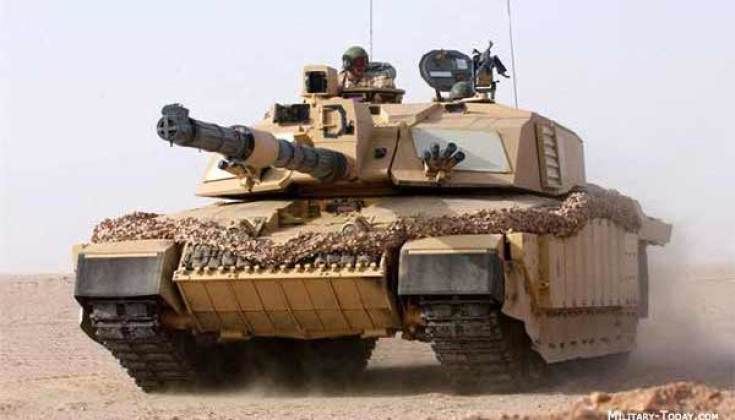
British Challenger 2 Battle Tank
With the British Armed Forces bracing for an anticipated new round of budget cuts, amid crippling economic crisis, the military leadership are reportedly considering retiring the country’s 227 Challenger 2 battle tanks. Although Britain was the first country to field tanks, deploying them in Europe during the First World War, warnings from Defence Secretary Penny Mordaunt that the military is no longer competitive, and reports of a growing consensus that motorised weapons have become obsolete, could leave the country as one of only a few in the world without any battle tanks. The retirement of the Challengers would be accompanied by a scrapping of the country’s 388 Warrior armoured vehicles, in favour of diverting investment towards fields such as aerial warfare, special forces and new carrier groups. Britain has already seen its fighting strength seriously undermined by budget cuts initiated in the early 2010s, and today a commitment to both a very costly nuclear deterrent and to fielding two full carrier groups - with each carrier set to deploy at least 48 of the world’s most expensive fighter the F-35B - has meant that the Army and Marines are expected to take the brunt of the blow from future cuts.
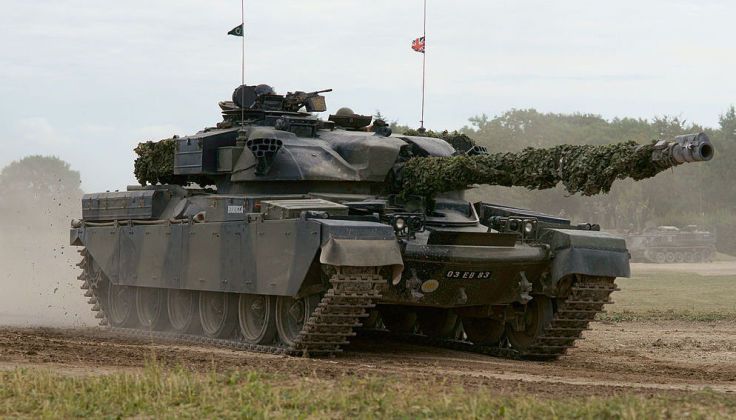
Britain was previously able to finance the retention of a large tank force with a larger and more efficient defence budget, and with large scale exports of its frontline armour to subsidise the costs of upgrades and research and development. The Challenger’s direct predecessor, the Chieftain, was largely subsidised by purchases from the Iranian military in the 1970s which fielded more of the tanks than Britain itself with around 900 acquired. Despite their considerable costs, the tanks proved very poor in combat taking extremely heavy losses to the superior Iraqi T-62 tanks while scoring few kills themselves, and forced to avoid combat with Iraq T-72 tanks entirely which had an even more overwhelming edge. The Iranians would subsequently shift to relying on the T-62, as the North Korean Chonma Ho variant, and on license built T-72 tanks, for their frontline units. The Chieftain was also sold to Jordan, Kuwait and Oman in much smaller numbers. The Cheiftain's successor the Challenger 1 would only see sales to Jordan, with other export bids failing, and the only foreign operator of the later Challenger 2 was Oman. The small gulf monarchy has consistently come under considerable pressure to purchase British hardware, although it acquired only 38 tanks and is today interested in much more advanced armoured platforms such as the South Korean K2 Black Panther which is at least two decades ahead in sophistication. Poor exports combined with an ongoing economic crisis in Britain has meant that there have been few funds available for modernisation of the Challenger 2, and while Britain was reportedly developing a replacement for the tank scheduled to enter service in the 2040s this program is unlikely to materialise.
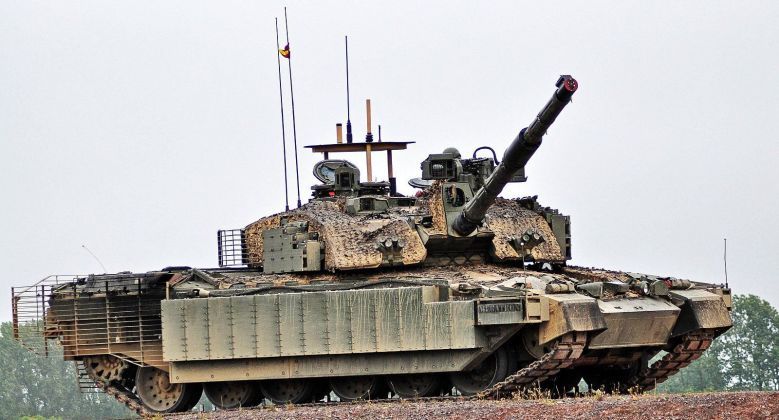
Defence Secretary Penny Mordaunt notably referred to the Challenger 2 as obsolete, stating regarding its capabilities: "Challenger 2 has been in service without a major upgrade since 1998. During this time the U.S., Germany and Denmark have completed two major upgrades, whilst Russia has fielded five new variants with a sixth pending. Warrior is even more obsolete, and is twenty years older than those operated by our key allies.” British tanks not only lag behind competitors in terms of quality, but inefficiencies in the armed forces mean that the country fields very little armour relative to the size of its defence budget. The United States, for example, fields over 5000 M1 Abrams tanks - platforms which are not only superior but over twenty times as numerous. Other countries with much smaller defence budgets, from North and South Korea to Japan, Algeria and Thailand also field much more capable frontline armour with both quantitative and qualitative advantages over Britain. The government plan for retirement of the Challenger 2 and the Warrior has been described as the "biggest review of our foreign, defence, security and development policy since the end of the Cold War,” although whether enough funds can be diverted from other sectors of the military to make the country’s two carrier strike groups viable remains uncertain.
