
How Syria Nearly Became the World’s First Country to Import Combat Jets with Phased Array Radars
Military Watch Magazine Editorial Staff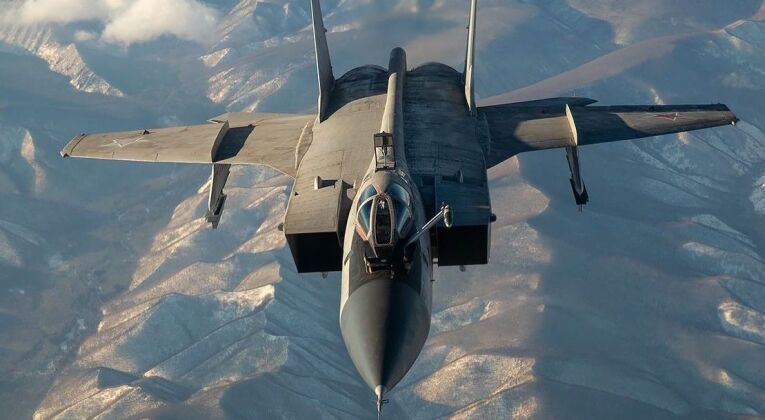
MiG-31 Foxhound Heavy Interceptor
In 2007 it was widely reported that Syria and Russia had reached advanced stages in discussions for the sale of eight MiG-31 Foxhound advanced interceptors, for which Syria would pay between $400 and $500 million each. Syria has been a priority client for the most advanced Soviet arms during the Cold War, including the Foxhound’s predecessor the MiG-25 Foxbat as well as the lighter and cheaper MiG-29A medium weight fighter - both of which were the most capable Soviet jets ever exported in terms of air to air combat performance. A number of reports indicated that the MiG-31 purchase would be accompanied by the acquisition of MiG-29M fighters - a successor to the MiG-29A. In the face of fast improving U.S., Israeli and Turkish combat fleets on its borders, the Foxhound would have represented the most capable Russian fighter or interceptor ever sold abroad, and had several distinct combat advantages over the aircraft of Syria's adversaries, which would have helped to compensate for the very small numbers of MiG-31s the Arab country was able to reasonably afford.
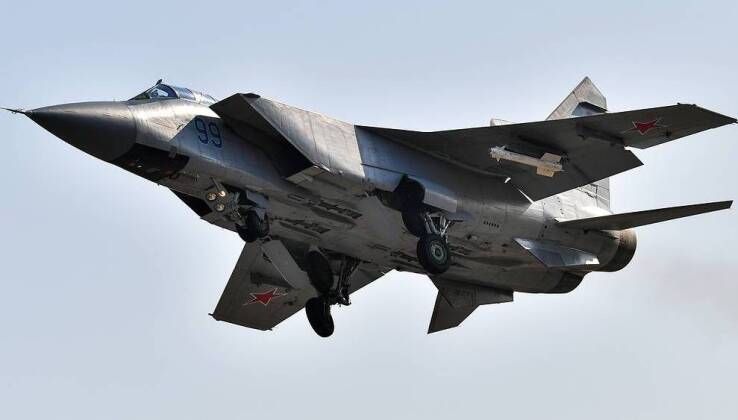
The MiG-31 had many notable features, including a speed, endurance, operational altitude, missile payload and air to air engagement range ahead of any Western rival at the time. Perhaps the aircraft’s most notable feature, however, was its Zaslon-M radar, which had entered service in the mid-1990s as an improvement on the Cold War era Zaslon. The radar was not only the largest in the world built for air to air combat, but was also highly sophisticated with technologies far ahead of any competitors when it entered service. The original Zaslon, which was first used by the Soviet military in 1981, was the world’s first phased array radar built for air to air combat, and would remain the only one for 21 years until Japan deployed the J/APG-1 on its F-2 fighter in 2002 followed by the U.S. AN/APG-77 radar on its F-22 from 2005. The U.S. had also modernised a small number of older F-15s with AESA radars from 2000, and had jointly developed the F-16E/F Block 60 with its own AN-APG-80 AESA radar with the United Arab Emirates which were first delivered in 2005, although joint contributions to research and development meant this was not an outright export. By 2007, the only countries which deployed fighters or interceptors with phased array radars were Russia, Japan, the UAE, the United States and Kazakhstan, which like Russia had inherited them from the Soviet Union. This meant that if Syria had purchased the MiG-31, it would have been the first country in the world to import such a radar and one of just two countries in the Middle East to deploy it.
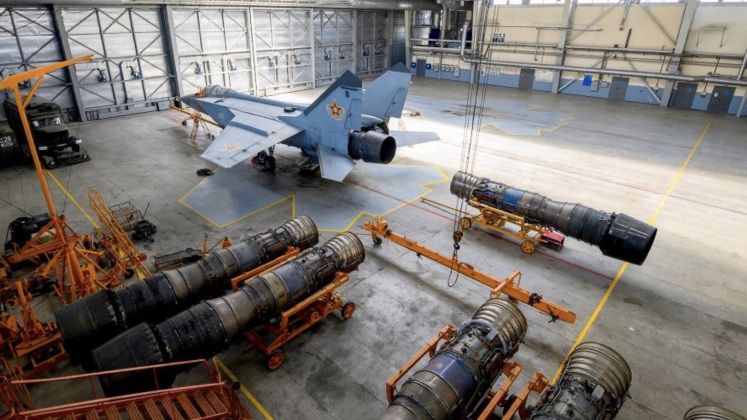
Even with a small number of MiG-31s deployed, the Zaslon-M radar would have provided a very high degree of situational awareness to the Syrian Air Force - which would have been enhanced by the advanced data sharing capabilities of the interceptors themselves. While conventional radars tracked targets by physically turning their main beam 360 degrees, phased array radars were revolutionary ini that they steered the main beam by manipulating the pattern from an array of hundreds or thousands of radiating elements. This allowed them to almost instantaneously move the location of the overlapping waves, which was much more efficient than moving the actual radar dish and allowed Foxhound interceptors to scan for targets much faster. The MiG-31’s sensors were designed to allow them to patrol the USSR’s vast territory, with the original Zaslon allowing a single small unit of four Foxhounds to patrol an area of 800km by 2,000km and the enhanced Zaslon-M increasing this very significantly.
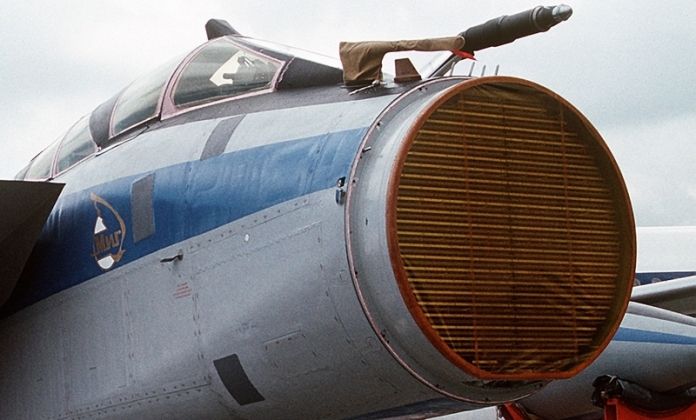
Until the entry into service of the Su-57 fighter in December 2020, the MiG-31’s Zaslon-M was the most powerful radar of any Russian fighter or interceptor and was optimised for tracking very small targets at very long ranges. This made the Foxhound highly capable of intercepting very low flying enemy cruise missiles - one of very few combat jets in the world that was good at doing so - and also allowed the aircraft to threaten stealth targets at much longer ranges than almost any other fighter or interceptor could. Indeed, the Soviets offered to demonstrate this capability a the 1991 Paris Air Show using the original Zaslon radar - as both the older MiG-31B variant and the American F-117 stealth fighter were present. Equipped with the Zaslon-M, the modern MiG-31BM or MiG-31BSM Foxhounds were each capable of tracking up to 24 targets simultaneously and engaging up to eight, and could guide missiles to targets up to 400km away. The radar allowed the aircraft to precisely engage hypersonic targets travelling at speeds of up to Mach 6.
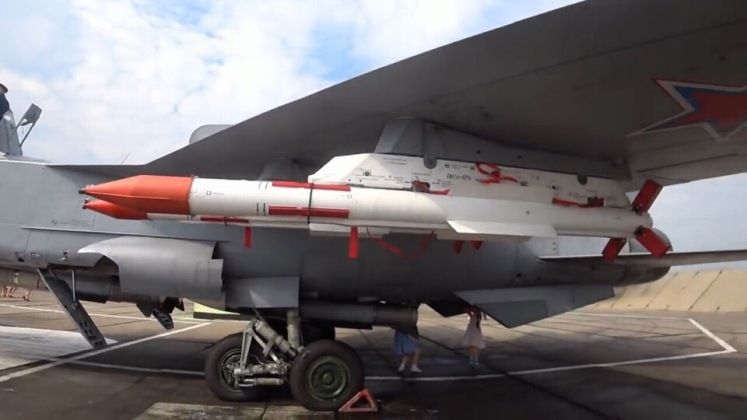
As Syria was set to receive its MiGs around 15 years after the Zaslon-M first entered service, it would have likely been offered the new R-37 air to air missile which carried a very large 60kg warhead and had an impressive range reportedly as long as 400km to complement the radar’s advanced capabilities. While even a small Syrian MiG-31 unit would have been a potential game changer for the balance of power in the Middle East, the deal was reportedly cancelled due to Israeli pressure on Russia. No efforts are known to have been made to acquire MiG-31s from Kazakhstan, which was another potential source and had a few dozen of the jets in reserve storage. Ten years of war in Syria beginning in 2011 have since left the country in a poor position to afford new combat jets, although it has received MiG-29SMT fighter jets from Russia which represent a cheaper alternative to the MiG-29M that it was reportedly originally considering as a lighter complement to the elite MiG-31. Syria is not expected to field fighters from the same range or with comparable capabilities to the MiG-31 in the near future, although such assets would have potentially been a very useful asset in multiple engagements including its recent clashes with Turkish aircraft infringing on its airspace.
