
U.S. Upgrades HIMARS Launchers with 400 Percent Ballistic Missile Firepower Loadout
Military Watch Magazine Editorial Staff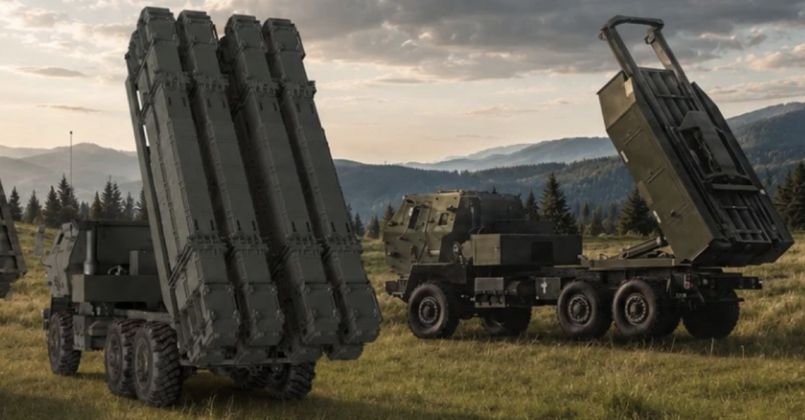
HIMARS FLEX in Rocket (left) and Missile Configurations
New enhancements made to the U.S. High Mobility Artillery Rocket Systems (HIMARS) design have quadrupled its missile firepower, while providing a 67 percent increase in engagement range, which is a potential game changer for the strike capabilities of the very widely deployed assets. The most important improvement is the integration of the new PrSM ballistic missile, which are significantly smaller than the ATACMS ballistic missiles that were previously relied on. While an ATACMS occupies an entire launch pod in a HIMARS launcher, meaning each launcher can carry fire only one missile before reloading, PrSM’s more compact design allows two missiles to fit in a single launch pod, doubling the number carried by each launcher. The second improvement has been the development of the HIMARS FLEX, which addresses the original’s limited ammunition capacity by increasing carriage from a single rocket pod to two, meaning it can fire twelve GMLRS rockets, two ATACMS missiles, or four PrSM missiles.
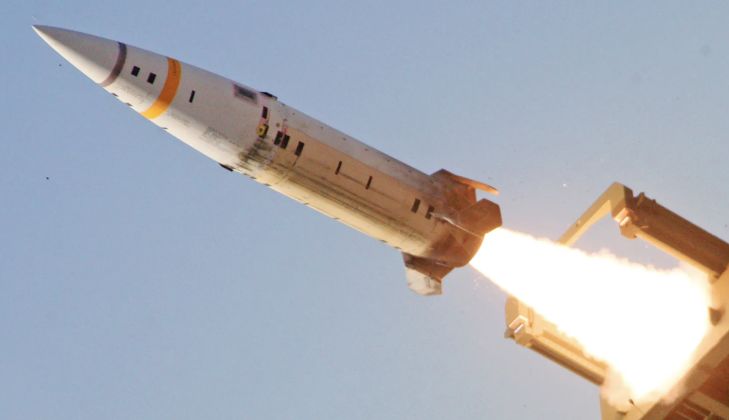
The development of the PrSM and the HIMARS FLEX represent significant innovations in the designs of missiles and launchers respectively, which have effectively doubled the system’s missile carriage twice. Beyond its more compact design, the PrSM incorporates a modern inertial navigation system integrated with GPS guidance, offering greater precision than earlier ATACMS models, while upgraded processing power and navigation technology, improved resistance to jamming, and a reduced circular error probability, enabling highly accurate strikes against point targets. The PrSM has also been designed with improved aerodynamics and a more efficient rocket motor, enabling higher speeds and a less predictable flight profile than ATACMS. These characteristics complicate interception by modern missile defence systems, which has been a serious issue for ATACMS in the Ukrainian theatre when operating against Russia’s multi-layered missile defence network.
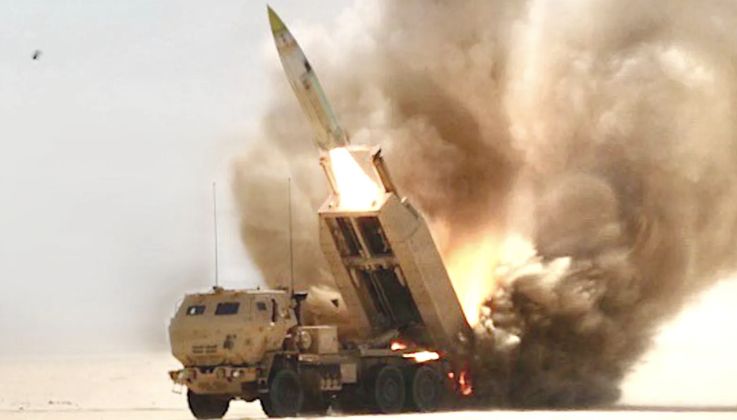
PrSM replaces the older cluster-munition ATACMS variants, many of which have been retired because of concerns over unexploded ordnance, and instead employs a high-explosive unitary warhead designed to destroy hardened military targets while complying with modern U.S. policy regarding cluster munitions. It was also designed for integration into the U.S. Army’s evolving joint all-domain command and control (JADC2) architecture, allowing it to receive targeting information from satellites, drones, aircraft, and other sensors, enabling rapid engagement of time-sensitive targets at long range. This networked approach allows launchers to fire based on information gathered by platforms hundreds or even thousands of kilometres away. Should the missile be procured in significant numbers, it is expected to transform the U.S. and its strategic partners’ deep-strike capabilities from a short-range battlefield missile into a long-range precision weapon capable of shaping operational and strategic campaigns.
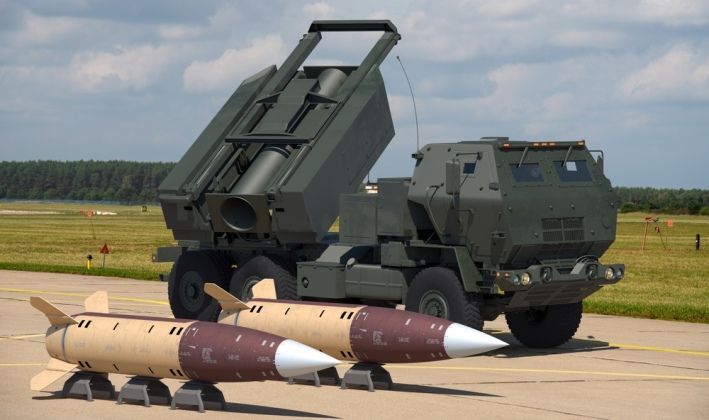
Unlike ATACMS, which was largely a fixed design, PrSM uses an open systems architecture, making it easier to integrate new software, guidance packages, and mission capabilities throughout its service life. This modular approach allows the missile to evolve without requiring a completely new design. The U.S. Army plans multiple to commission multiple incremental upgrades, including integrating a multi-mode seeker for engaging moving maritime and land targets, enhanced payload options, and further range increases and advanced effects, potentially including new warhead technologies. This mirrors HIMARS FLEX’s adoption of the FLEXFires modular architecture, which has been designed to accommodate future missiles and software upgrades with minimal modification, avoiding the requirement for a completely new launcher each time new munitions are introduced. This open architecture reduces long-term costs, while ensuring compatibility with evolving precision strike and air defence capabilities.
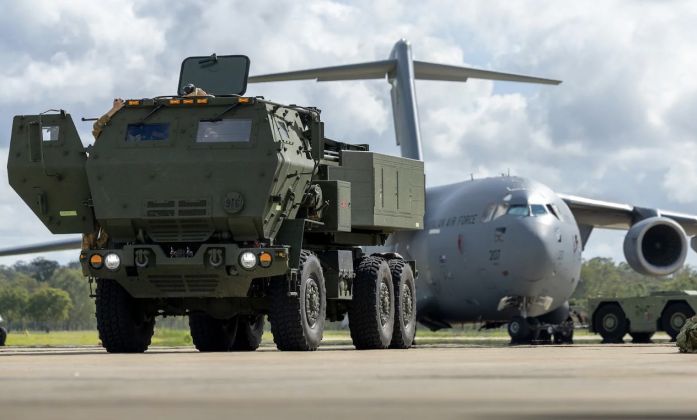
The operational implications of a quadrupling of the ballistic missile carriage of HIMARS launchers is highly significant. A single HIMARS FLEX launcher can engage four separate high-value targets such as command centres, air defence batteries, or missile launchers in rapid succession and at considerable ranges, or it can fire a concentrated salvo against a single heavily defended objective. The increased missile load also reduces the frequency of reloading, allowing launchers to sustain operations longer and improve their survivability through “shoot-and-scoot” tactics. In practical terms, HIMARS FLEX offers firepower approaching that of the much heavier M270 tracked launcher, while retaining the wheeled platform’s advantages of high road mobility, lower operating costs, and transportability on C-130 aircraft. By carrying four PrSMs, the system significantly increases the density of long-range precision fires available to frontline units, and enhances the ability to conduct deep strikes against enemy command networks, logistics hubs, and anti-access/area-denial systems. This is particularly significant due to how widely HIMARS are deployed across multiple theatres, from Republic of China Army units in the Taiwan Strait, to U.S. Army units in Japan, the Philippines, the Arctic, and across Eastern Europe.
