
New U.S. HIMARS Rocket Artillery Variant Doubles Firepower While Retaining High Mobility
Military Watch Magazine Editorial Staff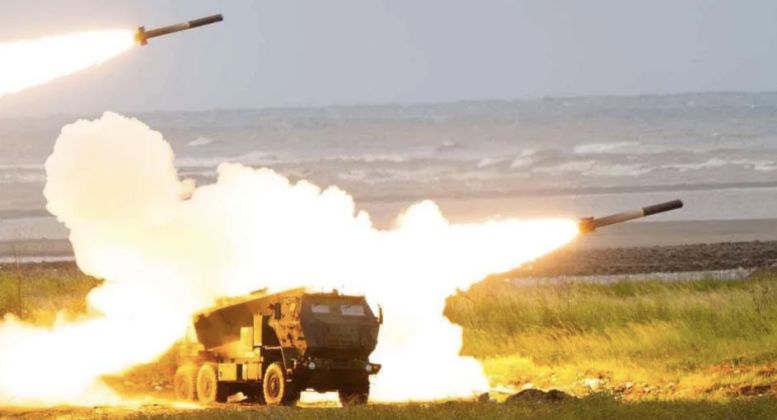
Republic of China Army HIMARS During Live Fire Exercises
Lockheed Martin has unveiled a new variant of the High Mobility Artillery Rocket Systems (HIMARS), the HIMARS FLEX, which was designed to address several operational shortcomings that have become increasingly apparent through recent conflicts and evolving military requirements. In particular, the new variant has responded to requirements for greater firepower, improved versatility, enhanced survivability, and reduced logistical burden. One of the principal issues with the original HIMARS was its limited ammunition capacity. The original launcher carried only a single rocket pod, meaning it can fire six GMLRS rockets or one ATACMS missile before requiring a reload. After expending its ammunition, the launcher must withdraw to a resupply point, creating a temporary gap in its ability to engage targets. HIMARS FLEX addresses this limitation by introducing a dual-pod launcher, doubling the onboard ammunition capacity and allowing the vehicle to engage more targets before reloading.
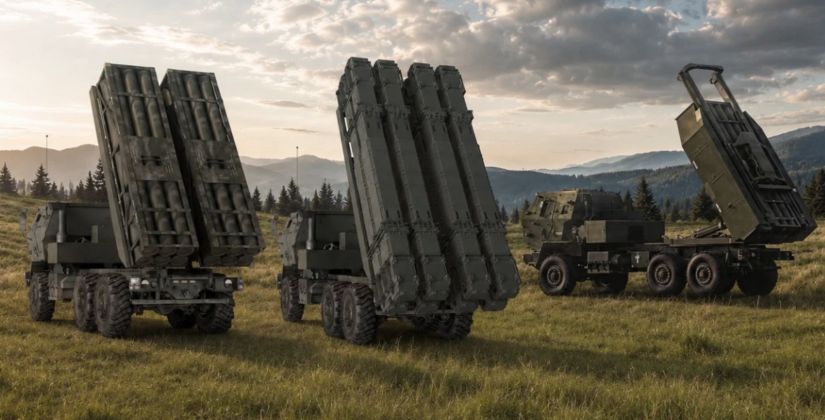
The HIMARS FLEX addresses the challenge of rapid technological change through its FLEXFires modular architecture. Instead of requiring a completely new launcher each time new munitions are introduced, the system is designed to accommodate future missiles and software upgrades with minimal modification. This open architecture reduces long-term costs while ensuring compatibility with evolving precision strike and air defence capabilities. Another issue the design has sought to address is the growing need for multirole battlefield flexibility. Rather than functioning solely as a rocket artillery system, HIMARS FLEX has been designed to fire a much broader range of effectors, including air and missile defence interceptors such as the PAC-3. This transforms the launcher into a modular platform capable of switching between offensive deep-strike missions and defensive air and missile defence tasks, allowing commanders to adapt rapidly to changing battlefield conditions. This mirrors the integration of a secondary air defence capability using the PAC-3 on the Typhon Mid-Range Capability cruise missile system.
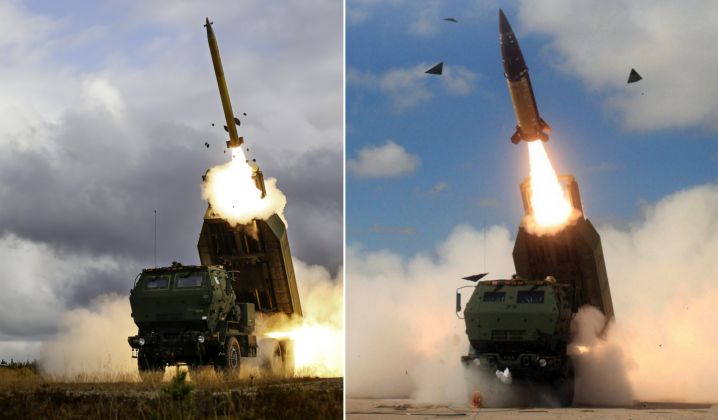
HIMARS FLEX was designed to preserve the strengths that made the original HIMARS successful while expanding its capabilities. Despite carrying significantly more firepower and supporting additional mission types, it is intended to retain high strategic mobility, including transportability by C-130 aircraft, allowing it to be rapidly redeployed to dispersed operating locations in theatres such as the Pacific. Combined with its optional autonomous operation features, the system reflects a broader shift toward more survivable, modular, and networked long-range fires capable of operating in highly contested environments. A primary cause of the HIMARS’ limited firepower compared to other rocket artillery systems such as the M270 was its requirement for a lightweight design that could be easily redeployed by air, with the HIMARS FLEX appearing to end the need for a compromise between mobility and firepower by retaining the primary strengths of both systems.
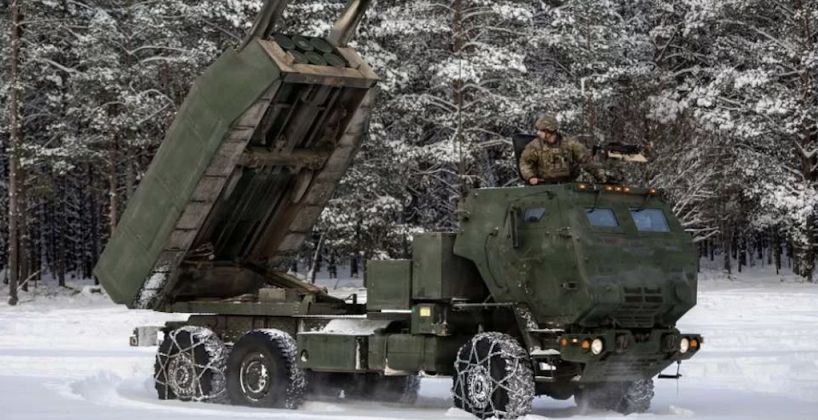
HIMARS have been extensively combat tested in the Ukrainian theatre, and have been used to target multiple high value targets including the the destruction of launchers and radars from S-400 air defence systems, the destruction of other radar systems, the neutralisation of Russian Iskander-M ballistic missile launchers. NATO members have deployed HIMARS for multiple high profile exercises near Russian territory, with the U.S. Army in early February having conducted live-fire using the systems exercises near Klaipeda, Lithuania, approximately 50 kilometres from the Russian border, was widely interpreted as a show of force. In mid-January U.S. Army and Lithuanian Army artillery units conducted advanced interoperability training centred on employment of the HIMARS at the Pabrade training area in eastern Lithuania. HIMARS deployments have not been restricted to the Untied States, with the Polish Army having deployed HIMARS to Finland to participate in NATO’s Swift Response 25 military exercises in May 2025, as part of a broader contribution that includes personnel from both the 1st Rocket Brigade and the 6th Airborne Brigade.
