
NATO Rocket Artillery on Belarus’ Border: U.S. Demonstrates HIMARS Strike Capabilities in Lithuania Exercises
Military Watch Magazine Editorial Staff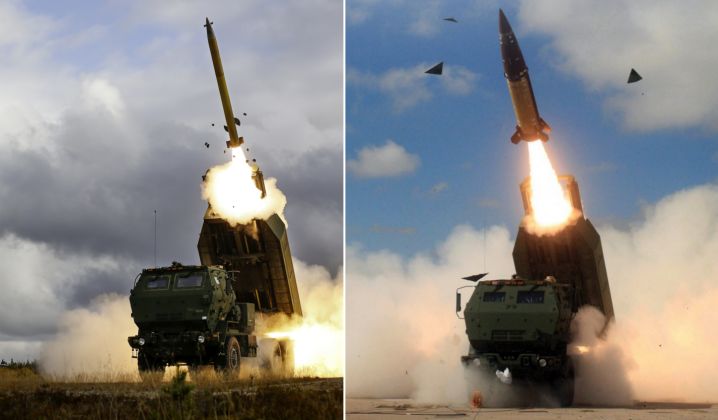
HIMARS Rocket (left) and Ballistic Missile Launches
U.S. Army and Lithuanian Army artillery units have conducted advanced interoperability training centred on employment of the M142 High Mobility Artillery Rocket System (HIMARS) at the Pabrade training area in eastern Lithuania, near NATO’s border with Belarus. The exercises focused on synchronised long-range precision fires, digital command and control procedures, and rapid mobility concepts, all of which are critical to the United States’ rotational force posture in the Baltic region, a former part of the Soviet Union now on the frontlines of hostilities in Europe. The training provided Lithuanian forces with practical exposure to HIMARS operational workflows, as deliveries of the systems by the United States are expected to commence before the end of the year.
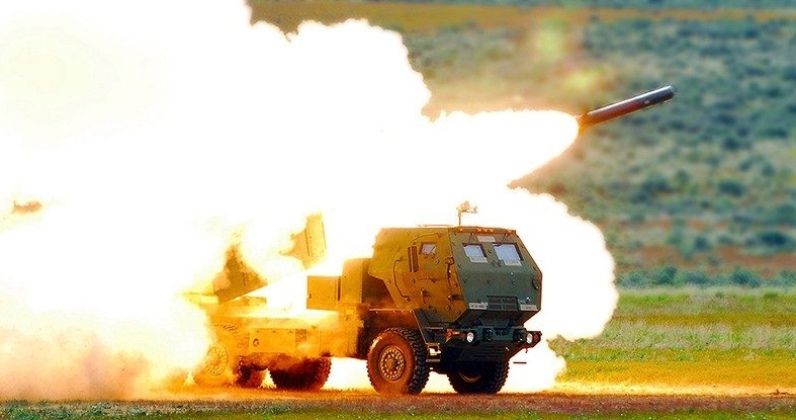
U.S. Army HIMARS were deployed by Bravo Battery, 1st Battalion, 14th Field Artillery Regiment, assigned to Task Force Pergale under the 41st Field Artillery Brigade. Their operations focused on core launcher operations rather than symbolic demonstrations, including pre-mission maintenance, radio procedures, crew coordination and precise launcher positioning. Exercises were conducted as part of the U.S. Army’s broader HIMARS initiative in Europe, which has focused on improving interoperability and integration of the systems within NATO formations. Within Europe the system is currently operated by Estonia, Poland, Romania and Ukraine, while Italy, Latvia and Lithuania have all placed orders. A primary factor preventing more widespread sales has been competition from the South Korean Chunmoo rocket artillery system which can be delivered in a fraction of the time and carries considerably more firepower on each launcher. Germany has also attempted to lobby for sales of its EuroPULS system, albeit with little success.
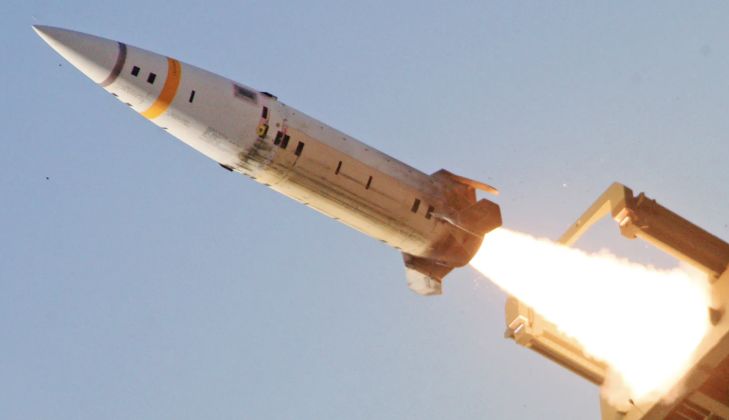
HIMARS was designed to be employed for expeditionary operations by both the U.S. Army and the Marine Corps, and while deploying just half the firepower of the heavier M270 system, its lightness ensures both high mobility, and ease of transport by air to reinforce American and allied forward deployments across the world. HIMARS and other rocket artillery systems have played a particularly central role in the ongoing Russian-Ukrainian War, with the system having been used destroy critical infrastructure, launchers and radars from S-400 air defence systems, ballistic missile launchers, and other high value targets far behind enemy lines. One of the most notable successes achieved in the theatre was a strike on January 1, 2023, which killed 89 Russian military personnel after hitting a temporary barracks in the disputed Donetsk region.
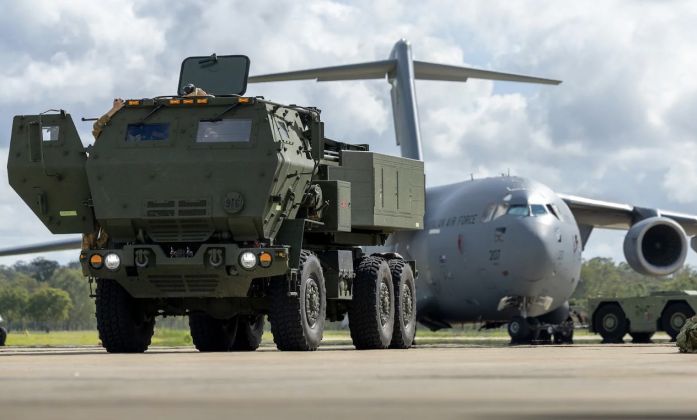
The deployment of HIMARS to Lithuania closely coincides with the U.S. Armed Forces larger scale exercises with the Australian Army simulating rapid HIMARS redeployments by air for operations across wide areas. The growing numbers of HIMARS launchers deployed by European states has placed growing pressure on the defences of Russia and Belarus. The Polish Army in May 2025 deployed the systems to Finland to participate in NATO’s Swift Response 25 military exercises, as part of a broader contribution that includes personnel from both the 1st Rocket Brigade and the 6th Airborne Brigade. Each HIMARS launcher can deploy either six GMLRS rockets with 80 kilometre ranges, or an ATACMS ballistic missile with a range exceeding 300 kilometres, with the latter allowing for precision strikes deep into Russian territory.
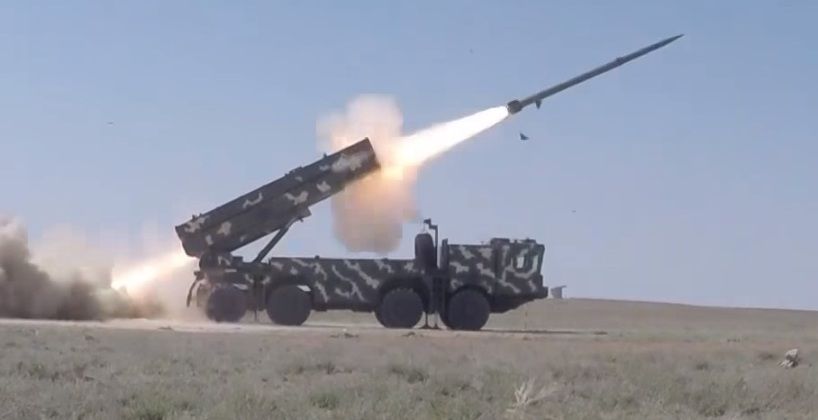
Belarus has faced fast growing military pressure from NATO, with the U.S. Army in September 2025 having deployed 1st Armoured Division AH-64 Apache attack helicopters for deep strike live-fire exercises in Lithuania near the Belarusian border. Four months prior the German Army on May 22 inaugurated the 45th Armoured Brigade stationed in Vilnius, Lithuania, providing an elite forward deployed mechanised warfare capability on the territory of the former USSR just 150 kilometres from the Belarusian capital Minsk. Belarus has seen its own air defence capabilities significantly enhanced with the delivery of S-400 long range systems from Russia from 2022, and in December operationalised Oreshnik intermediate range hypersonic ballistic missile systems as part of what was widely interpreted as a response to the Western military buildup.
