
South Korean Rocket Artillery Deploying Just 140km From St Petersburg: Estonia Places New Order
Military Watch Magazine Editorial Staff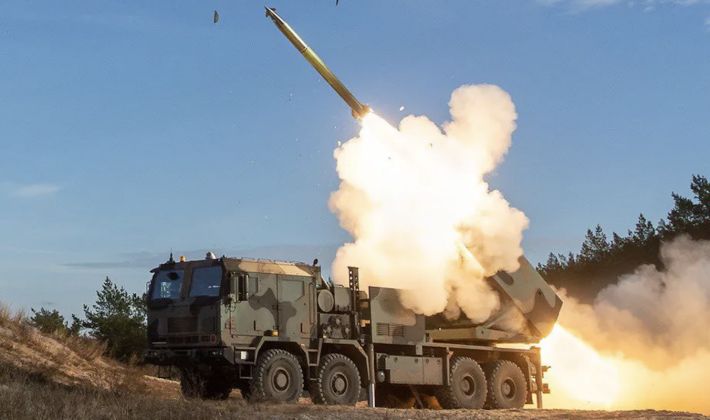
Launch From Chunmoo Multiple Rocket Launcher System
The Estonian Defence Ministry has signed an agreement with the South Korean defence manufacturer Hanwha Aerospace to procure Chunmoo rocket artillery systems, expanding on prior orders for six Chunmoo launchers. Commenting on the procurement, Estonian Defense Minister Hanno Pevkur observed: “Deep-strike capability in the form of HIMARS already exists for us, but creating a second complementary system is extremely necessary… Chunmoo has a firing range of up to 300 kilometres, and they are working to go further, up to 500 kilometres.” A Soviet successor state with a 294 kilometre border with Russia, Estonia’s close proximity to Russia’s most densely populated city, St. Petersburg, allows rocket artillery systems deployed there to launch strategic bombardments even when using less costly lower calibre munitions. The city is located just 140 kilometres from the Russian-Estonian border.
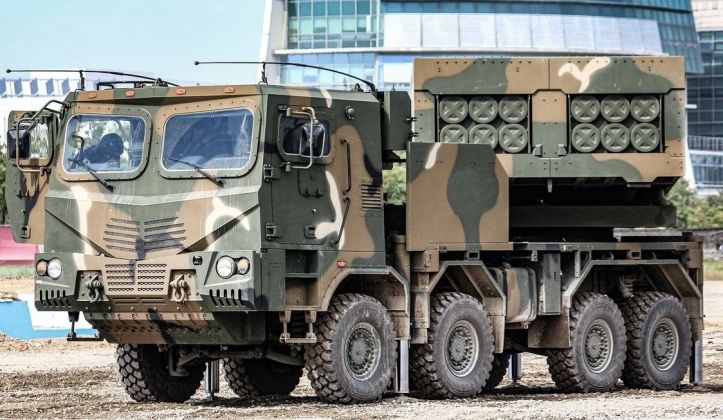
The Chunmoo system can integrate 131mm, 230mm, 239mm rand 400mm rockets, as well as 600mm ballistic missiles, and has a number of advantages over rival Western systems that has led it to be selected to arm countries across Europe. Commenting on its advantages over the rival American HIMARS which Estonia already fields, Hanwha’s head of precision-guided munitions business Billy Boo Hwan Lee observed: “HIMARS has only one rocket pod, but we use two… This means we have double capability. For example, on the left side we can use an 80 kilometer range rocket, and on the right a 290 kilometer range rocket. Our system is dual-purpose. This means we offer greater operational capability.”
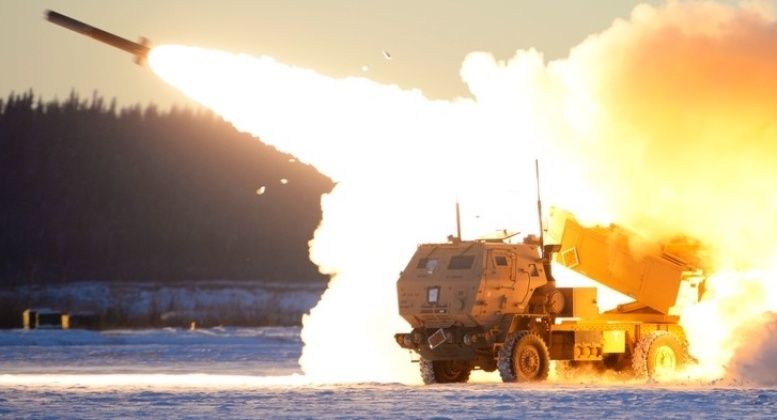
Commander of an Estonian Army division fire support unit Meelis Laanemets highlighted that the Chunmoo system has significantly greater firepower, although HIMARS “is much lighter and has high strategic mobility.” He added that training for the two systems is broadly similar, and that rocket artillery units are expected to become proficient in operating both. Regarding how South Korean industry has managed to meet a major increase in export demand due to a surge in European investments in acquiring rocket artillery, Lee noted: “We had to change and reorganise our production line in order to add and double capacity, so we are able to deliver on time,” he said. “In Poland’s case, we were able to deliver more than a thousand rockets in one year.”
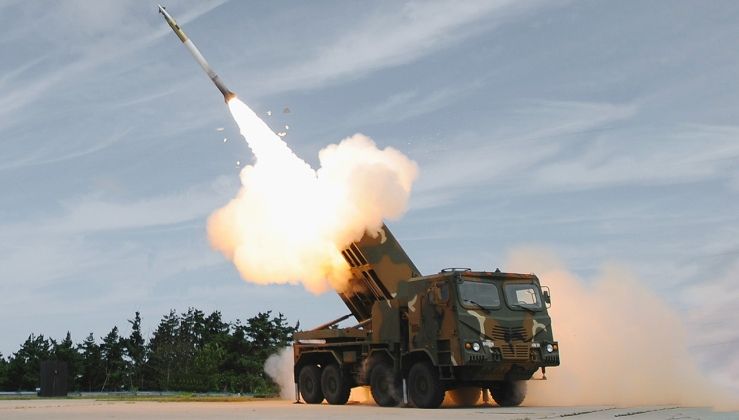
In late November Norwegian Defence Ministry has removed the German EuroPULS rocket artillery system from its Long Range Precision Firing Systems tender, leaving the rival HIMARS and Chunmoo systems as the sole remaining contenders, despite considerable German lobbying efforts. The Chunmoo is reportedly favoured, and would complement Norway’s recapitalising of its howitzer arsenals with K9 mobile 155mm systems. Poland remains the largest foreign client for the Chunmoo system, and in 2022 signed a $6 billion framework agreement for the acquisition of 288 launchers. Rocket artillery has played a particularly central role in the ongoing Russian-Ukrainian War, with the ability of systems to also be configured to launch ballistic missiles allowing them to serve in strategic roles to destroy critical infrastructure far behind enemy lines.
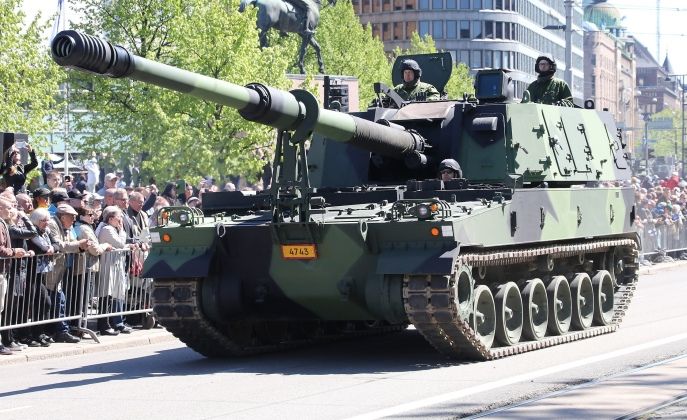
Estonia’s strategic location makes rocket artillery deployments in the country particularly critical and potentially highly sensitive for Russia considering that several of its major economic centres are in the firing line. Estonian procurements reflect broader trends across frontier European states towards increasingly favouring South Korean armaments, with the Estonian Army in late November having received a new batch of South Korean K9 howitzers, which have also been ordered by Poland, Turkey, Norway, Finland and Romania. Sweden is reportedly poised to follow suite in procuring the K9. Where the significant inefficiencies in European defence sectors had long limited pressure on the Russian Armed Forces, the large scale procurements of South Korean armaments by European states remains a game changer that is poised to equip NATO members on its borders to a much higher standard and far more cost effectively.
