
U.S. Marines Demonstrate Rocket Artillery Precision Fire Capabilities on China’s Doorstep
Military Watch Magazine Editorial Staff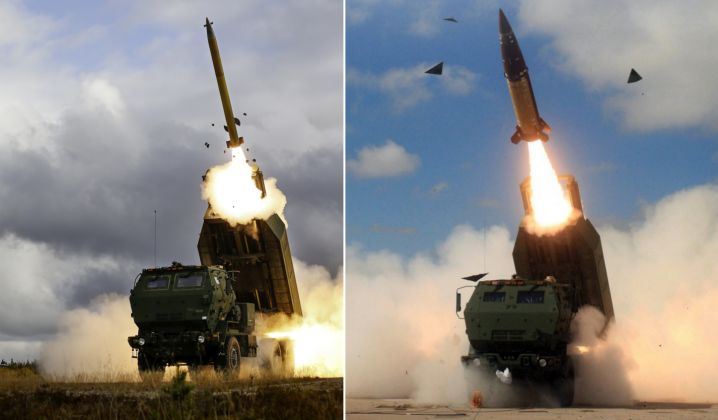
Rocket (left) and Ballistic Missile Launches From HIMARS System
The U.S. Marine Corps has deployed High Mobility Artillery Rocket Systems (HIMARS) for major live-fire exercises near Mount Fuji, Japan, demonstrating the ability to rapidly redeploy launchers and delivery precision fires from austere positions. Equipment and ammunition was transported by air and sea, with HIMARS having been specifically designed to be highly compact allowing launchers to be rapidly redeployed by C-17 or C-5 transports to forward locations in strength. This is particularly valuable for reinforcing Marine operations in remote archipelagic or littoral theatres, such as those in the East China Sea. Alongside artillery rockets with 70 kilometre ranges, HIMARS can also fire ATACMS 300 kilometre range ballistic missiles, and new more compact and sophisticated PrSM ballistic missiles with 500 kilometre ranges.
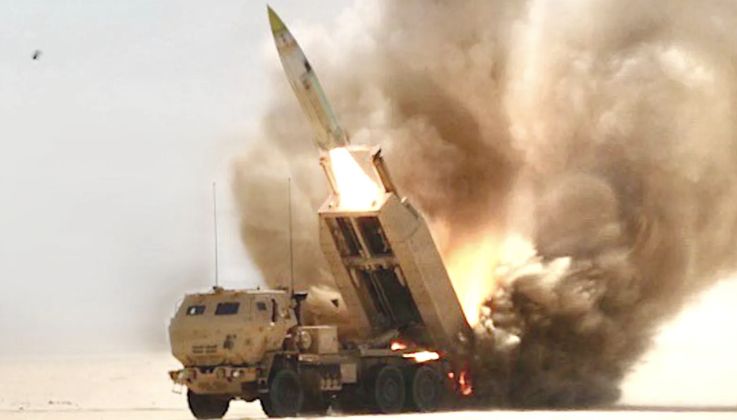
The U.S. Armed Forces have continued to rapidly expand its deployments of HIMARS rocket artillery systems in the Western Pacific region, reflecting broader trends towards the prioritisation of highly in demand equipment for delivery to forces in the region. HIMARS is considered an optimal asset both by the U.S. Armed Forces, and by multiple strategic partners, to asymmetrically counter larger and equally or more advanced forces, with its capabilities having been demonstrated repeatedly in the Ukrainian theatre. The U.S. Army in April deployed and fired HIMARS in the Philippines during Exercise Salaknib 2026, which represents a significant landmark in the expansion of forward-positioned long-range strike capabilities near Chinese territory.
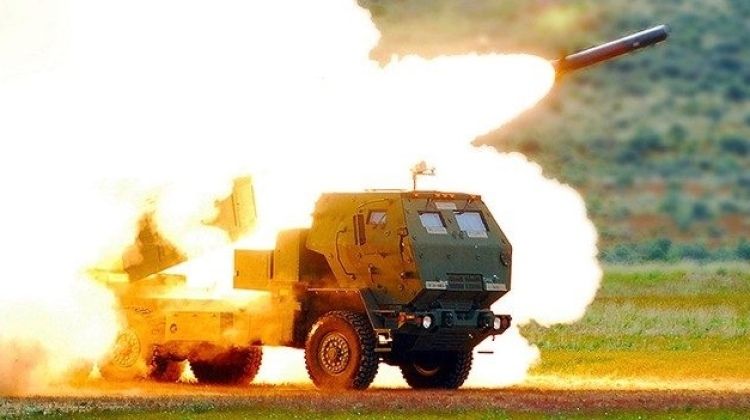
The prioritisation of Japan and the Philippines for deployment of long range missile and rocket artillery systems is far from unprecedented, largely due to the countries’ geographic locations which makes them optimal to serve as a staging ground for attacks on China. In April 2024, the U.S. Army made its first ever deployment of the Typhon Mid-Range Capability (MRC) system to the Philippines, which can not only target enemy warships with 370 kilometre range SM-6 missiles, but also fire the Tomahawk land attack cruise missile which retains a 1,600 kilometre range. Alongside deployments by the U.S. Army and Marine Corps, HIMARS are also being prioritised for delivery to the Republic of China Army based on Taiwan Island, which remains in a state of civil war with the People’s Republic of China based on the mainland. These sales gained greater significance from January 2026 following the U.S. Armed Forces’ obtaining of new authority from Taipei to coordinate its arsenals through the establishment of a Joint Firepower Coordination Centre.
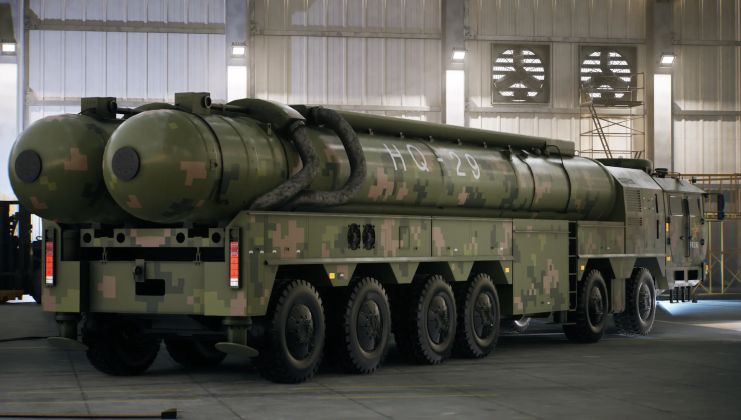
ATACMS ballistic missiles have been used to destroy multiple high value targets in the Ukrainian theatre, with examples having included the destruction of launchers and radars from S-400 air defence systems, the destruction of other radar systems, the neutralisation of Russian Iskander-M ballistic missile launchers, and the successful targeting of high value combat aircraft at airfields. PrSM ballistic missiles were from February used extensively to strike a wide range of targets in Iran during 39 days of hostilities between the country and the United States. The concentration of large numbers of U.S. ballistic missile systems in the Philippines, Japan and Taiwan appears intended to hold high value targets across large parts of the Chinese mainland at risk. Nevertheless, the far superior air defence capabilities of the Chinese People’s Liberation Army relative to those of Russia, and the fact that ballistic missiles associated with HIMARS are relatively straightforward to intercept, has raised serious questions regarding the viability of using the system to threaten Chinese territory.
