
More HIMARS Ready to Take on Russia: U.S. Deploys Rocket Artillery For Arctic Live Fire Exercises
Military Watch Magazine Editorial Staff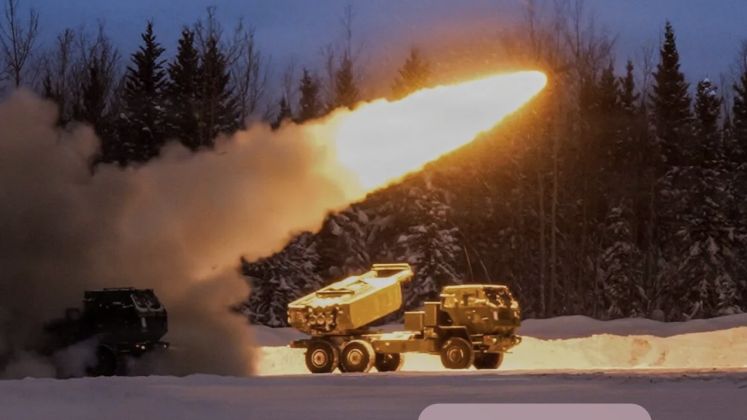
17th Field Artillery Brigade HIMARS Launch During JPMRC 26-02
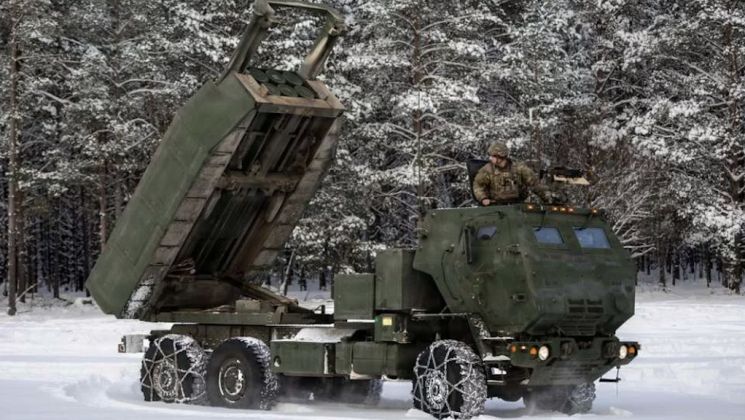
The U.S. Army has deployed M142 High Mobility Artillery Rocket System (HIMARS) for live fire exercises during Joint Pacific Multinational Readiness Center (JPMRC) drills in Alaska, which has reportedly served to validate a capability to “rapidly deploy, integrate and deliver accurate long range fires across extended distances despite extreme cold temperatures and challenging terrain.” The Army’s 17th Field Artillery Brigade conducted a ground raid mission using the systems, which focused on testing the brigade’s ability to rapidly deploy and employ launchers in extreme environments, where terrain, temperature, and logistics significantly complicate operations. The Army stated integrating long-range fires into Arctic training is important to ensure that forces remain prepared to respond quickly in contested environments.
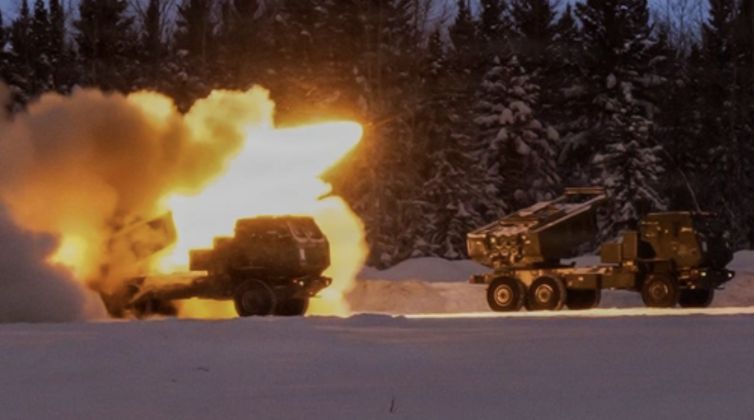
The latest exercises reflect ongoing efforts by U.S. forces to improve readiness in Arctic regions, amid a broad surge in multiple NATO members’ deployments to the far north. Arctic temperatures created technical challenges for HIMARS launchers, freezing key components that threatened operational timelines. The 17th Field Artillery Brigade coordinated with the 11th Airborne Division and the 354th Operations Support Squadron’s Airfield Operations Flight to to secure the resources needed to keep launchers within operational temperature limits, allowing the live fire exercises to proceed successfully. Captain Benny Rodriguez, the brigade’s battery commander, emphasised the operational value of expeditionary training, observing: “It tests our ability to project power into austere environments, forcing us to confront and solve complex problems that we simply cannot simulate at our home station.” “Our battalion’s motto is ‘flexible,’ and this exercise made that word resonate with every Soldier in this Battery,” he added, elaborating on how personnel adapted to various environmental obstacles.
Of eight countries with Arctic territories, only Russia remains outside NATO, with NATO members’ growing presences in the region and training for high intensity regional conflict widely assessed to be aimed at preparing for possible war with the country. HIMARS have been deployed for multiple high profile exercises near Russian territory, with the U.S. Army in early February having conducted live-fire using the systems exercises near Klaipeda, Lithuania, approximately 50 kilometres from the Russian border, which was widely interpreted as a show of force. In mid-January U.S. Army and Lithuanian Army artillery units conducted advanced interoperability training centred on employment of the HIMARS at the Pabrade training area near the Belarusian border. Other NATO members have also made significant HIMARS deployments, with the Polish Army having deployed HIMARS to Finland to participate in NATO’s Swift Response 25 military exercises in May 2025, as part of a broader contribution that includes personnel from both the 1st Rocket Brigade and the 6th Airborne Brigade.
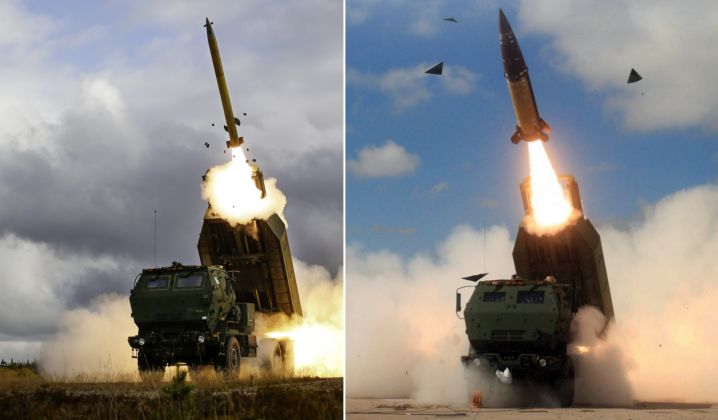
Rocket artillery systems have played a central role in the Russian-Ukrainian War, with HIMARS having achieved multiple notable successes including destroying critical infrastructure, launchers and radars from S-400 air defence systems, and other high value targets far behind enemy lines. One of the most significant successes achieved was a strike on January 1, 2023, which killed 89 Russian military personnel after hitting a temporary barracks in the disputed Donetsk region. HIMARS is highly valued for compressing long-range strike capabilities into a 6x6 truck-sized footprint, providing speed and high cross-country mobility to improve survivability, while also allowing it to be easily redeployed by air. The system can also serve as a ballistic missile launcher to fire ATACMS, which have been used to strike high value targets such as airfields in Russia at much longer ranges.
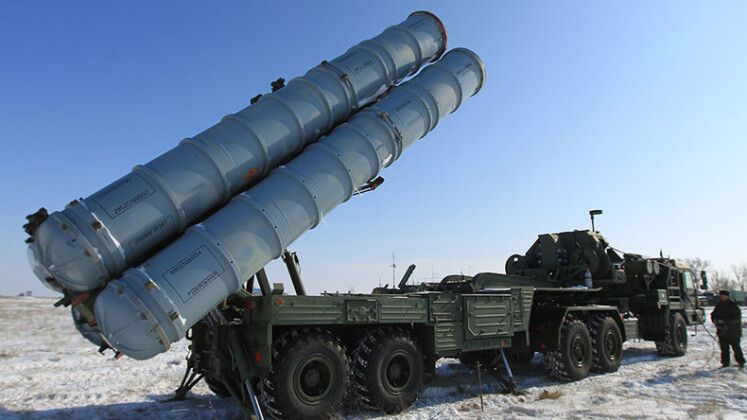
The Arctic remains vital for the Russian economy, accounting or approximately 20 percent of the country’s GDP, while also being vital for Russia’s maritime nuclear deterrent, with the large majority of its ballistic missile submarines being based in the region. The opening of the Northern Sea Route has also made the ability to disrupt civilian shipping in the region vital to any Western Bloc effort to impose a distant blockade on Russia or China. Russian Navy Commander-in-Chief Admiral Alexander Moiseyev in December warned regarding the expansion of NATO members’ Arctic operations that NATO members bordering the Arctic have significantly accelerated the construction of icebreakers and ice-class ships, while developing a wide range of drone types intended specifically for combat in the region. “These actions prove that Russia is forming military instruments of deterrence in the Arctic. However, I’d like to note that we are not moving closer to their borders; they are moving closer to ours,” he noted.
