
U.S. and Japan’s Top Air Superiority Fighters Train For Joint Operations Against China: Air Units Face Fast Worsening Power Balance
Military Watch Magazine Editorial Staff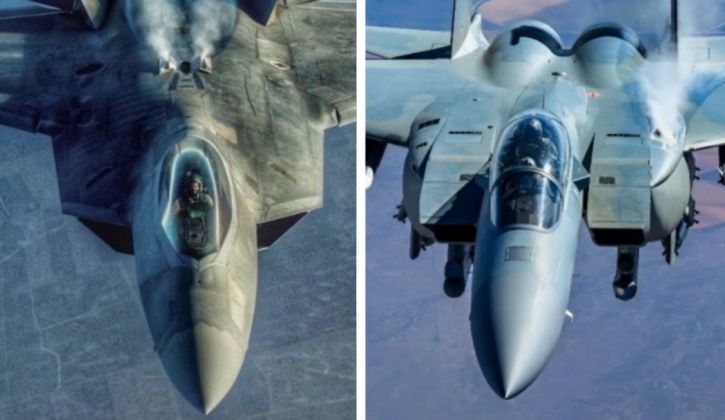
F-22 (left) and F-15 Fighters
The United States Air Force and the Japan Air Self-Defense Force have demonstrated a greater degree of operational integration during Valiant Shield 2026 exercises, during which both services deployed their premier air superiority fighters to simulate an air campaign. The campaign is widely assessed to be based on conditions for a joint war effort against China. The U.S. Air Force deployed F-22 fifth generation fighters, which it operationalised from 2005-2012, while the Japan Air Self-Defense Force deployed F-15J fighters that were procured from the early 1980s. A key objective was to rehearse integrated air superiority missions, with the exercises also focusing on distributed coalition operations and sustaining operations from multiple bases to minimise vulnerability to strikes on major facilities.
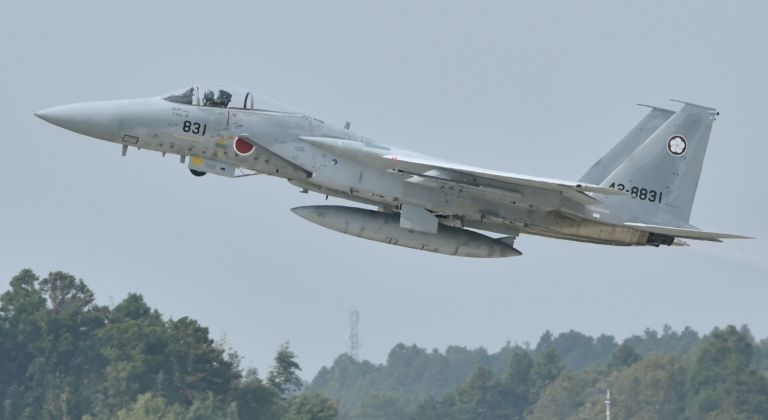
The selection of aircraft for Valiant Shield has highlighted the rapid ageing of the U.S. and Japanese air superiority fleets, primarily as a result of decline in the U.S. defence sector after the end of the Cold War. While the F-15 was one of the world’s most capable air superiority fighters when first introduced into service in the late 1970s, its capabilities, and in particular those of the F-15J variant, are today long past obsolescence. This was recently demonstrated during engagements between the fighters and Chinese People’s Liberation Army Navy J-15B fighters in December 2025, during which Japanese defence planners were reported to have been ‘freaked out’ by the extent of the Chinese ‘4+ generation’ fighters’ superiority. The J-15B is widely considered the most capable pre-fifth generation fighter type in service worldwide, and is expected to have an overwhelming advantage over Cold War era aircraft like the F-15J.
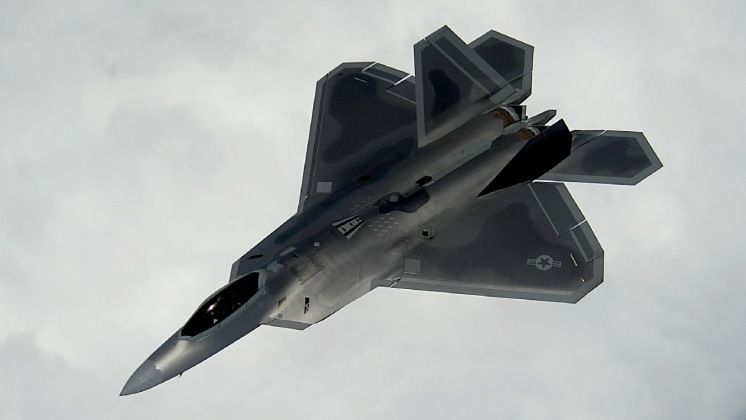
While newer than the F-15J, the F-22 still represents a 1990s technology level that is very far from cutting edge, although this is masked by its service entry date of December 2005 which was the result of major delays and issues with the aircraft. The fighter is by far the least advanced of its generation, with its avionics, data links and sensors all being decades behind those of the F-35 or of modern Chinese fighters like the J-20 or J-35. The F-22 program notably failed to deliver on many of its key goals in including lower maintenance needs and a longer range than the F-15, with its sustainment costs being by far the highest, and its availability rates, the lowest, of any aircraft in the Air Force. This has led the U.S. Air Force to seek to begin retiring the aircraft from service decades early, with the program considered far from successful.
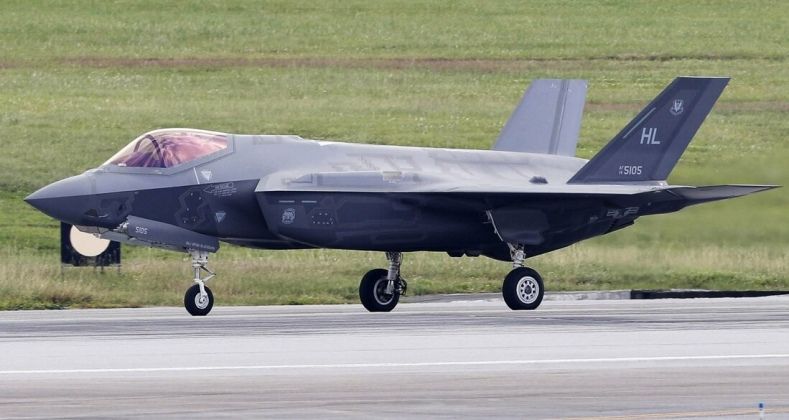
Although the F-22 and F-15J were designed specifically as air superiority fighters, their air-to-air combat capabilities are markedly inferior to the F-35A fighters being procured to equip the air forces of both the U.S. and Japan. The F-35 was developed under the Joint Strike Fighter program with a more limited secondary air-to-air capability, although its vast technological superiority over the F-22 and F-15J has meant that its air-to-air combat potential is still markedly superior. While it is slower and less manoeuvrable, its sensors, data links, and other avionics are considerably more advanced, as are its stealth features, while its maintenance needs are also markedly lower. With the fighter being the only one of its generation in production in the Western world or among Western-aligned states, it is heavily relied on for air-to-air roles despite not being an air superiority fighter.
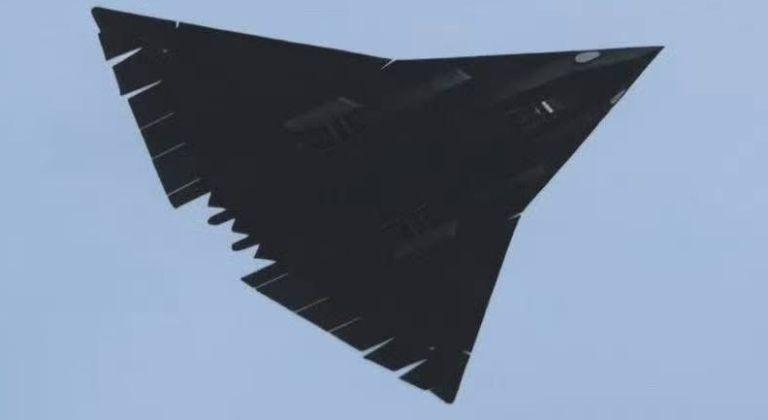
Japan and the United States both face an increasingly unfavourable balance of power in the air, as while the F-35 is considered technologically on par with China’s J-20 and J-35 fifth generation fighters, it is a much smaller and shorter ranged aircraft with a more limited radar size and more constrained flight performance. Not only is China’s air force procuring J-20 and J-35 fighters on a significantly greater sale than the air forces of the U.S. and Japan combined are receiving F-35s, but it is also receiving advanced ‘4+ generation’ fighters such as the J-16 and J-15B at far higher rates, with Japan receiving none at all. Furthermore, China is poised to lead the world by close to a decade in fielding sixth generation fighters, with aircraft from three such programs in flight prototype stages, the heaviest of which is making particularly rapid progress. While the failings of the F-22 program were a major turning point, the rate at which U.S. and Japanese air-to-air combat capabilities continue to diminish relative to those of China is expected to continue to accelerate.
