
New Chinese J-15B Fighters’ Engagement with F-15Js ‘Freaks Out’ Japanese Command
Military Watch Magazine Editorial Staff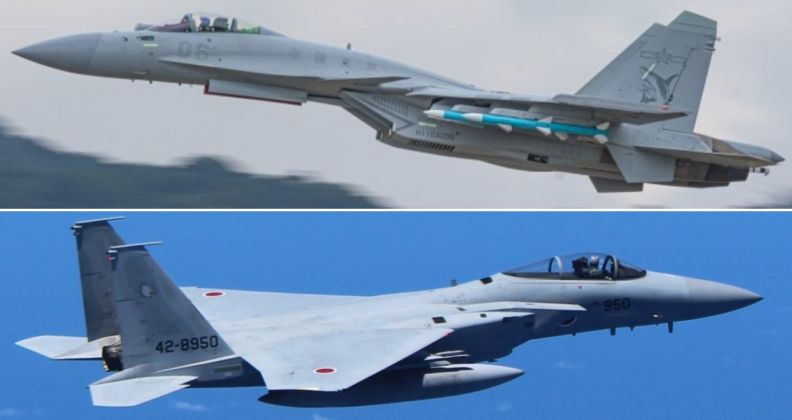
Chinese J-15B/T and Japanese F-15J Fighters
Reports from media outlets based on Taiwan have indicated that the Japanese military leadership has been highly unsettled, to the point of being “freaked out” in the exact words used in one report, by the results of two engagements between Chinese J-15B and Japanese F-15 fighters on December 6. Citing senior Japanese defence sources, it was reported that after J-15Bs operating from the aircraft carrier Liaoning locked onto F-15Js, the American-supplied aircraft’s radar warning receivers were only able to notify pilot of the threat after a weapons lock had already been formed. It was assessed on this basis that in the event of a clash between the two fighter types, the F-15J would have already been close to being destroyed before Japanese pilot had time to react.
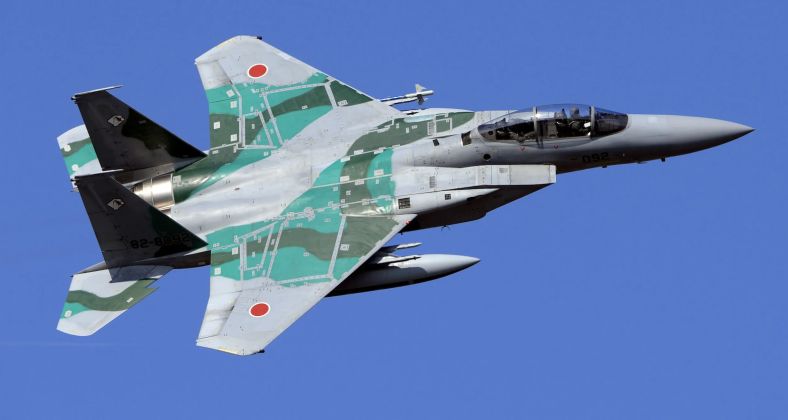
Japanese sources have reportedly observed that the F-15J’s radar can track the J-15B at ranges of around 100 kilometres, while the Chinese fighters are estimated to be able to detect the F-15s at ranges of 170 kilometres at the very least. The incident has thus been described as a “sobering awakening” for the Japanese military apparatus. The F-15J’s radar is considered effectively obsolete, and uses a mechanically scanned array that is not only far from efficient by 21st century standards, but is also highly vulnerable to jamming. This is a particularly significant drawback when facing Chinese carrier groups due to the deployment of the J-15D electronic attack aircraft, which is particularly well optimised for jamming. The J-15B’s active electronically scanned array radar is not only far larger, but also several decades ahead technologically, providing not only a greater detection capability, but also a far higher electronic warfare potential and a lower signature compared to that of the F-15J.
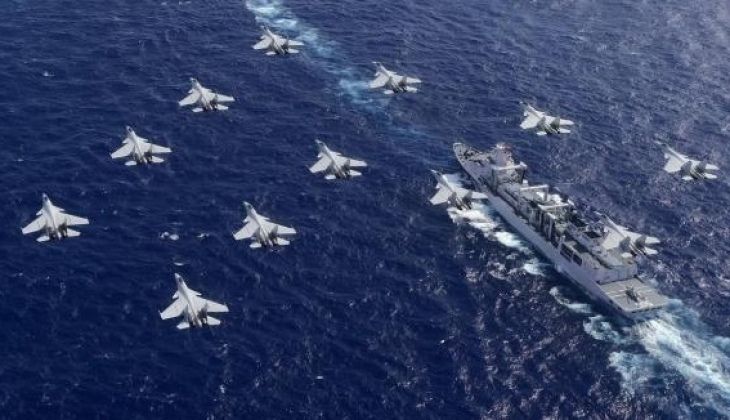
The situation regarding the radar warning receiver on the F-15J has drawn parallels to that faced by Indian Air Force pilots flying Rafale fighters when they were reportedly engaged and destroyed by Chinese-built J-10C fighters in Pakistani service in May. The discrepancy in capabilities favouring the J-15B, however, is significantly greater in East Asia, as while the J-10C and Rafale are fighters of the same generation, the J-15B is technologically close to four decades ahead of the F-15J, and entered service 43 years later in 2024. The Japanese aircraft have served since 1981, and are closely based on the American F-15C/D which joined the fleet in the late 1970s. The J-15B has replaced the baseline J-15 in the air wings of the carriers Liaoning and Shandong, with the older J-15 that joined the fleet in the early 2010s having capabilities much more comparable to those of the F-15.
