
China Will Field 1000 J-20 Long Range Stealth Fighters By 2030 - Royal United Services Institute Reports
Military Watch Magazine Editorial Staff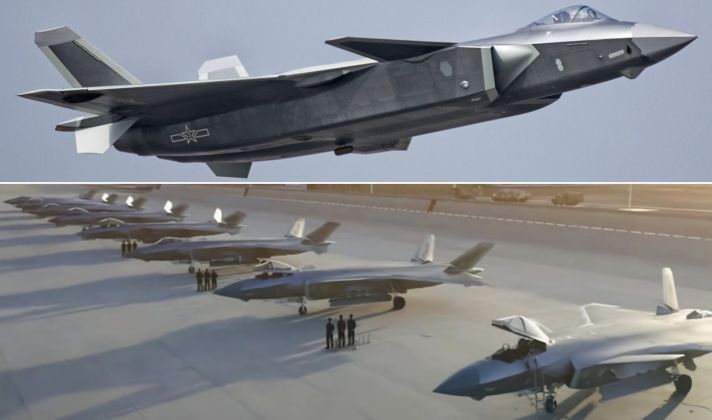
Chinese PLA Air Force J-20 Fighters
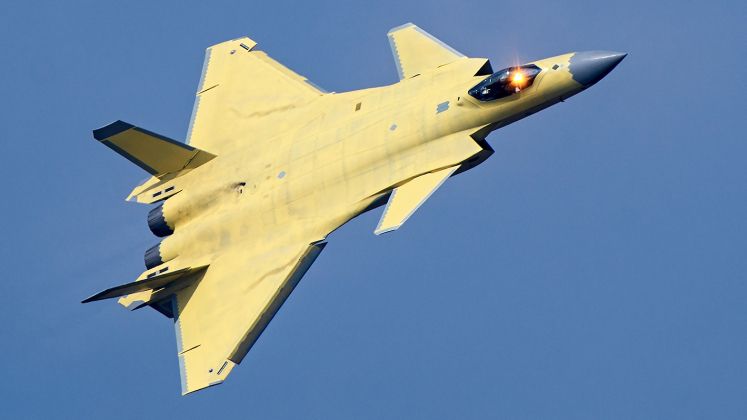
A new report published by the British Royal United Services Institute (RUSI) has estimated that the Chinese People’s Liberation Army Air Force will field approximately 1000 J-20 fifth generation air superiority fighters by 2030, highlighting the major surge in production levels to reach approximately 120 fighters per year in 2025. This followed a similar projection of a production run of over 1000 fighters made by leading expert on the fighter program Abraham Abrams in 2024, in his book China's Stealth Fighter: The J-20 'Mighty Dragon' and the Growing Challenge to Western Air Dominance. The J-20’s production scale is currently in a league of its own alongside the American F-35 and the fourth generation J-16, although unlike the F-35, which is being built to equip over a dozen services around the world, all J-20s are being built exclusively for China’s air force.
The RUSI report particularly emphasised the growing “sophistication and realism of PLAAF [People’s Liberation Army Air Force] and PLANAF [Naval Air Force] regular training has increased, especially in the J-16 and J-20 fleets.” “Aircrew routinely fly complex training and demonstration of force sorties involving fighters, bombers, tankers and AEW&C aircraft, in coordination with each other and with PLAN surface action groups. This is especially noteworthy around Taiwan and in the Sea of Japan,” it observed. The increase in the numbers and capabilities of cutting edge fifth and ‘4+ generation’ fighters is thus being supported by marked training improvements. The assessment also particularly singled out the improvements in air-to-air missile technologies which have at times given Chinese fighter units a significant advantage over their U.S. Air Force counterparts.
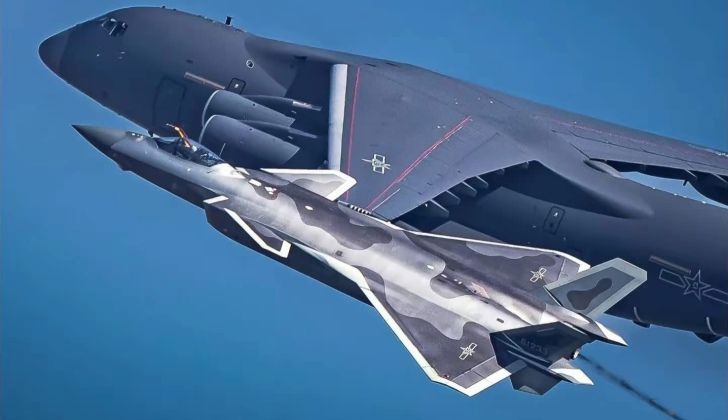
The latest assessments of the J-20’s production run closely coincide with the fifteenth anniversary of its first fight in January 2011, with the fighter’s service entry just six years later being an early indicator that it would proceed far more smoothly in development than its rivals in the United States and Russia. It also closely follows the release of video footage confirming that the first batch of J-20s integrating twin WS-15 next generation turbofan engines had completed serial production in lat December, marking a major milestone that will further expand the fighter’s advantages in flight performance, range, and power for onboard systems over rival Western fighter types. It further coincides with what appears to be one of the most high risk operations in the history of the program, when a fighter appeared to fly over Taiwan Island while evading interception by the Republic of China Air Force, which is technically in a state of civil war with the Chinese People’s Liberation Army.
The rapid expansion of the J-20 fleet has significant implications for the balance of power in the Pacific, and has made the propagation of a Western dominated balance of power appear increasingly unfeasible. The only comparably advanced fighter, the F-35, has been prioritised for deployments in the region both by the United States, and by a growing number of Western Bloc states from Italy to the Netherlands, it is far less well optimised for air-to-air operations with less than half the range, a much smaller missile carrying capacity and radar, and a more conservative flight performance. A long history of serious shortfalls in the F-35’s availability rates, and major delays to ongoing efforts to bring the aircraft to the Block 4 standard which is considered vital for high intensity combat, have further limited the effectiveness of these Western responses. The balance of power in the air is expected to become more favourable for Chinese interests in the early 2030s as the country leads the world to bring the world’s first sixth generation fighters into service, after having begun prototype flight testing several years ahead of the United States in 2024. The entry into production of a sixth generation successor to the J-20 may result in significant reductions or an end to production of the fifth generation fighter type.
