
Chinese J-20 Long Range Stealth Fighter Flies Over Southern Taiwan Undetected in Major Show of Force
Military Watch Magazine Editorial Staff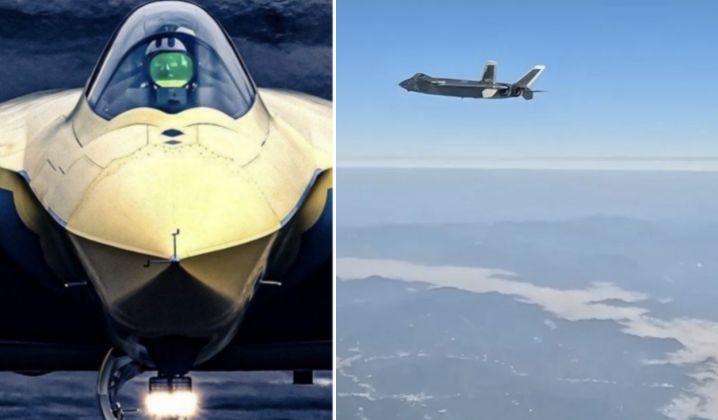
J-20 in Apparent Flight Over Pingtung, Taiwan Island
New footage released b the Chinese People’s Liberation Army Eastern Theatre Command showing the Justice Mission 2025 joint services exercises in late December appears to show a J-20 fifth generation fighter flying close to Pingtung Airbase on Taiwan Island, raising questions regarding the vulnerability of local defences. The base is operated by the Republic of China Air Force, which remains in a state of conflict with the People’s Liberation Army as part of the technically ongoing Chinese Civiil War between the rival Chinese governments in Taipei and Beijing. Although the Republic of China lays claim to all of Chinese territory, which combined with its lack of international recognition makes its airspace difficult to define, the image indicates that the J-20 was operating overland deep inside territory over which it would otherwise be expected to be intercepted.
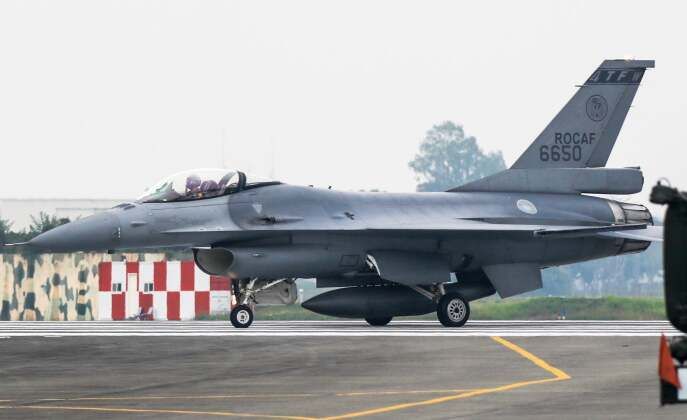
The Republic of China Air Force’s ability to engage advanced fifth generation fighters like the J-20 has long been in serious question. The majority of the service’s fighters use obsolete mechanically scanned array radars which are highly limited in their ability to detect such targets, let alone track or lock onto them. The service begun operating F-16V ‘4+ generation’ fighters in November 2021, after upgrading F-16A/B fighters to this standard and integrating new AN/APG-83 active electrically scanned array radars and modern data links to improve situational awareness. The AN/APG-83 is nevertheless one of the smallest and weakest of its kind, due to the restrictions of the F-16’s radar nose cone as a relatively lightweight fighter. A further limitations remains the AIM-120 air-to-air missiles used by the fighters, which continue to use mechanically scanned array radars for guidance.
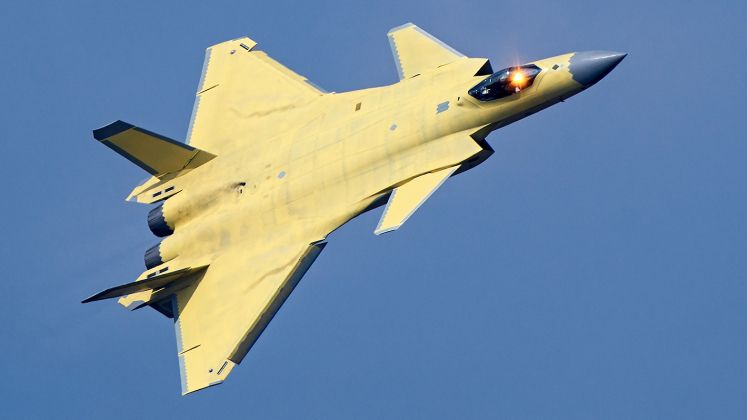
Operating its most capable air superiority fighter deep inside territory supposedly controlled by the Republic of China Armed Forces would represent a major show of force by the People’s Liberation Army, at a time when concerns remain high in Taipei that the mainland’s military advantages are growing increasingly overwhelming. The J-20’s service entry in February 2017, and the rapid modernisation of the design over the following nine years, have represented major turning points in the balance of power in East Asia, with the fighter increasingly widely considered to be the world’s most capable in its air-to-air capabilities. In December it was confirmed that an enhanced new variant of the fighter integrating the WS-15 next generation engine had seen the first batch complete serial production, with the aircraft estimated to have significantly greater thrust than any other tactical combat jet.
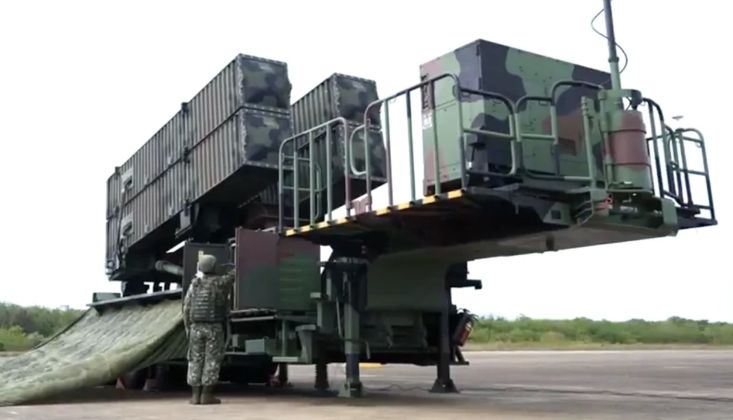
As a result of Taipei’s international status, the Republic of China Ministry of Defence has been unable to procure fifth generation fighter aircraft, with efforts to order the only NATO-compatible fighter of the new generation, the F-35, having consistently been rejected by Washington. The possibility of developing such an aircraft indigenously is currently under consideration, although the limitations of the industrial base and technologies available means it is unlikely to be a peer competitor to mainland Chinese and U.S. fighters. The People’s Liberation Army Air Force is currently projected to lead the world in bringing sixth generation fighters into service in the early 2030s, which will further wide the discrepancy between the two fleets across the Taiwan Strait. The deployment of the J-20 for flights over Taiwan Island represents an important indicator of prevailing power trajectories in the Taiwan Strait, and serves as a warning not only to Taipei, but also to Japan and Western Bloc states which have indicated they may intervene should hostilities resume.
