
Republic of China Air Force F-16V Fighter Crashes After Major Software Issues: Bugs Continue to Hinder Fleet
Military Watch Magazine Editorial Staff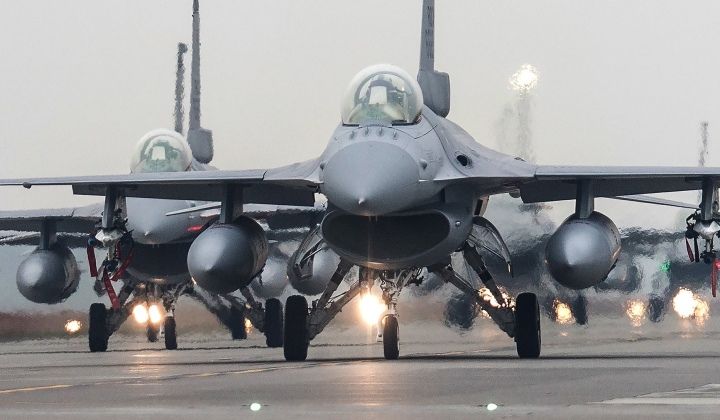
Republic of China Air Force F-16 Fighters
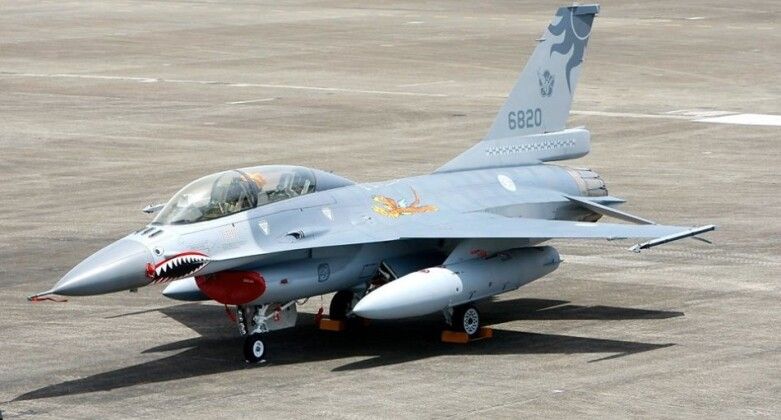
A Republic of China Air Force F-16V fighter crashed during a routine training mission in January 6, after taking off at 6.17pm from Hualien Air Base, marking the latest of several fighter losses by the service to accidents in recent years. The fighter’s mission computer is reported by local media outlets to have malfunctioned, resulting in the spatial disorientation of the pilot, with the mission computer having experienced a similar malfunction a few days prior. Multiple local sources reported that after F-16A/B fighters have been modernised to the F-16V standard, the frequency of mission computer failures increased, often leading to system failures, and at times causing the aircraft to perform unexpected "ghost turns” which place pilots' lives at risk. A whistleblower reporting these software issues also claimed that after the flight control system was updated to version 4.3 in 2024-2025, two incidents occurred at the Chiayi Air Base which saw F-16s perform violent "ghost turns" exceeding roll limits without human control.
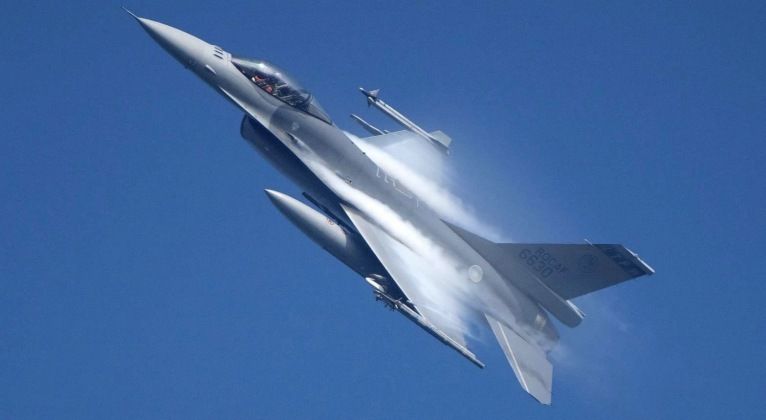
The whistleblower who revealed details regarding malfunctions with the F-16V fighters noted that their radar warning receivers were detecting threat sources in wildly inaccurate directions, rendering the threat response completely unreliable. He confirmed that the failure rate of the aircraft’s mission computers after the upgrades was very high, noting that failures at night or in cloudy conditions "would be extremely dangerous," especially since it would cause all electrical systems to fail, while "even the backup attitude indicator cannot be trusted." The insider said that the unexpected excessive "ghost turns" were not due to pilot G-force induced unconsciousness, but rather a problem with the control stick. He added that a similar incident also occurred last year, but it was not made public.
Major software issues with American fighter aircraft leaving pilots disoriented, or else unable to control their aircraft, have been far from isolate to the Republic of China Air Force F-16 fleet. On October 19, 2022, a near fatal F-35A crash at Hill Air Force Base was caused by a software issue, which left the pilot unable to abort the fighter’s landing sequence as it stopped responding and sharply banked to the left. An F-35 test pilot who observed the incident recalled that the aircraft “looked like a totally normal F-35 before obviously going out of control... When the oscillations were happening, I did see really large flight control surface movements, stabs, trailing edge flaps, rudders all seem to be moving pretty rapidly like, probably at their rate limits, and huge deflections.” The fighter put itself in a position with “virtually no chance of recovering,” he concluded.
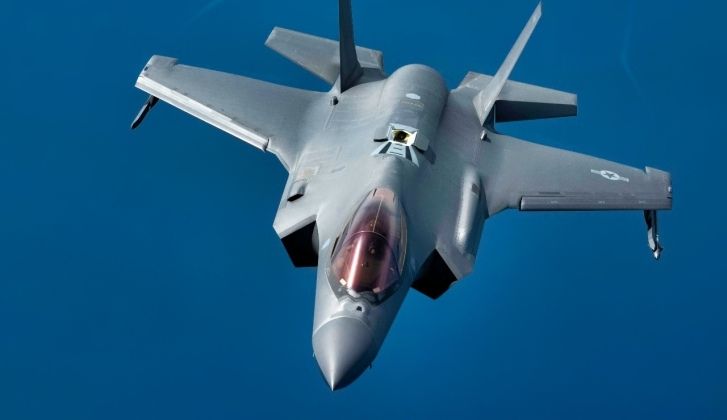
In April 2019 a Japanese F-35 pilot was found to have lost spatial awareness leading him to crash directly into the sea, fuelling widespread speculation of software related issues. The F-16V uses ‘4+ generation’ avionics with many similarities with those of the F-35, with the Republic of China Air Force having begun operating the fighters in November 2021, before receiving the last of 139 F-16A/B fighters upgraded to the new standard in late 2023. Deliveries of F-16 Block 70 fighters, which use very similar software and avionics, has faced repeated and consistent delays due to manufacturing issues in the United States. The Republic of China remains in a state of civil war with the People’s Republic of China on the Chinese mainland, and lacks international recognition a claimant to sovereignty over the Chinese nation. Its status as an effective non-state actor has made it highly challenging to procure armaments abroad, with the F-16 being the only fighter that has been offered, while efforts to procure the F-35 have been rebuffed for over two decades.
