
First Chinese J-20 Stealth Fighters With Long Awaited WS-15 Next Generation Engines Complete Serial Production
Military Watch Magazine Editorial Staff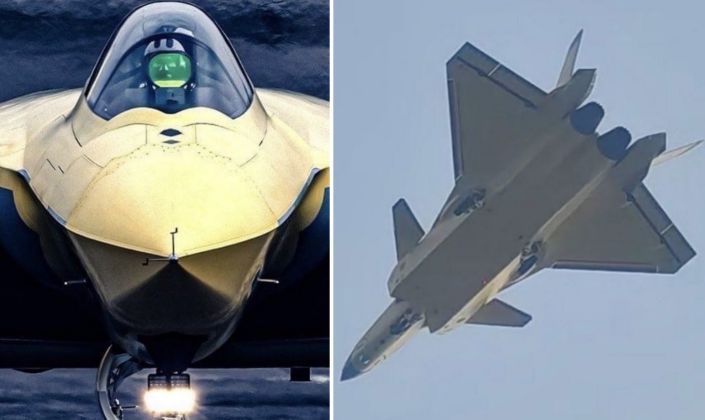
J-20 Fighter and Serial Production J-20 with WS-15 Engines
New video footage has for the first time confirmed that the first batch of J-20 fifth generation air superiority fighters integrating twin WS-15 turbofan engines has completed serial production, marking a major milestone in China’s most high profile fighter program. The first flight of a serial production aircraft with the engines reportedly took place on December 27. The WS-15 is one of the most sophisticated fighter engines in production anywhere in the world, with a reported weight to thrust to weight ratio rivalled only by the F135 powering the F-35 fifth generation fighter among known engine types. This represents a significantly higher level of efficiency than the F119 powering the Western world’s only twin engine stealth fighter the F-22, and than new Russian fifth generation engines.
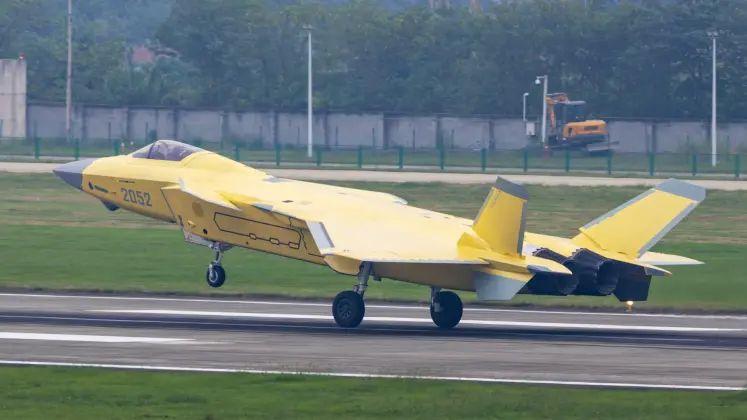
The WS-15 was first seen integrated onto the J-20 in single configuration for a test flight in January 2022, and was subsequently first flown in twin configuration in June 2023. The engine significantly improves all aspects of the J-20’s flight performance, as well as its range, while providing greater power to onboard subsystems and reducing maintenance requirements. The new engine’s integration onto serial production aircraft represents a major achievement for the Chinese fighter engine industry, which just two decades prior in the mid-2000s was still unable to produce engines on par with those powering U.S. and Soviet Cold War era fourth generation fighters such a the F110 and AL-31F. Rapid progress in development has placed China in a league of its own alongside the United States in the sophistication of its fighter engines.
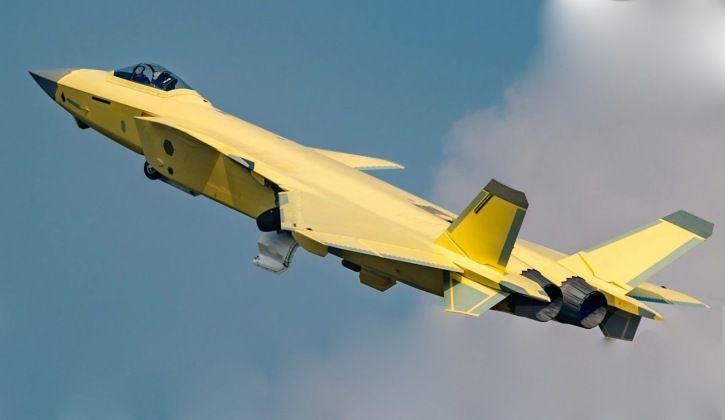
Commenting on the new engine, leading expert on the J-20 program Abraham Abrams observed in his recent book J-20 Mighty Dragon that compared to WS-10C that powered J-20s from previous batches, the WS-15 boasts a “much higher thrust/weight ratio estimated at 10:1 or 11:1, require less maintenance, improve thermal management properties, and have a significantly longer service life. Its cutting-edge single- crystal turbine blades, although proving particularly difficult to mass produce, were expected to almost double the engine’s lifespan compared to the WS-10B while significantly lowering maintenance needs.” The integration of the new engine has been achieved in parallel to broader modernisation of the J-20, including the integration of new missile types, updating of its avionics, and refining of its airframe design to further reduce its radar cross section.
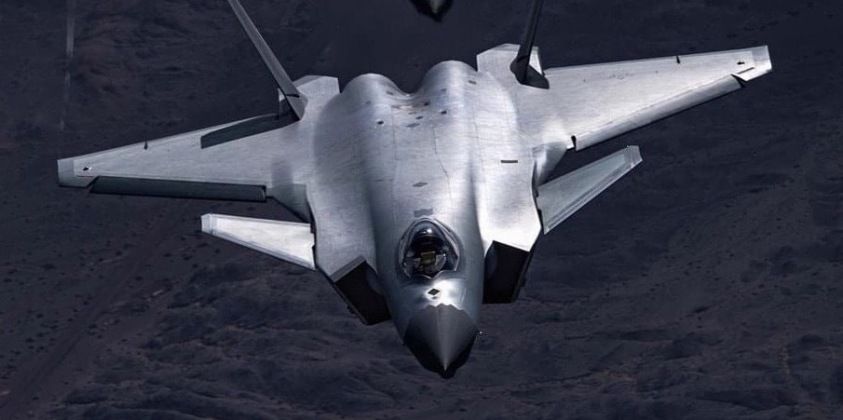
A primary challenge in the later stage of the development of the WS-15 was ensuring sufficient quality during mass production of its single crystal superalloy turbine blades and its powder metallurgy superalloy turbine disks. With these production challenges addressed, the WS-15 and its future enhanced derivatives are expected to remain in production for several decades. The use of the WS-15 as a basis to develop future fighter engines would be far from unprecedented, and would mirror the case for the United States’ own first fifth generation engine, the F119, which was developed into the larger, more efficient and more powerful F135. The F135, in turn, is currently being developed into a further enhanced variant under the Engine Core Upgrade program.
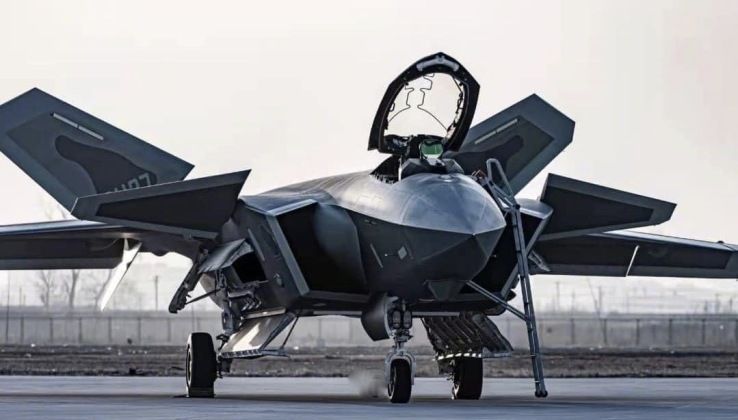
Enhanced derivatives of the WS-15 may be relied on to power early sixth generation fighters as these begin to be brought into service in the early 2030s. There has been some speculation that the engine could also be relied on to power advanced fourth generation fighters such as the J-16 and new carrier based J-15B, reducing sustainment costs and improving flight performance. A further uncertainty remains whether the WS-15 may be used to eventually re-engine older J-20 fighters to improve their performances as part of future upgrade packages, which would likely not only improve performance, but also lower maintenance needs and sustainment costs. While much regarding the future of the WS-15 program remains uncertain, the new engine’s successful development and operationalisation opens up a wide range of new possibilities for the future of the Chinese fighter industry.
