
China’s Ultra-Long Range Sixth Generation Fighter Program Marks Major Milestone With Third Flight Prototype
Military Watch Magazine Editorial Staff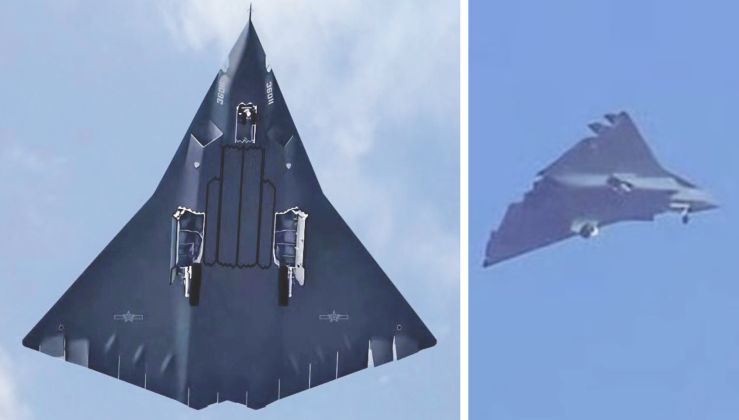
Chengdu Sixth Generation Fighter First and Third Prototypes
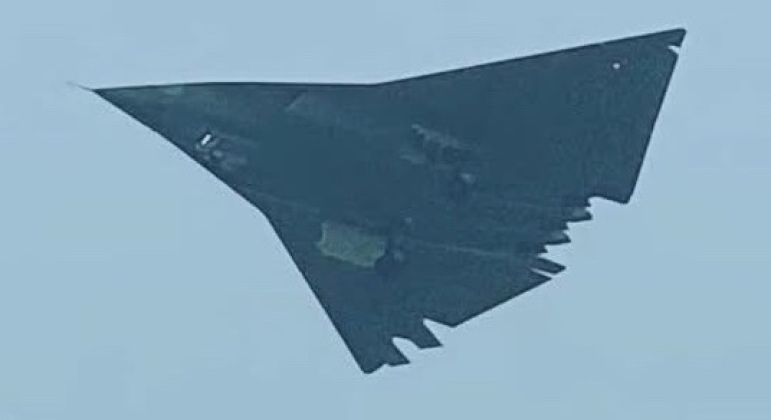
The Chengdu Aircraft Corporation has made significant further progress in the development of a very heavy ultra long range sixth generation fighter, bringing the program’s third flight prototype into flight testing. Images showed the aircraft in flight alongside a J-10C fighter on December 25, with the prototype having visible differences from its two predecessors signalling continued evolution and refinement of the design. This followed the first known flight of the preceding two prototypes in formation close to ten days prior, and closely coincided with the one year anniversary of the aircraft’s unveiling on December 26, 2024, as the first sixth generation fighter type ever seen anywhere in the world. A second sixth generation fighter type developed by the Shenyang Aircraft Corporation was also revealed on that day to be in flight testing, and is a more regular sized heavyweight fighter with comparable dimensions to the J-20 fifth generation air superiority fighter currently in service.
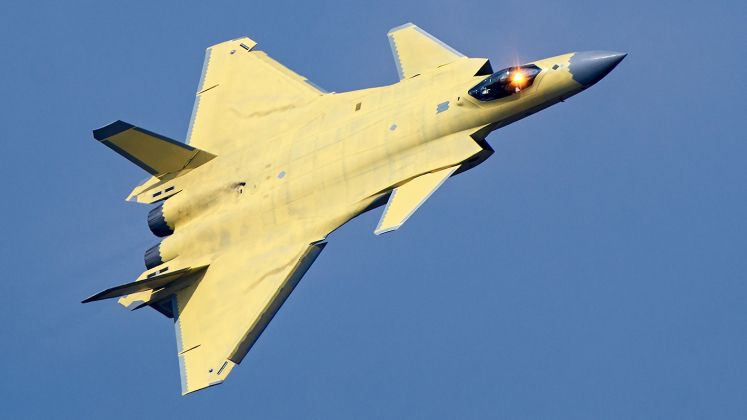
The progress of Chengdu’s sixth generation fighter program to a third flight test airframe may be a major landmark in its development, much as was the case for the preceding J-20. Where the J-20’s first two flight test airframes were demonstrators, the third was a full prototype that was more representative of the final design, and made its first flight in October 2012, 21 months after the first demonstrator airframe’s flight in January 2011. The third J-20 airframe differed significantly from the two demonstrators, with notable changes included redesigned air intakes, a reshaped canopy, an additional inner frame and an Electro-Optical Targeting System (EOTS), the addition of stealth coatings, a retractable aerial refuelling probe, re-profiled vertical stabilisers, smaller underwing actuators, enlarged tail booms housing additional electronic warfare/electronic countermeasures, and self-defence systems such as chaff and flare dispensers. It is highly possible that the third flight test airframe of the sixth generation fighter has marked a similarly landmark in the maturing of the design.
Although images of the third flight prototype of the new sixth generation fighter are not clear, notable variants include its air intakes, engine exhaust nozzles, and landing gear structures. The Chinese program is considered at least three to four years ahead of the rival F-47 sixth generation fighter under development for the U.S. Air Force, which is intended to make its first flight only in 2028, and is projected to enter service in the latter half of the 2030s. The Chinese aircraft is expected to enter service closer to the beginning of the decade. The new aircraft’s range is expected to be entirely in a league of its own with a combat radius exceeding 4000 kilometres, with its combination of advanced stealth capabilities, a particularly large radar, and a high weapons carrying capacity allowing it to operate unsupported and seriously threaten hostile Western Bloc aircraft across the western and mid-Pacific.
