
The F-35 Urgently Needs a New Engine: The Engine Core Upgrade Program’s Design Review Highlights Why
Military Watch Magazine Editorial Staff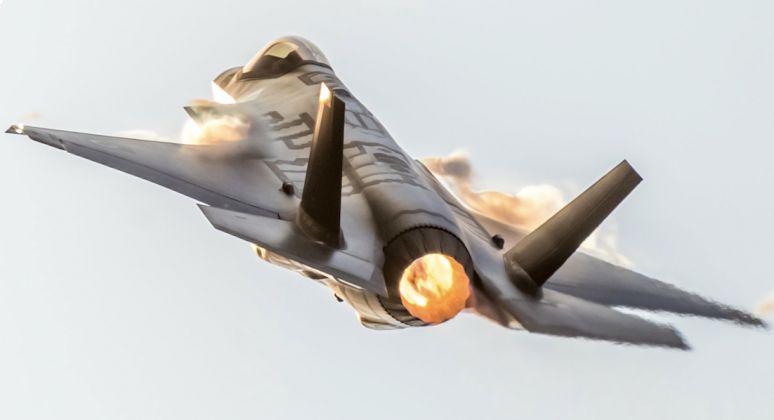
F-35 Powered by F135 Engine
An enhanced variant of the Pratt & Whitney F135 engine was confirmed on July 16 to have successfully completed the preliminary design review, placing it on schedule to be integrated on to future variants of the F-35 fifth generation fighter before 2030. Developed under the Engine Core Upgrade program, the powerplant was developed as an alternative to work on the Adaptive Engine Transition Program which had been intended to provide a clean sheet new powerplant for the F-35 with revolutionary new capabilities. The much more conservative Engine Core Upgrade program will provide far less ambitious specifications, lacking key features such as a “third stream” of bypass air system for greater efficiency and cooling and an adaptive cycle intended to significantly increase thrust and endurance. Benefits of the Engine Core Upgrade, however, include a much lower development cost than developing and entirely new engine, as well as commonality of maintenance with the several hundred baseline F135s already built. Where the Adaptive Engine Transition Program was expected to only be compatible with the Air Force and Navy’s F-35A and F-35C models, the enhanced F135 developed under the Engine Core Upgrade program will also be compatible with the Marine Corps’ F-35B.
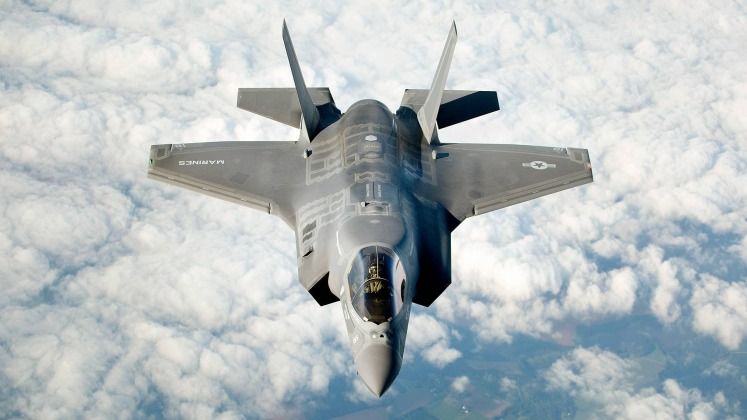
A new engine for the F-35 is considered an urgent priority for multiple reasons, among them the aircraft’s perceived wholly insufficient range and flight performance for operations over the Pacific. The only closely competing fifth generation fighter, the Chinese J-20, has over double the range and overwhelming superiority in all aspects of its flight performance, with its thrust/weight ratio set to be further improved through integration of the WS-15 engine. Perhaps more pressingly still, the F135 is already working at over double its intended cooling capacity at 30 kilowatts, where it was designed to provide just 15, forcing it to pull more bleed air from the engine to run through heat exchangers. This is set to become totally unfeasible as the upcoming Block 4 upgrade for F-35s across the fleet will raise requirements to 47 kilowatts or more. If not addressed, this cooling deficit is expected to cause $38 billion of additional costs for the Pentagon over the F-35’s lifetime, including greater maintenance needs and a much faster wearing out of the engines.
