
China’s First Stealth Fighter First Flew 15 Years Ago: How the J-20 Program Started a New Era of Competition For Air Dominance
Military Watch Magazine Editorial Staff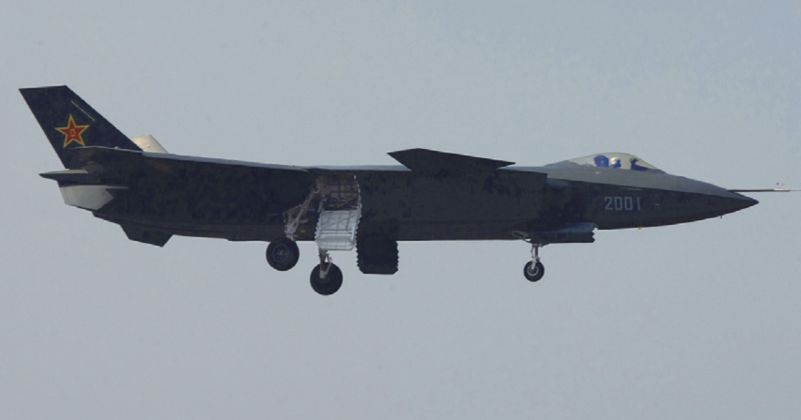
J-20 First Flight Demonstrator (No. 2001)
January 11, 2026, marks 15 years since the maiden flight of the J-20 fifth generation fighter, which represents one of the most significant milestones in the country’s emergence as one of the world’s two industry leaders in fighter aviation. The J-20’s first flight in early 2011 was wholly unanticipated among Western analysts, with China having introduced its first fully indigenous fourth generation fighter, the J-10, into service just five years prior. The J-20 would enter service just six years later in February 2017 as the world’s first stealth fighter developed outside the United States, which compared highly favourably to the fifteen to sixteen years required to bring its American rivals the F-22 and F-35 into service after beginning flight testing. Although the F-35 first flew eleven years before the J-20, it was brought into service in the U.S. Air Force just months before its Chinese rival, with the discrepancy in how quickly the two defence sectors could bring aircraft to operational readiness allowing China to rapidly bridge capability gaps in its fleet.
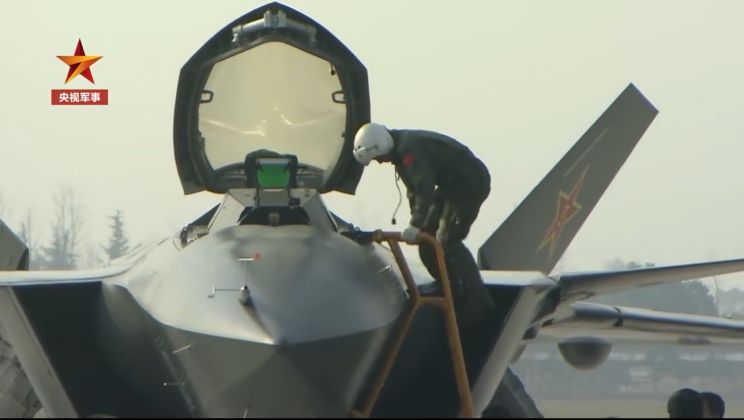
The J-20 began development in the mid-1990s, with the disintegration of the Soviet Union in 1991 and subsequent severe decline of the Russian economy, tech sector, and fighter aviation industry having by then made it clear that the Chinese People’s Liberation Army Air Force could not continue to rely on Russian aircraft to retain qualitative parity with the United States. Thus while the Soviet Su-27 fourth generation air superiority fighters that had begun deliveries in late 1991 were widely assessed to have superiority over the American F-15, the Soviet program to develop a successor to the Su-27, which was intended to outperform what later became the F-22, quickly saw development stall in post-Soviet Russia before coming to a complete halt.
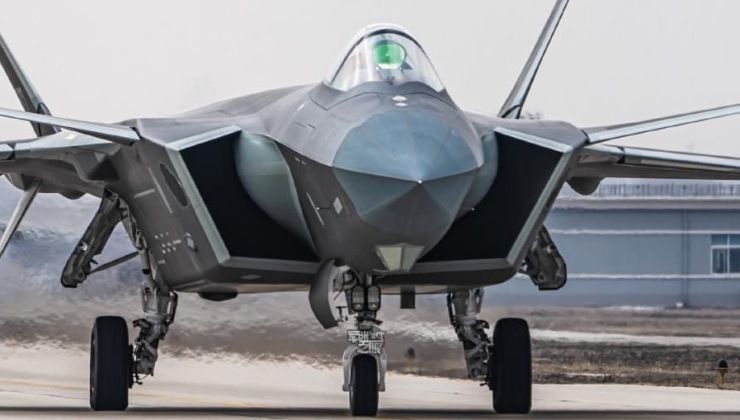
The advances pioneered by the J-20 program allowed China to rapidly reduce its reliance on Russian fighter aircraft from the early 2000s, and moreso from the mid-2010s, as the ‘4+ generation’ J-10C and J-16 fighters began to be brought into service. These used similarly advanced avionics, composite materials and weaponry to the new fifth generation aircraft. The J-20 would itself see its capabilities rapidly improved, with aircraft operationalised from 2021 integrating enhanced WS-10C engines, before the first aircraft with next generation WS-15 engines completed serial production in late 2025. Its avionics, stealth coatings, and airframe shape would also be improved significantly over time. The program’s technologies would also be used to facilitate the smooth and low cost development of a lighter fifth generation fighter type, the J-35, which joined both the Navy and the Air Force in 2025.
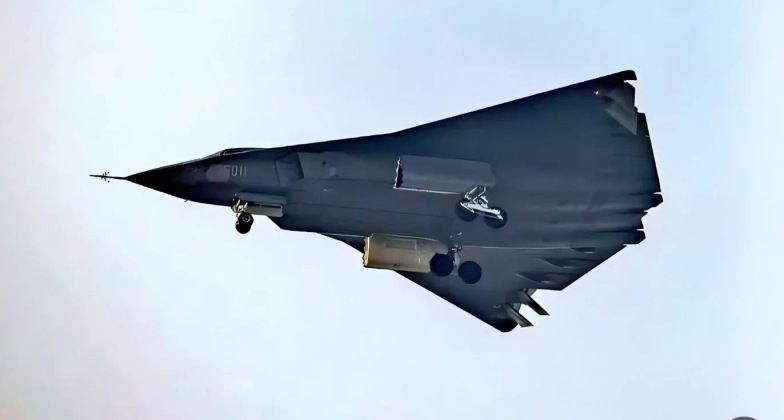
As of 2026 the J-20 and J-35 remain two of just three advanced fifth generation fighters in serial production in the world, alongside the American F-35, with the J-20 being procured at higher rates by the People’s Liberation Army Air Force than any other fighter type in the world is by any other single service. The full significance of the J-20 program’s successes as a milestone for the Chinese fighter aviation industry are only becoming fully apparent in the mid-late 2020s, as not only have the aircraft very drastically shifted the balance of power in the air in East Asia, but the program has also placed the Chinese industrial base and tech sector in a highly advantageous position to lead the world in the development of sixth generation fighters. The world’s first two fifth generation fighter programs reached flight demonstrator stages in December 2024, both in China, while a third did so in 2025, with the largest and most unique of these developed by the Chengdu Aircraft Corporation that was responsible for the J-20. This has placed China at least four years ahead of the United States in flight testing, and is expected to place it over half a decade ahead in bringing such aircraft into service.
