
Two New Chinese J-35A Fifth Generation Fighters Unveiled as Serial Production Accelerates
Military Watch Magazine Editorial Staff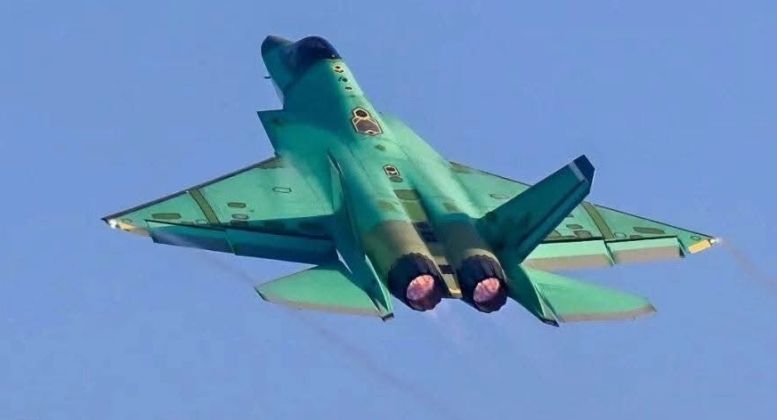
Newly Produced Chinese J-35A Fifth Generation Fighter
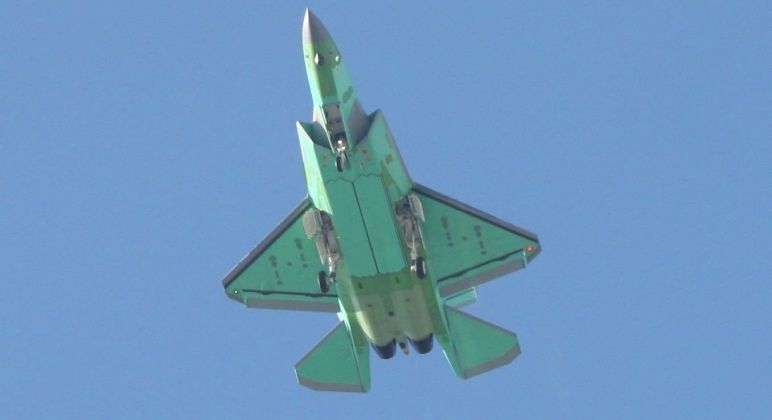
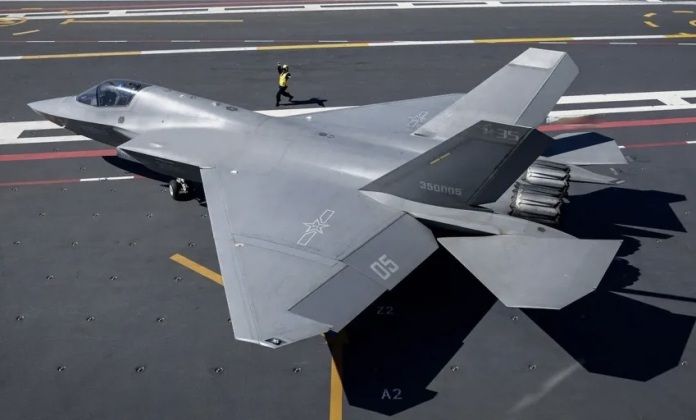
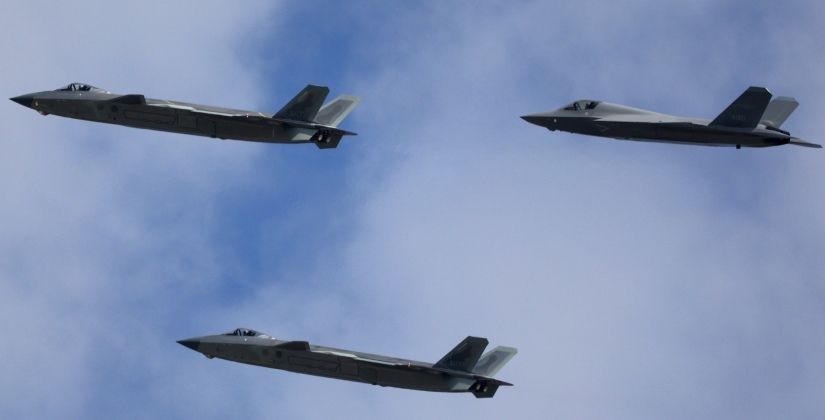
The Shenyang Aircraft Corporation has conducted the first known joint flight of two newly produced J-35 fifth generation fighter aircraft, following the type’s confirmed entry into frontline service in 2025. The flight took place near the corporation’s production complex in Liaoning Province, with dual-aircraft operational testing providing further confirmation that serial production is underway. The J-35 was developed under a joint program between the Chinese People’s Liberation Army Air Force and the Navy, with the J-35A variant seen in the latest footage fielded by the former service, while the baseline J-35 was designed to operate from supercarriers such as the new warship Fujian. The J-35 is the second fighter type of its generation to enter service, following the larger and longer ranged J-20 air superiority fighter which was confirmed to have joined the Air Force more than eight years earlier in February 2017.
Both the Air Force and the Navy were confirmed to have begun fielding the J-35 in July, before variants in both services took place in a major military parade on September 3. The fighter program has benefited from significant research and development work done for the J-20 program from the late 1990s, with this aircraft having seen its stealth capabilities incrementally improved since it first entered service. In December it was confirmed that the first batch had completed production with WS-15 next generation engines. In September Chinese state media revealed that the radar cross section of the J-35 was smaller than a human palm, roughly that of a sparrow, which was credited to its special fuselage design and metamaterial technologies. Its stealth capabilities are thought to be comparable to those of newer production batches of the J-20 and F-35, and significantly superior to those of the older F-22 and Russian Su-57.
State media sources have also revealed that the J-35 has a maximum takeoff weight of close to 30 tons, placing it at the upper end of medium weight fighters in terms of its size, only slightly smaller than the F-22 and significantly larger than its closest foreign rival the F-35. This has strengthened the consensus among analysts that the new fighter’s operational costs are likely significantly lower than those of the heavier J-20, which is likely to have been a primary factor in the Air Force’s interest in the aircraft. It remains uncertain on what scale the fighters will be procured, with the Navy fielding only a small fighter fleet which limits its ability to absorb significant numbers of J-35s, while the Air Force is already rapidly procuring the J-20, J-16 and J-10C in parallel. With China poised to be the world’s first to field sixth generation fighters in the early 2030s, there remains a possibility that the J-35 may not be procured in large numbers due to competition from both these newer more advanced aircraft, and from the J-20.
In December 2025 the annual report by the U.S. Department of Defence to Congress on Chinese military capabilities singled out the J-35 for its potential to provide the Chinese fighter aviation industry with a much more dominant position on export markets. Not only does the fighter have a significantly longer range, greater flight performance, and more powerful radar than the F-35, but it is also marketed with far less controls over how it can be used, where F-35 clients other than Israel and the United Kingdom are all very seriously restricted. Nevertheless, the United States and its Western allies’ significant ability to exert potential and economic pressure on countries across the world to influence their arms procurement decisions are expected to remain a primary factor limiting the J-35’s ability to gain market share. Leading potential clients may include Algeria, Egypt, Pakistan, Thailand, and Indonesia.
