
F-35 Availability Rates Remain Staggeringly Low as Maintenance Issues Persist: DoD Watchdog Blames Lockheed Martin
Military Watch Magazine Editorial Staff
F-35 Fifth Generation Fighter
The U.S. Armed Forces’ fleets of F-35 fifth generation fighter aircraft operated by the Air Force, Marines, and Navy have continued to suffer low availably rates, which the Defense Department’s Office of the Inspector General’s latest report revealed remained at just 50 percent. Published on December 19, the report observed that although “the aircraft were not available to fly half of the time,” and the maintenance issues meant they didn’t meet “minimum military service requirements,” the Pentagon still paid the fighter’s primary contractor, Lockheed Martin, $1.7 billion without any economic adjustment. The report highlighted that the Pentagon “did not consistently hold Lockheed Martin accountable for poor performance related to F-35 sustainment,” for which the firm is responsible under existing contracts.
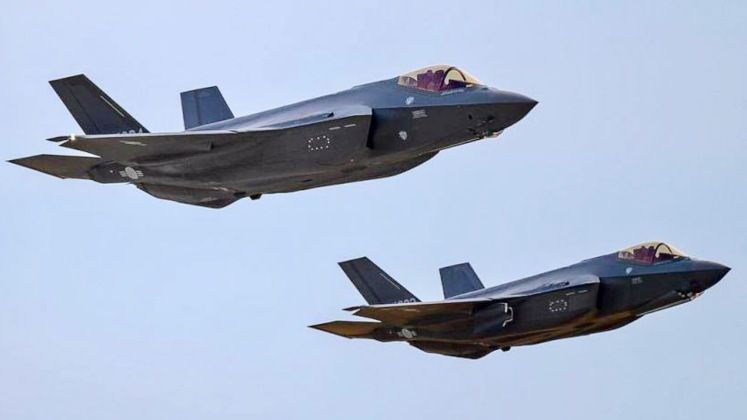
The F-35’s low availably rates and outstandingly high maintenance needs and sustainment costs have continued to attract considerable criticism, as pledges to improve them have consistently fallen far short of success. Availability rates of only around 50 percent are particularly outstanding when considering that the F-35 is the newest fighter type in the American fleet, with Cold War era F-15 and F-16 fleets having been kept available at far higher rates despite despite decades more wear on their airframes. This indicates that F-35 availability rates could fall significantly lower, possibly to around 35 percent, as the fleet starts to age and maintenance needs rise. The F-35’s relatively short airframe lifetime of just 8000 hours, compared to 20,000 hours for the new F-15EX fighter, makes it particularly prone to seeing maintenance requirements and sustainment costs rise significantly over its lifetime.
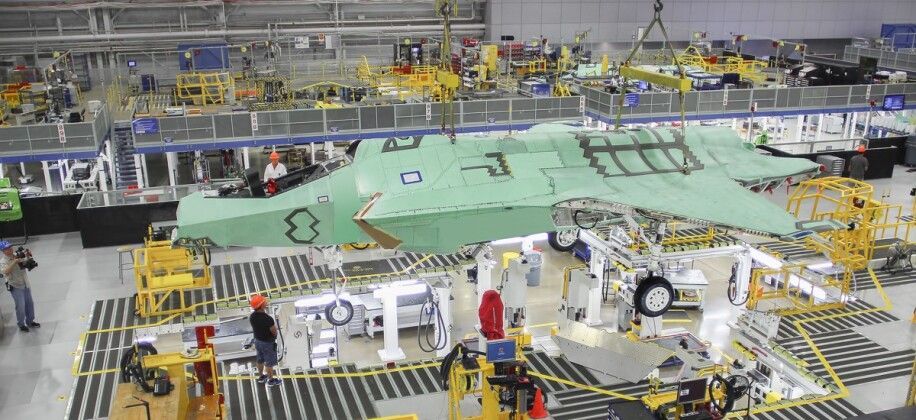
Pentagon reports have repeatedly highlighted that the F-35 suffers from poor reliability, and that its high operational costs could make it unaffordable in the numbers initially expected to be purchased. Previously commenting on the F-35’s low availability rates in September 2023, Chairman of the House Armed Services subcommittee on tactical air and land forces Rob Wittman stated that Capitol Hill’s patience for Lockheed Martin’s handling of the issue was “at the very end of what would be reasonable.” Referring to recent findings on the aircraft’s availability rates as “deeply concerning,” he exclaimed: “It’s a new aircraft — why is it at 55%?,” which was the figure for fleet availability at the time. With the life cycle costs of all planned and current F-35s combined expected to cost the Pentagon $1.3 trillion, the U.S. Air Force has been seriously considering deep cuts to planned orders for the aircraft. Issues with the F-35’s F135 engine have been one of the leading drivers of low availability rates.
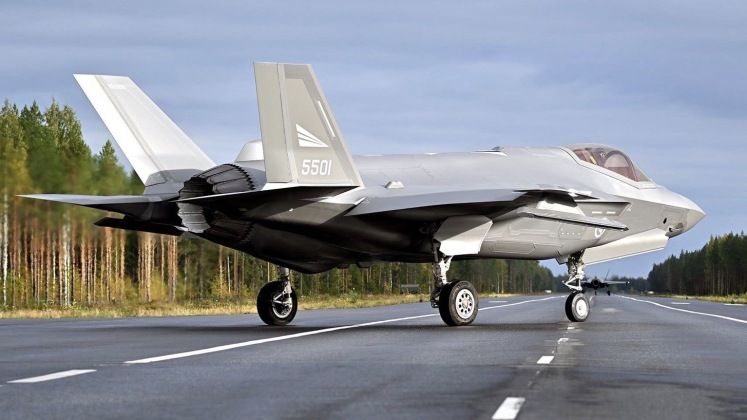
Although the F-35 has long suffered from a wide range significant shortcomings, the lack of any similarly advanced fighter types in production in the Western world has ensured the program has a total monopoly on supplying NATO-compatible fifth generation tactical combat jets. The fighter has, despite all drawbacks, retained overwhelming superiority over all other Western fighter types with the partial exception of the new ‘4+ generation’ F-15EX. The program’s future has become increasingly uncertain, however, as both China and the United States appear poised bring their first sixth generation fighters into service in the 2030s, with Lockheed Martin’s stock value notably having suffered after China unveiled its first sixth generation fighters in December 2024, specifically due to the highly possibility that this would reduce demand for the F-35 as it is left a generation behind. The Pentagon halved planned procurements of the fighters for 2026, and will continue to procure the aircraft at much reduced rates for the remainder of the decade.

A recent primary issue with the F-35 program has been the mounting delays impeding efforts to modernise the aircraft to the Block 4 standard, despite significant reductions to the scope of upgrades that have amounted to a ‘watering down’ of Block 4 requirements. This follows a long history of watering down performance requirements to reduce the extend of delays. An audit of the program by the Government Accountability Office in September found that Block 4 now will “have fewer capabilities, will experience schedule delays, and will have unknown costs,” and that “Block 4 will now consist of “a subset of the original 66 … capabilities and those added in later years.” These delays come at a time when advances in Chinese air power have made the enhancement of the F-35’s capabilities an increasingly urgent priority.
