
Major Cuts to F-35 Orders Under Consideration: Air Force Chief Wants a Simpler ‘4+ Generation’ Fighter to Replace It
Military Watch Magazine Editorial Staff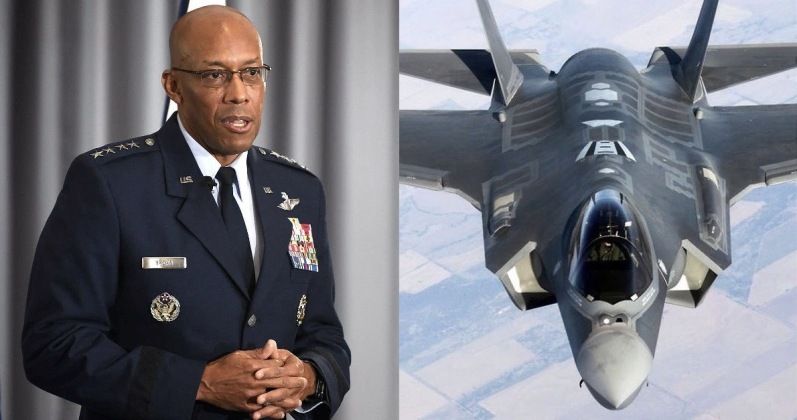
Chief of Staff Charles Brown Jr. and F-35
USAF
Since long before its entry into service the F-35 fifth generation single engine fighter has been the subject of considerable controversy, and has been harshly criticised over the years by several officials from the previous Defence Secretary Christopher C. Miller to Senate Armed Services Committee Chairman John McCain and Pentagon’s chief weapons tester Michael Gilmore among many others. With the fighter suffering very low availability rates and multiple serious performance issues, still far from combat ready and having yet to pass tests set by the Pentagon which would approve it for mass production, despite having entered service over five years ago, the possibility of a dialling back of American investment in the program has increasingly been raised. Recently proposed cuts to F-35A orders by the U.S. Air Force would entail reducing the planned fleet size from 1,763 aircraft to 1,050 or less - a decline of over 40%. The Air Force has simultaneously considered making orders for the ageing but reliable and non-complex F-16 Fighting Falcon to serve in place of the F-35s, although the Falcons will have been flying for fifty years before the first new deliveries are made if the service proceeds with the order.
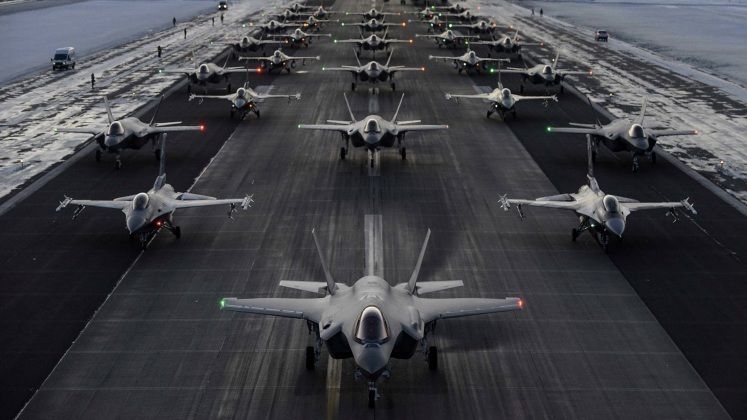
Caught between a very troubled and extremely high maintenance F-35, and an ageing F-16 which has increasingly been referred to as obsolete both in the U.S. and abroad, the Air Force Chief of Staff General Charles Q. Brown Jr. has called for the development of an entirely new class of lightweight single engine fighter which would be cheaper and simpler than the F-35 but more modern than the F-16. He referred to this as a “four-and-a-half-gen or fifth-gen-minus” fighter. “This will help inform the decisions that I think I need to make internal to the Air Force, and what I would recommend that force mix might be,” he stated. “Now, I will also tell you I don’t think that everybody’s going to exactly agree with what I say. But I want to actually have a starting point as a point of departure, a point of dialogue.” Brown has opposed further acquisitions of the F-16, highlighting among other things its lack of open architecture software protocols that would allow it to be rapidly reconfigured and the fighter's inability to receive software updates sufficiently quickly. He referred to the new fighter the Air Force needed as “something new and different, that’s not the F-16 — that has some of those capabilities but gets there faster and uses some of our digital approach.”
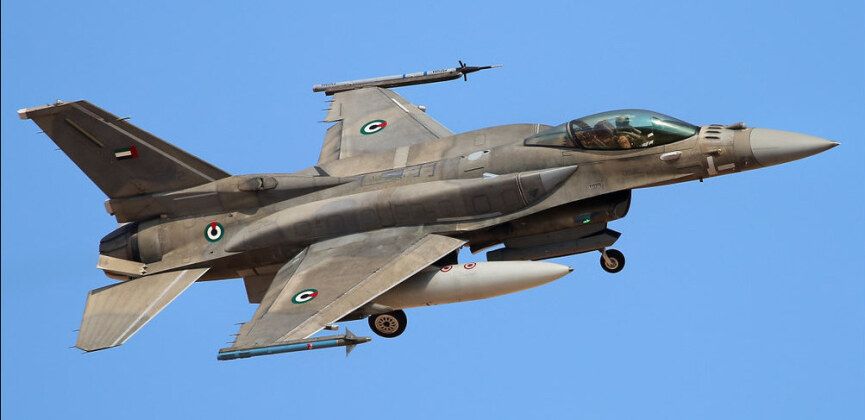
China and Russia have notably invested heavily in developing ‘4++ generation’ fighters to field alongside their fifth generation aircraft - with China’s J-10C built to serve as a lighter, cheaper and easier to maintain counterpart to its J-20 fifth generation jet being a key example. One major reason for cutting back on orders for the F-35, which was highlighted as a major issue by Pentagon officials in the past, was that the fighter’s maintenance requirements and operational costs were excessively high and far greater than the design was originally intended to have. While the operational costs of the F-16 are around $7,700 per hour, those of the F-35 are around $31,000 meaning replacing F-16s with F-35s will not be affordable. A new ‘4+ generation’ American fighter, possibly built around the F-16’s F110 engine but using a newer design with more armaments and stealth features, could provide a more practical replacement. If successful, the aircraft’s induction could also lead to further cuts to planned F-35 purchases.
