
Why the U.S. Air Force Plans to Buy a 50 Year Old Fighter Jet: F-16 Orders Scheduled for 2023
Military Watch Magazine Editorial Staff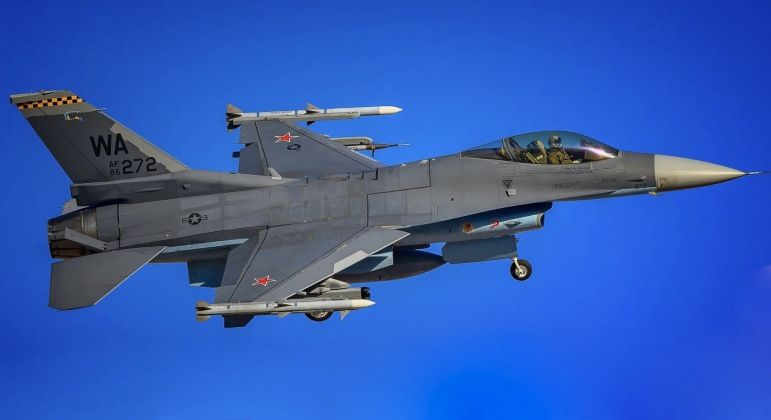
F-16 Fighting Falcon
Former Assistant Secretary of the United States Air Force for Acquisition, Technology, and Logistics, Will Roper, has revealed that the service is considering purchasing more F-16 Fighting Falcon combat jets to modernise its fleet. This wholly unexpected development comes as the Air Force plans for its Fiscal Year 2023 budget request. The F-16 is the lightest and cheapest American fighter produced in the last 30 years, and was designed in the 1970s to serve as a lighter and cheaper counterpart to the F-15. The aircraft conducted its first flight in 1974 and first entered service in the U.S. Air Force in 1978. If ordered in 2023 then deliveries are expected to begin the following year - a full 50 years after the aircraft first took to the skies. The fighter is prized for its very low operational cost of approximately $7,700 per hour - compared to approximately $29,000 for the F-15, $31,000 for the F-35A and over $60,000 for the F-22. Despite its age, changes to the design have been conservative with the jet using the same airframe design and the same engine and retaining the same high radar cross section that it had decades ago.
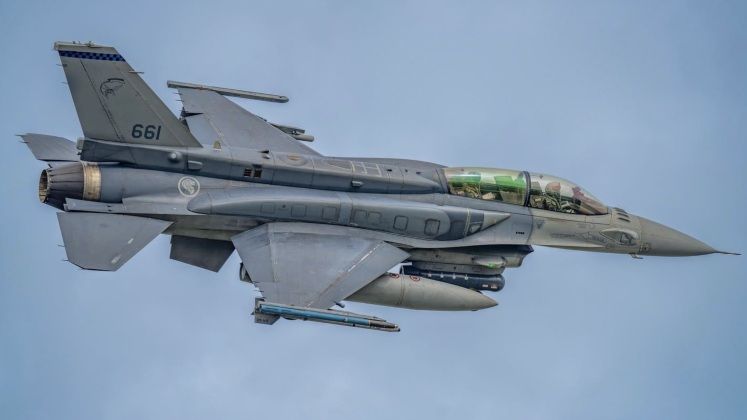
F-16s currently in production are of the F-16V variant - a relatively conservative upgrade to the Fighting Falcon design which nevertheless meets the Air Force’s need for a versatile and reliable low cost jet. The F-16V does not have an expanded weapons payload as the proposed F-21 variant does, does not use a high composite airframe as the F-2 derivative does, and does not use an enhanced engine for improved flight performance as the F-16E does. The aircraft is neverthless cheaper to manufacture than any of these, and boasts internal changes including the integration of an AESA radar for greater situational awareness as well as new avionics and electronic warfare systems. At a time when the U.S. Air Force continues to fail to meet combat readiness goals, the fact that the F-16 is relatively easy to maintain and consistently has high combat readiness rates is a major attraction of the aircraft.
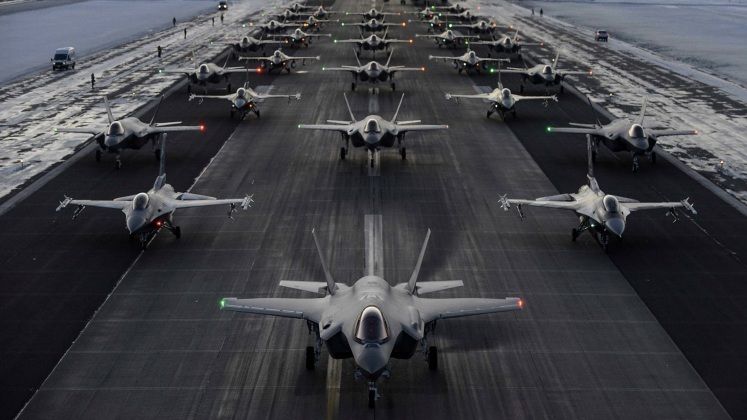
Considering that the Air Force had long planned to replace its F-16 fleet with F-35s, and has approximately 700 F-16s already in service, its investment in more Fighting Falcons could well be a sign of poor faith in the newer design which is several years behind schedule, still far from ready for high intensity combat and has yet to be certified by the Pentagon for full scale production almost a decade after this was initially expected to begin. Nevertheless, the F-16’s suitability for combat against near peer adversaries remains limited and the fighter is not only one of the least capable in production today, but also the second oldest only to the F-15 which entered service two years prior. F-16 operators across the world from Egypt and Israel to South Korea and Singapore have either begun to phase their F-16s out of service or are making plans to do so in the near future, with officials from several countries as well as from the U.S. itself referring to the aircraft as one which will soon be obsolete. It remains to be seen whether the U.S. Air Force will go ahead with plans to order more Fighting Falcons, but unless there is a major improvement in state of the F-35 program then it is likely that such orders will be placed.
