
Big Fleet Can't Fly: New U.S. Military Report Shows Aircraft Availability Rates Are Abysmally Low
Military Watch Magazine Editorial Staff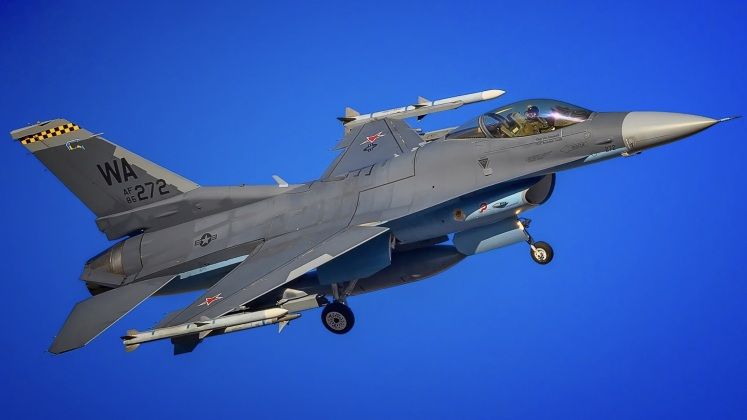
American F-16 Fighting Falcon
According to a new report from the U.S. Congress Government Accountability Office (GAO), only three of several dozen classes of American military aircraft were able to achieve annual mission capable rate goals the majority of the time between Fiscal Years 2011 and 2019. Of these three aircraft, only the UH-1N Twin Huey helicopter was able to meet the required rate every year, while several aircraft notably never achieved the target mission capable rates. The publication of the GAO report comes two years after then-Secretary of Defense James Mattis publicly raised concerns about low combat readiness rates across the Air Force, Navy and Marine Corps aircraft inventories, issuing a memorandum calling for mission capable rates to be raised to 80% within a year. Over two years on, the U.S. Military is very far from achieving this goal which appears to have been abandoned entirely.
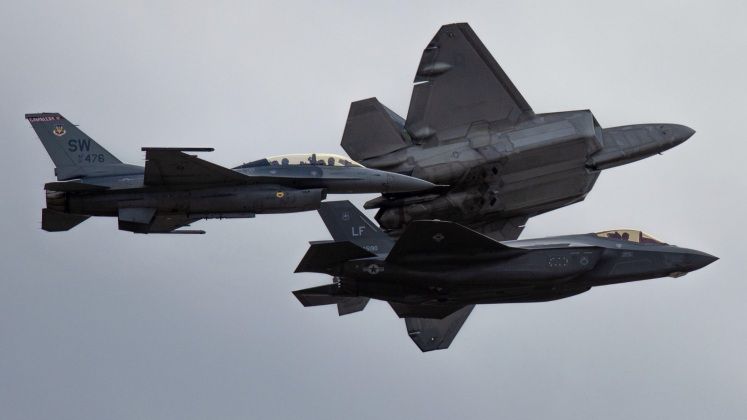
The GAO report noted: "Average mission capable rates for the selected Air Force, Navy, and Marine Corps aircraft have fallen since fiscal year 2011, while average mission capable rates for the selected Army aircraft have slightly risen… Program officials provided various reasons for the overall decline in mission capable rates, including ageing aircraft, maintenance challenges, and supply support issues." A number of factors, including the availability of spare parts, the degree of the aircraft’s maintenance requirements and how often it is flown all affect availability rates. The U.S. Air Force’s prime fighter jet the F-22 Raptor, for example, has consistently been its poorest performer in terms of combat readiness due to its extremely high maintenance requirements and operational costs, which means keeping even half of the fleet in a mission capable state is an extremely trying task.
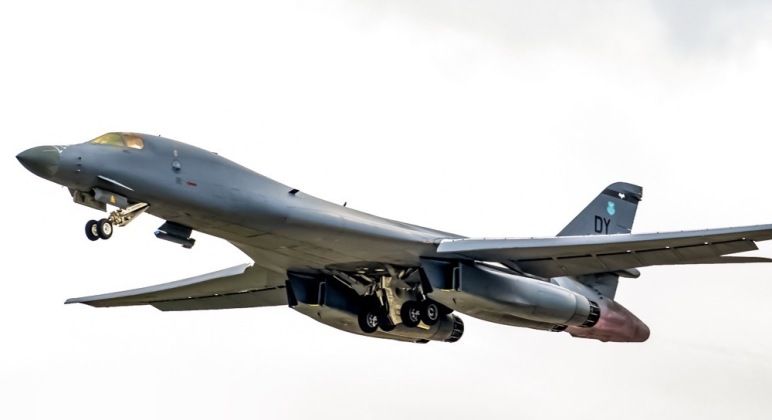
At the opposite end of the spectrum, lightweight and relatively simple and low cost jets such as the F-16 Fighting Falcon and A-10 Warthog have been easier to keep in a state of higher combat readiness. This is potentially a major issue for both the Air Force and the Navy, which are planning to phase out the respective F-16 and F-18 fighters for newer F-35 jets. The F-35, although lighter and easier to maintain that the Raptor, is similarly complex and will require much more maintenance than the aircraft it is replacing, meaning combat readiness rates could well fall further as more squadrons transfer to the newer jets. Issues have hardly been relegated to the fighter fleet alone, with the B-1B bomber, for example, seeing an extremely low mission capable rate of under 10% in 2019 due to the design's age and complexity. The aircraft may be retired early partly as a result although its replacement, the B-21, is also expected to be far from easy to maintain.
