
U.S. Expands Stealth Strike Capabilities at Key Forward Base Near China as First F-35s Enter Service
Military Watch Magazine Editorial Staff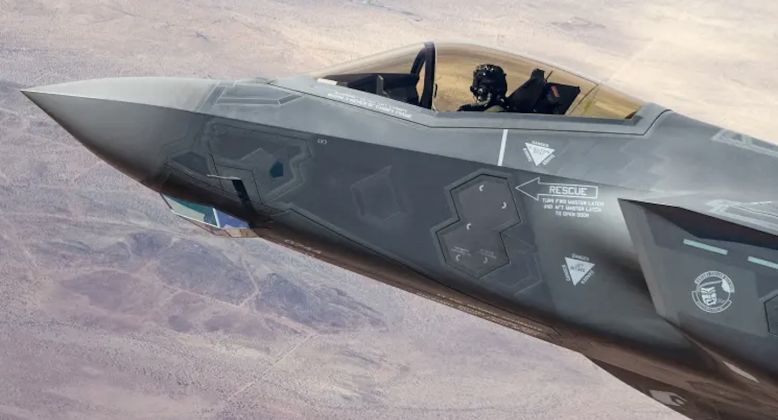
F-35 Fighter
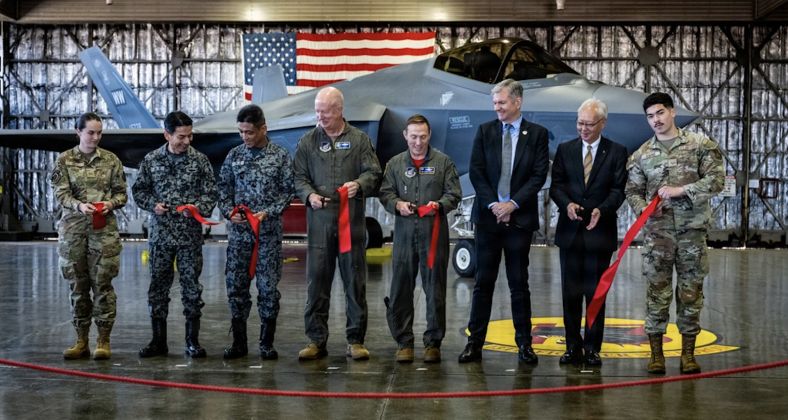
The U.S. Air Force 35th Fighter Wing on April 24 conducted an F-35 Lightning II ribbon-cutting ceremony at Misawa Air Base in Aomori Prefecture, northern Japan, marking the official introduction of the new fighter type to the air unit. Department of Defence sources reported that this signalled “the start of its next chapter in fifth-generation airpower,” and reflected “the wing’s continued evolution to meet mission requirements and reinforce allied relationships.” The F-35A’s formal service entry at the facility follows reports in January indicated that the Air Force was preparing Misawa to support a planned permanent deployment of the aircraft, after it was announced in July 2024 that the Pentagon planned to deploy 48 of F-35As to the facility to replace 36 aging F-16CM fourth generation fighters.
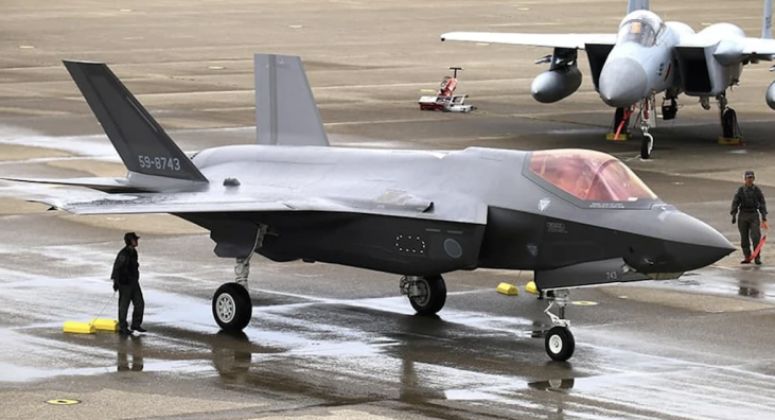
Misawa Air Base hosts both U.S. Air Force and Japan Air Self-Defence Force fighter units, and was the first facility to host F-35A fighters from the latter service. In March the Royal Netherlands Air Force launched its first-ever fighter exercise from Misawa Air Base, deploying F-35As from the facility to train with U.S. and Japanese air units, including the two countries’ own F-35s. The Dutch fighters were not permanently stationed at the facility, however. While Misawa is the only facility that permanently hosts U.S. Air Force F-35A fighters in the country, the Japan Air Self-Defence Force was confirmed in April 2025 to also have begun operating the F-35A from Komatsu Air Base, marking the first time that the aircraft have been operationalised to directly phase out older F-15J Eagle fighters. Deployment of the first F-35s to the facility on April 1 marked the first major change to its frontline aircraft in 38 years, after F-15s were first introduced in the early 1980s.
The F-35 program has suffered considerable delays, leaving the U.S. Air Force’s fleet significantly below its previously projected strength. A notable indication of this was then-U.S. Secretary of Defence Robert Gates’s announcement in 2011 that the fleet reach 1,100 fighters by 2020. The number of aircraft in the American fleet "China, by contrast, is projected to have no fifth generation aircraft by 2020. And by 2025, the gap only widens. The U.S. will have approximately 1,700 of the most advanced fifth generation fighters versus a handful of comparable aircraft for the Chinese,” Gates asserted at the time. A look at the current size and capabilities of the U.S. stealth fleet, however indicates that it has fallen far short of expectations, resulting in F-35s being particularly heavily concentrated at bases in Japan. China, by contrast, brought its first fifth generation fighters into service in 2017, rather than the early 2020s as expected, and has expanded numbers and improved the performances of these aircraft, most notably the J-20, far faster than Western analysts had previously projected.
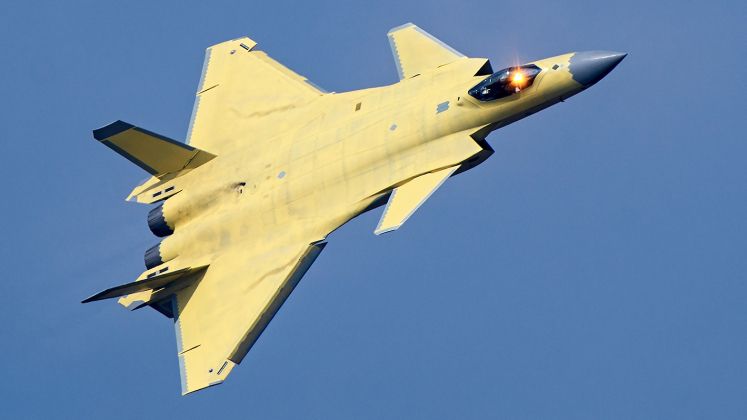
Responding to the expansion of the U.S. and Japanese F-35 fleets near its territory, researchers affiliated with the Chinese People’s Liberation Army in late 2024 simulated operations by the country’s air defences to defend the southeastern city of Shanghai from attacks by the aircraft. Ten rounds of computer generated simulations found that the fighters could be detected 180 kilometres away by ground based radars, well before the aircraft were in range to launch precision guided bombs which have ranges of under 30 kilometres. The Chinese People’s Liberation Army retains a number of options to counter potential attacks by F-35s beyond reliance on ground based air defences. Among them are the deployment of J-20 fifth generation fighters and KJ-500 ‘flying radar’ AEW&Cs for long range patrols, allowing F-35s to be detected and engaged early on. Advanced air defence on the country’s fast growing destroyer fleet, and the expected service entry of the KJ-3000 AEW&C system which integrates what is expected to be the world’s most powerful airborne radar, further strengthen defensive capabilities. The J-20 itself retains similarly advanced stealth capabilities to the F-35, which makes it an optimal aircraft to launch surprise cruise missile attacks on U.S. and allied targets in the region, thus providing a counter and deterrent to such attacks by U.S. and Japanese F-35s.
