
Key Airbase on China’s Doorstep Preparing For Permanent U.S. Air Force F-35 Deployment
Military Watch Magazine Editorial Staff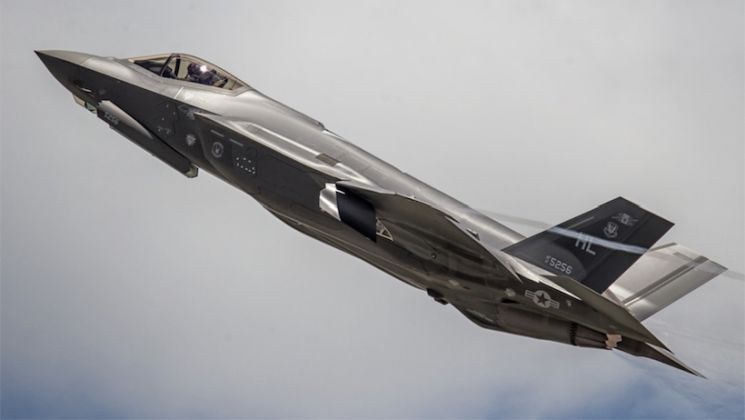
U.S. Air Force F-35A Fighter
The United States Air Force is currently preparing Misawa Air Base in northern Japan to support a planned permanent deployment of F-35A fifth generation fighters, as part of a much broader expansion in F-35 deployments in the region. The Pentagon plans to deploy 48 of the aircraft to the facility to replace 36 aging F-16CM fourth generation fighters, in parallel to the replacement of 48 F-15C/D air superiority fighters at Kadena Air Base on Okinawa in southern Japan with 36 newer F-15EX fighters. Plans to replace fighters at these two facilities were first announced 18 months ago in July 2024. Images published by the Air Force show personnel from the 35th Fighter Wing receiving and preparing equipment intended to support F-35A, with the service announcing that preparations for the transition began in December 2025.
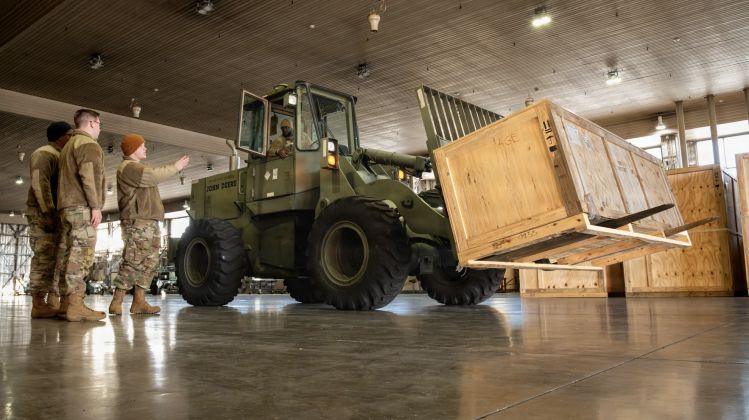
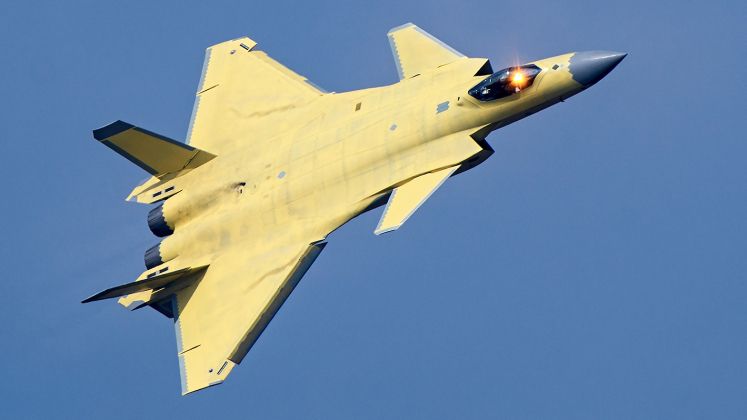
Regarding ongoing work at the facility, the U.S. Air Force stated: “The delivery of cargo supporting future F-35A Lightning II fighter aircraft operations will enhance the wing’s ability to generate and sustain airpower in support of Indo-Pacific regional security and deterrence.” It highlighted the goal of ensuring the 35th Fighter Wing’s “ability to generate combat airpower in austere conditions, supporting a forward-postured force capable of responding rapidly across the Indo-Pacific region.” The presence the F-35 is particularly critical in Northeast Asia due to the outstanding magnitude of the challenges faced by U.S. forces in the region. While the F-35 is the only fighter of its generation in production in the Western world, China is producing the similarly advanced J-20 and J-35 in considerable numbers and with rapidly improving capabilities, posing the only peer level challenge to American air power.
Japan is the only country that is confirmed to be set to host permanent deployments of U.S. Air Force, Navy and Marine Corps F-35s, with the F-35B and F-35C variants already based at Marine Corps Air Station Iwakuni. The first F-35s arrived at the facility on permanent deployment in 2017, marking the first permanent foreign deployment of F-35s anywhere in the world. Alongside a rapid expansion of Chinese aerial warfare capabilities, North Korea, with which the United States remains officially in a state of war, has not only rapidly modernised its particularly capable and dense ground-based air defence network, but is also expected to begin procuring modern fighter aircraft from Russian in exchange for part of its tens of billions of dollars of annual arms exports to the country. Although Russia lacks similarly advanced fighters to the F-35, in North Korean hands they could provide an effective complement to its ground-based air defences.
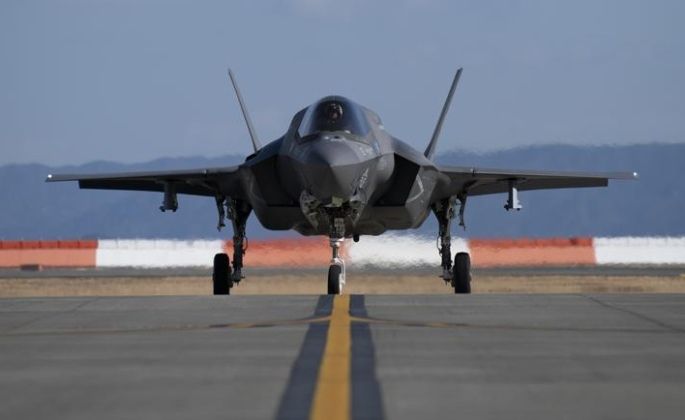
Misawa Air Base already hosts two Japan Air Self-Defense Force F-35A squadrons, and in 2025 also began to host American strategic bombers, making it a vital hub for U.S. and allied air operations in the region. Nevertheless, the viability of the F-35 for high intensity operations in Northeast Asia has increasingly been called into question. The fighter’s range remains highly constrained, with a combat radius approximately half that of advanced Chinese fighters such as the J-20 and J-16, while its radar and weapons payload are significantly smaller. Having been designed with a primary focus on air-to-ground operations, the aircraft’s flight performance is also far from outstanding. Major development issues have meant that the aircraft are not expected to be brought up to the Block 4 standard considered necessary for high intensity combat until the early 2030s, while availability rates have remained outstandingly poor. China is by that time expected to be the world’s first country to field sixth generation fighters, the expected capabilities of which have fuelled calls to divert investment away from the F-35 program.
