
U.S. Further Expands F-35 Presence in Japan: Navy Deploys F-35Cs to Iwakuni Facing China
Military Watch Magazine Editorial Staff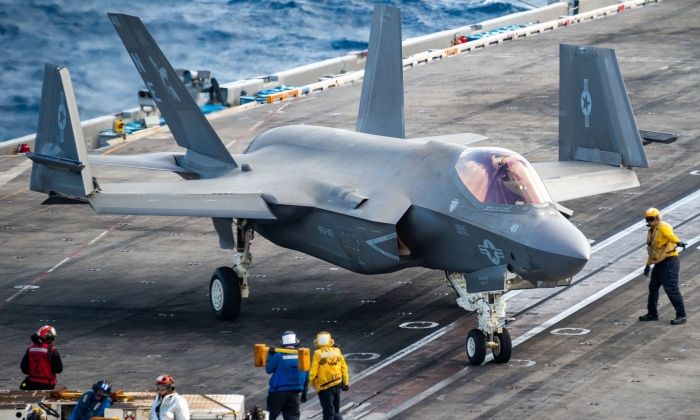
U.S. Navy F-35C on Carrier Deck
The U.S. Navy will forward deploy F-35C fifth generation fighters under Strike Fighter Squadron 147 to Marine Corps Air Station Iwakuni, Japan, replacing the F-18E/F Super Hornets operating under Strike Fighter Squadron 115. The deployment represents a further expansion of the F-35’s presence in Japan, reflecting Northeast Asia’s position as a priority for deployments since the fighter class began to enter service in the mid-2010s. The first F-35s deployed abroad were dispatched to Japan in 2017 under the U.S. Marine Corps, which has maintained a permanent presence in the country with the F-35B ever since. On July 3, 2024 the Pentagon confirmed the first ever forward deployment of F-35A fighters to Japan, with 48 of the stealth jets set to replace 36 F-16s at Misawa Air Base. This complemented prior rotational deployments of F-35As to Kadena Air Base on Okinawa, where F-35As from the 4th and 356th fighter squadron deployed to the facility in March and November 2023 respectively. The F-35C was developed for deployment from the U.S. Navy’s Nimitz and Gerald Ford Class supercarriers, and has wider wings for increased manoeuvrability as well as a longer range than A and B variants. The U.S. Navy is the sole operator of the class.
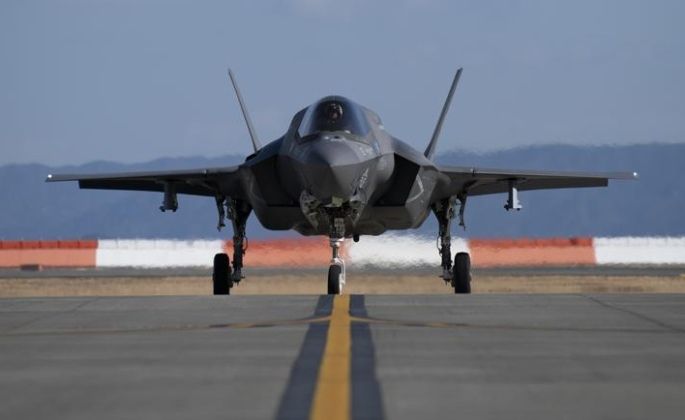
Japan has been particularly prioritised to host F-35s due to its proximity to China, at a time where the Chinese People’s Liberation Army Air Force is acquiring fifth generation fighters at a rate several times that of those of the next few countries combined. China’s J-20 is a much larger fighter class than the F-35 which boasts over double the range, a far larger radar, a higher weapons carrying capacity, and overwhelmingly superior manoeuvrability, while its avionics are considered broadly on par. The aircraft is set to be acquired at closet to 120 per year compared to F-35 acquisitions of just 48 per year by the U.S. Air Force. The J-20 and the F-35 had their first encounter confirmed in March 2022, which represented the first ever encounter between fifth generation fighters from opposing sides. The two are considered in a league of their own worldwide in terms of performance and sophistication, although this could soon change as China brings a second fifth generation fighter class, the FC-31, into service both in its navy and in the air forces of export clients.
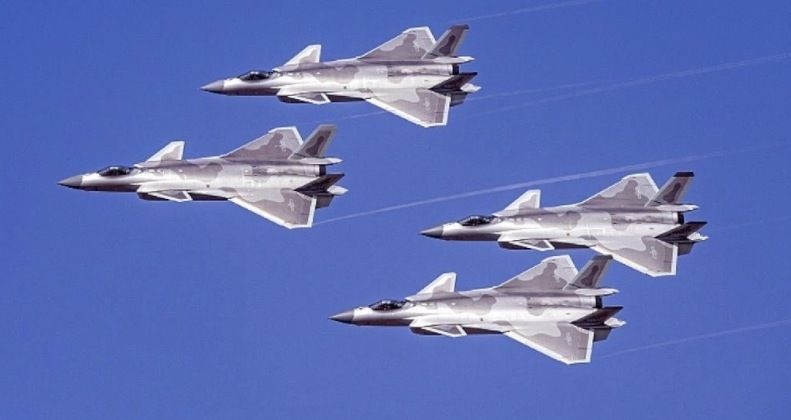
Unlike the J-20, which was designed as a twin engine high performance air superiority fighter, the F-35 was designed with a primary focus on air to ground missions as a strike fighter, with serious questions having been raised regarding its ability to counter the Chinese J-20 fleet. The issue has become particularly serious as the J-20’s capabilities have been tremendously improved, with new variants boasting far superior stealth capabilities, a supercruise capability from 2021, and likely form 2025 much faster supercruise speeds and manoeuvrability levels due to the integration of the WS-15 engine. The F-35’s manoeuvrability is considered well below average for a 21st century fighter, and it notably cannot supercruise. F-35 deployments in Japan are notably set to be complemented by the deployment of 147 of the aircraft by local Japanese forces, after orders for 42 and 105 fighters were respectively placed in 2011 and 2017. Allied European states are also expected to make growing deployments of their own F-35 fleets to support broader collective Western Blcc objectives in the region, with Italy having been the first to do so in August 2023.
