
U.S. Funds $1 Billion Upgrade For F-35’s Electronic Warfare Suite
Military Watch Magazine Editorial Staff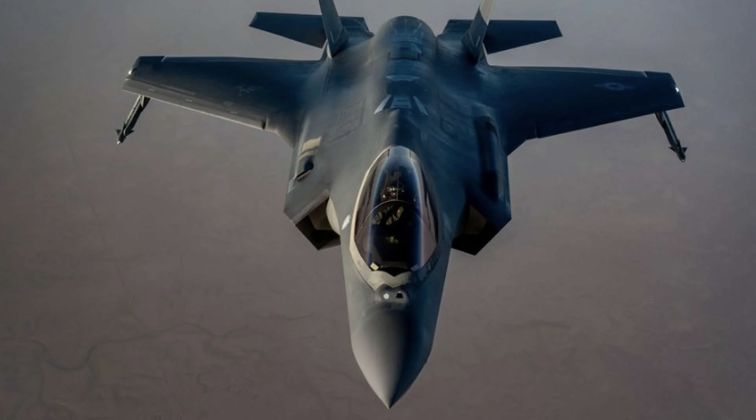
F-35 Fighter
The U.S. Department of War has signed a $991 million contract for the F-35 fifth generation fighter’s primary contractor, Lockheed Martin, to produce electronic warfare upgrade kits for 432 of the aircraft. The contract covers fighters across the three U.S. services operating the aircraft, the U.S. Air Force, Navy, and Marine Corps, as well as multiple undisclosed foreign clients. The U.S. Air Force will receive the largest allocation at 97 kits, while 54 are allocated to the Marine Corps, 42 to the Navy, 133 for non-U.S. program partner countries, and 106 for Foreign Military Sales customers. Although the F-35 program has been criticised for the very limited commonality achieved between the three variants, all variants share a common electronic warfare architecture, allowing a single modernisation package to be developed for the entire global fleet.
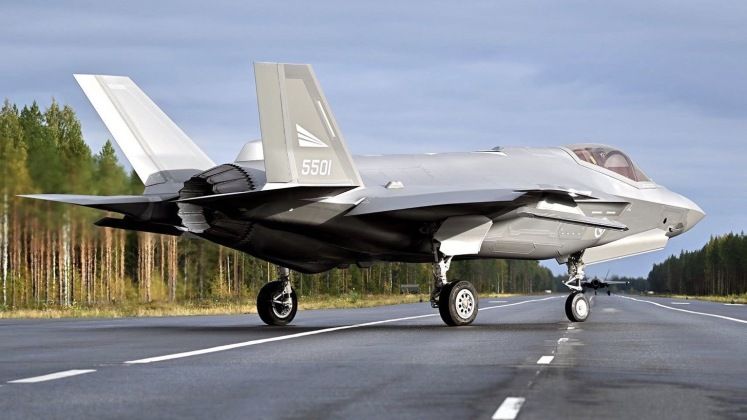
The F-35 combines cutting edge stealth capabilities with one of the world’s most powerful electronic warfare suite integrated onto a fighter, providing a degree of survivability that no other non-Chinese fighter type can rival. The AN/ASQ-239 electronic warfare system integrated into all F-35 variants provides advanced countermeasures, jamming options, and broadband protection, allowing the aircraft to effectively suppress enemy radars. The system was designed to operate in signal-dense environments, and to provide the F-35 with radio frequency and infrared countermeasures and rapid response capabilities. Its electronics architecture was designed specifically to allow designers to enable new capabilities as these were developed. Functions include threat detection, identification, and geolocation across a wide frequency spectrum, as well as electronic attack functions.
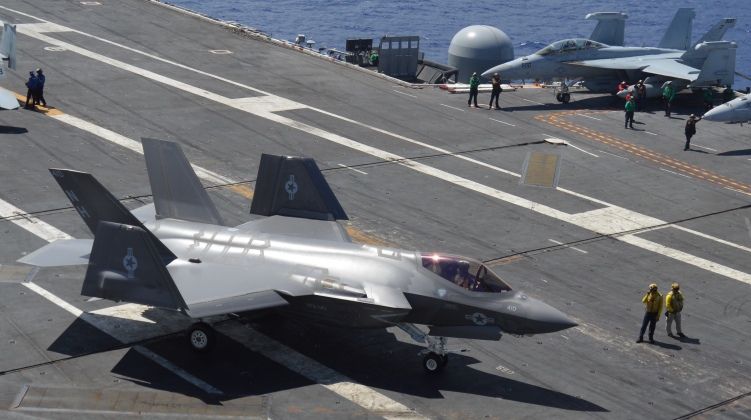
The AN/ASQ-239 is considered one of the most sensitive systems integrated on the F-35, with the discrepancy in performance between those built for domestic and foreign use reportedly being particularly wide. It is likely that this will be reflected in the latest upgrade package. The development of a major modernisation package for the F-35’s electronic warfare suite has been initiated in response to concerns regarding the continuous evolution of adversary electronic and broader aerial warfare capabilities, in particular those of China, but also to lesser extents those of Russia, North Korea and others. With over 20 services across the world operating the F-35, although foreign operators can and have developed subsystems and weapons for the fighter, and are expected to continue to do so, the fact that the U.S. does not share access to its base code with any clients means comprehensive upgrades to avionics cannot be made abroad.
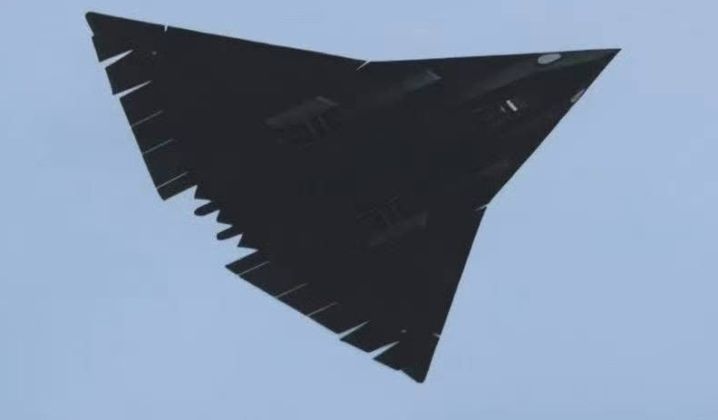
The F-35 is currently being produced in greater numbers than all other Western fighter types combined, as NATO members and a number of non-NATO allies such as Australia and Japan are expected to rely on the aircraft heavily for the foreseeable future. Funding for upgrades is expected to continue to grow rapidly as the service entry of the F-47 sixth generation fighter is likely to be delayed to the 2040s, forcing F-35 operators to rely on the fighter to counter new Chinese sixth generation combat jets that will enter service in the early-mid-2030s. Coinciding with upgrades to the F-35’s electronic warfare suite, the F-35 Joint Program Office is preparing to modify the fighter’s In-Line File Encryption Device software to support quantum-resistant algorithms, responding to the security challenges posed by China’s considerable and growing lead in quantum computing capabilities. The hardening of the aircraft’s core cryptographic systems against quantum-powered cyberattacks is expected to be critical to its ability to operate, particularly in Pacific war contingencies.
