
China Deploys Elite Fighter Trio For High Intensity Deep Desert Exercises: J-20, J-16 and J-10C Provide Complementary Capabilities
Military Watch Magazine Editorial Staff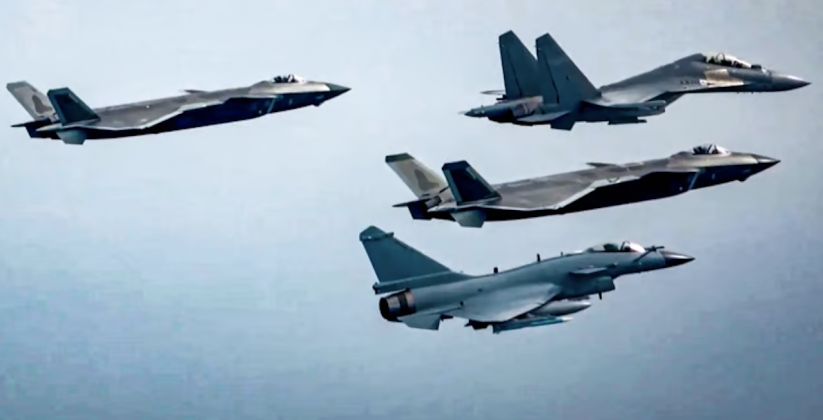
J-16D Leads J-20s and J-10C in Formation
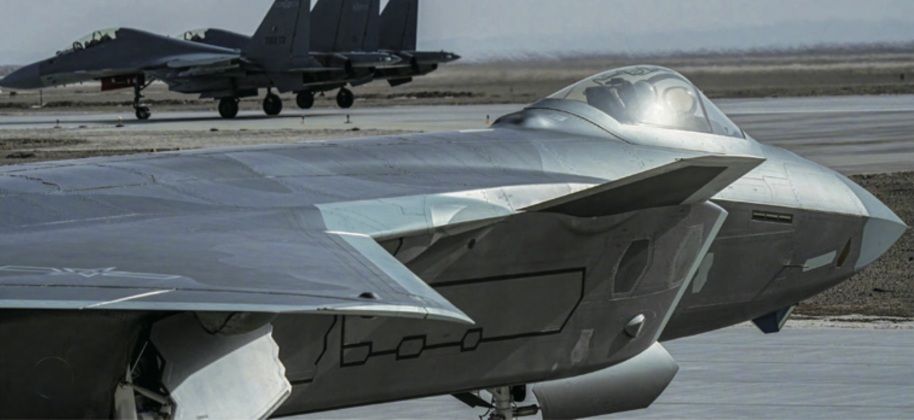
The Chinese People's Liberation Army Air Force fighter jets has deployed three of its most capable fighter types, the J-20, J-16 and J-10C, for deep-desert exercises. Exercises were reportedly conducted with real-time electromagnetic jamming and radar suppression injected by commanders, without informing pilots of preset plans, to simulate real high intensity war time conditions. The mission reportedly specifically targeted multi-aircraft coordination gaps and system-of-systems vulnerabilities. The three fighter types involved were developed in parallel, using many of the same technologies and the same types of weaponry, and have highly complementary capabilities.
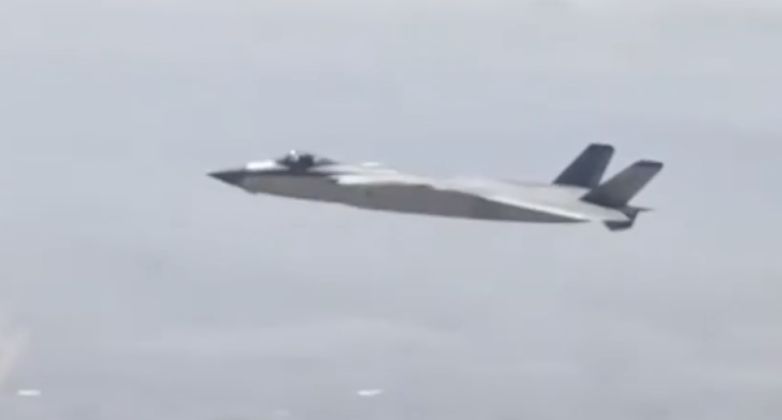
The J-20 began development in the mid-1990s and entered service in 2017 as the first operational non-U.S. fifth generation fighter in the world. The J-16 and J-10C are both heavily enhanced variants of fourth generation designs that use many of the same technologies as the J-20, and were brought into service in 2015 and 2018 respectively. While the J-20 has by far the highest combat potential, and is being procured in far greater numbers, the J-16 and J-10C have a number of important advantages which have led them to be highly valued in service. The J-16 is a larger fighter that carries one of the heaviest radars ever integrated onto a tactical combat jet, and one considered likely to be the most powerful in the world due to its combination of size and sophistication. Its high weapons carrying capacity also makes it optimal for integrating larger missiles such as the world’s longest air-to-air missile the PL-17.
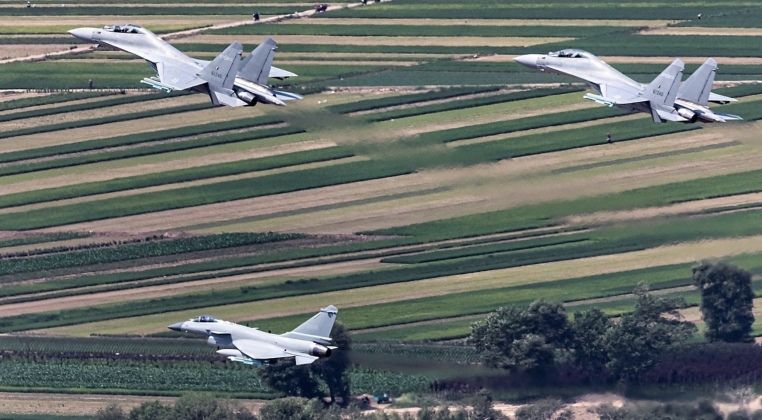
The J-20, J-16 and J-10C were all first brought into service at the 176th Brigade at the Flight Test and Training Base in the Gobi Desert, which was a unit assigned to test tactics for new fighters. The three fighter type were referred to as forming the Air Force’s ‘new generation.’ Joint training between the three fighter types has often taken advantage of their complementary capabilities, for example relying on the J-20 to gain air superiority, while the J-16 and J-10C carry out precision strikes on ground targets. The J-16 has otherwise been used to ‘bait’ targets using its larger radar cross section, or to destroy key airborne support aircraft such as airborne early warning and control (AEW&C) systems using its PL-17 missiles to serve as a force multiplier for the wider fleet.
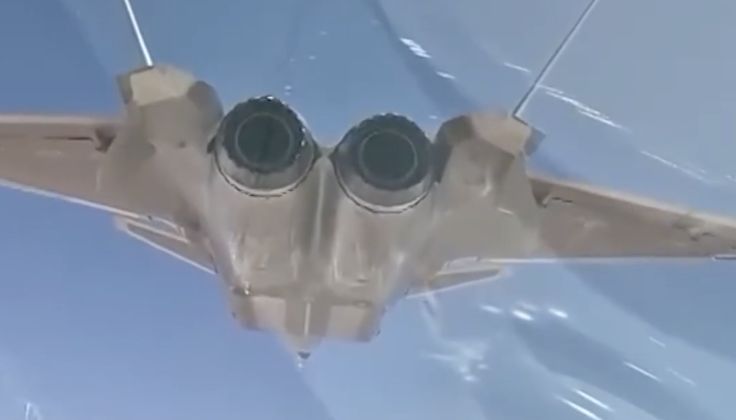
The J-16’s ability to support J-20 operations has been improved considerable not only with incremental modernisation of the aircraft, but also with the development of the J-16D electronic warfare variant. These aircraft integrate passive sensors to locate adversary radars, while carrying electronic warfare pods each optimised to jamming adversary radars in different frequencies, providing protection that is highly complementary to that provided by the J-20’s advanced stealth capabilities. The fact that both are heavyweight long ranged fighters allows them to operate together over considerable distances. While the J-16 is being procured in more limited numbers, it is expected to continue to play a central role in supporting J-20 operations.
It is notable that there have been no indications that the Air Force’s newest fighter type, the J-35 fifth generation fighter, has been significantly integrated into joint training, with the aircraft’s primary role remaining unclear. The fighter appears to have been developed as a lighter counterpart to the J-20, and was confirmed to have been brought into service in both the Air Force and the Navy in 2025. Chinese fighter development reached a major milestone in the mid-late 2010s as its new fighters, and particularly the J-20, for the first time led the world in performance. The country’s fighter aviation industry has continued to strengthen its international standing, and in December 2024 unveiled the world’s first two sixth generation fighter designs both at fight prototype stages. These are now expected to enter service in the early 2030s close to a decade before the U.S. can operationalise its own sixth generation fighter the F-47.
