
China’s New J-20A Enhanced Air Superiority Fighter Delivered to Elite Unit Next to Taiwan
Military Watch Magazine Editorial Staff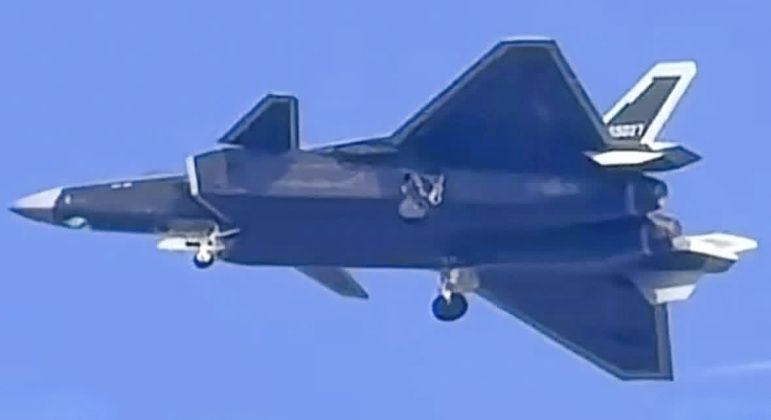
Chinese PLA Air Force J-20A From 41st Air Brigade
The Chinese People’s Liberation Army Air Force has begun to transition a number of elite air brigades from operating baseline J-20 fifth generation air superiority fighters, to the heavily enhanced new J-20A variant, as the new fighters are prioritised for delivery to some of the most strategically located units the service. The latest unit confirmed to transition was the 41st Air Brigade based at Wuyishan, Fujian province, which had transitioned to field the older baseline J-20 only in 2023. The location of facilities at Wuyishan are particularly sensitive due to its close proximity to the Taiwan Strait, where the Chinese Civil War remains technically ongoing as the Republic of China government based in Taipei continues to claim sovereignty over all of Chinese territory.
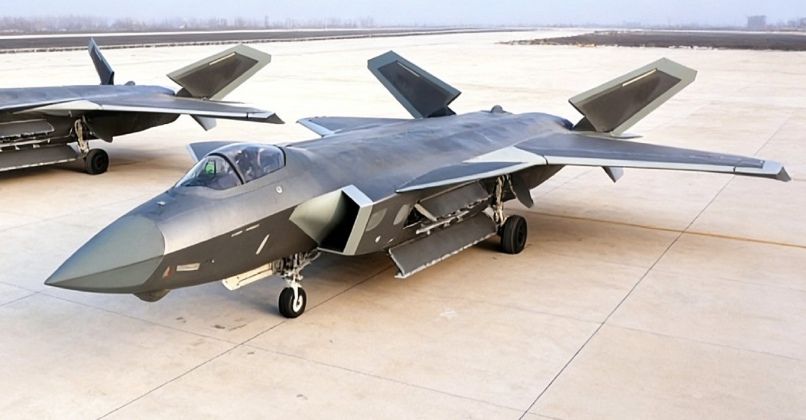
The J-20A has a revised airframe design, with the most conspicuous difference being its redesigned rear canopy which reduces aerodynamic drag, enhances its efficiency in supersonic flight, and is likely to further improve its stealth capabilities. The new variant integrates twin WS-15 next generation engines, which provide considerably more thrust and more power to onboard systems than the older WS-10C engines that powered baseline variants. The integration of the WS-15 significantly improves all aspects of the J-20’s flight performance, as well as its range, while providing greater power to onboard subsystems and reducing maintenance requirements. The new engines give the J-20 the highest thrust of any fighter type in the world, as well as the longest range with the exception of the Russian Su-34 strike fighter.
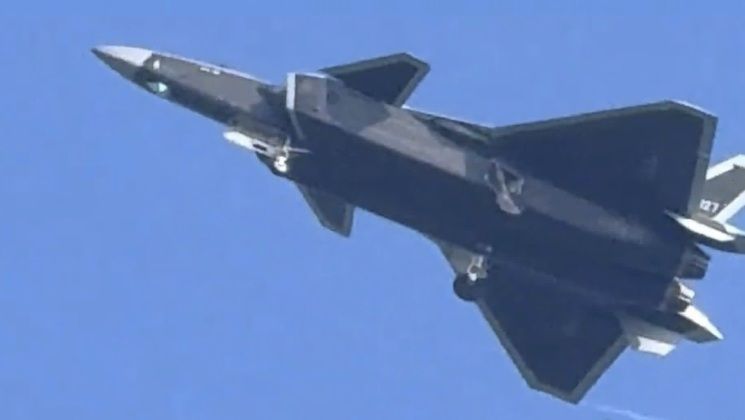
The 41st Air Brigade was the eleventh unit confirmed to have converted to the J-20 in 2023, after having previously deployed J-11 fourth generation fighters from 2008, when they had replaced older third generation J-7s. While the baseline J-20 was already considered sufficient to provide comfortable superiority over fighters deployed by the Republic of China Air Force, and had a favourable standing against F-35 fighters deployed by neighbouring Japan and by the U.S. Armed Forces at Japanese bases, the J-20A provides a significantly superior combat potential. Its much improved range and cruising speed could be particularly invaluable in setting up a blockade of Taiwan Island to prevent Western Bloc or Japanese forces from intervening in a Taiwan Strait conflict.
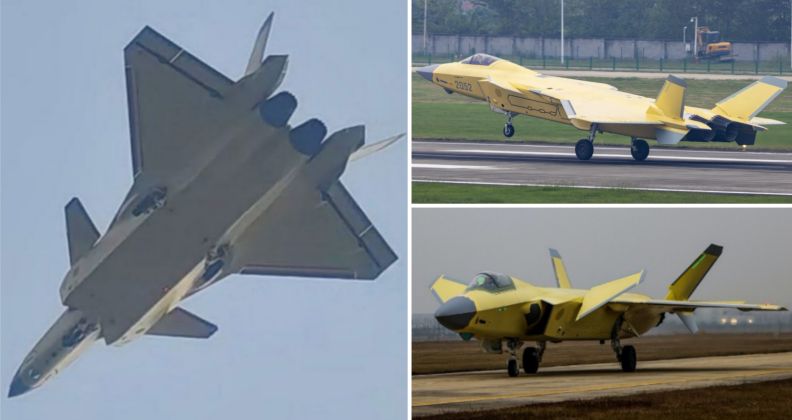
The decision to transition units from operating the J-20 to the J-20A indicates that the new variant has been assessed to be significantly superior, and raises questions regarding which units baseline J-20 fighters, which are still among the most capable aircraft in the Air Force and the wider world, will be transferred to equip. It also indicates that the J-20A may have significant commonalities in maintenance and training with the baseline variant, which makes it much easier to transition existing J-20 units, rather than transitioning nearby units that operate other fighter types such as the J-10 or J-11. Since its service entry in 2017, the J-20 has been considered one of the world’s two premier fighter types operating in a league of its own alongside the U.S. F-35. This changed in 2025 as the new J-35 was introduced into service as a lighter counterpart to the J-20 that is similarly sophisticated. The rate at which the Air Force has been procuring the J-20 notably very far surpasses the procurement rates of any fighter type by any other service in the world.
