
World’s Longest Ranged Air-to-Air Missile Unveiled in China: How the PL-17 Can Shape a Pacific Air War
Military Watch Magazine Editorial Staff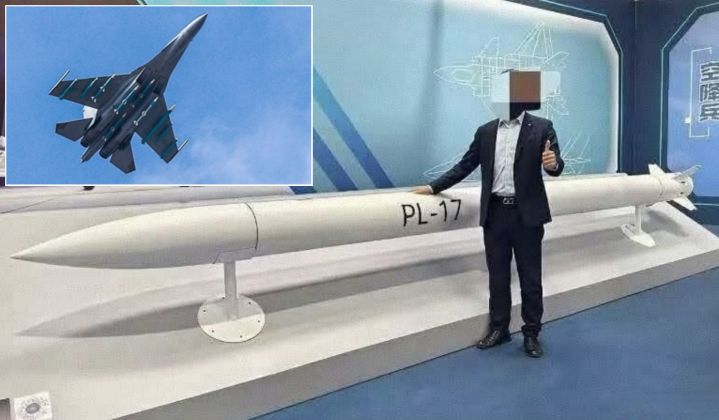
PL-17 Missile and J-16 Fighter with PL-17
The first publicly released close-up photo of the PL-17 ultra-long-range air-to-air missile has indicated it has a diameter of approximately 305 mm and a length of about 5.8 meters, following a decade of speculation regarding its actual size and capabilities. The first images of the PL-17 emerged in 2016, with images having shown it being tested on a J-16 fighter. Subsequently in December 2023 images for the first time showed J-16 fighters in active service carrying the missiles, alongside the long range PL-15, medium range PL-12 and short range PL-10 missiles. The missile has remained among the most mysterious in the world, and has notably been absent from major military parades and other footage of Chinese air operations.
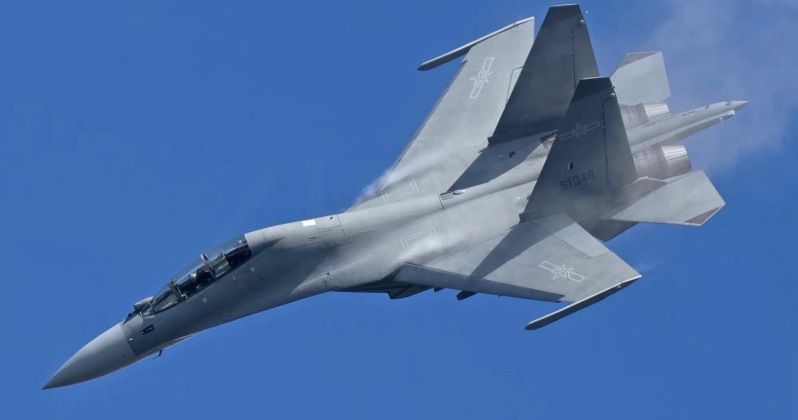
The PL-17 is estimated to have a 500 kilometre engagement range, significantly surpassing rival missile types such as the Russian R-37M and American AIM-174. Although the J-16 cannot fly as high or as fast as the Russian MiG-31BM interceptor, which was the first to deploy the R-37M, the superiority of the PL-17 design is expected to more than compensate for this. A significant advantage the Chinese missile is reported to have over its foreign rivals aside from its range is its use of a more advanced seeker head, which includes an active electronically scanned array radar and an infrared seeker for dual guidance and greater resilience to jamming or use of decoys. The J-16 itself has a significantly longer range than any fighter type in the Western world, with a combat radius approximately double that of the F-35 and F-22 fifth generation fighters, and carries a radar approximately triple the size of that of the NATO’s primary frontline fighter the F-35.
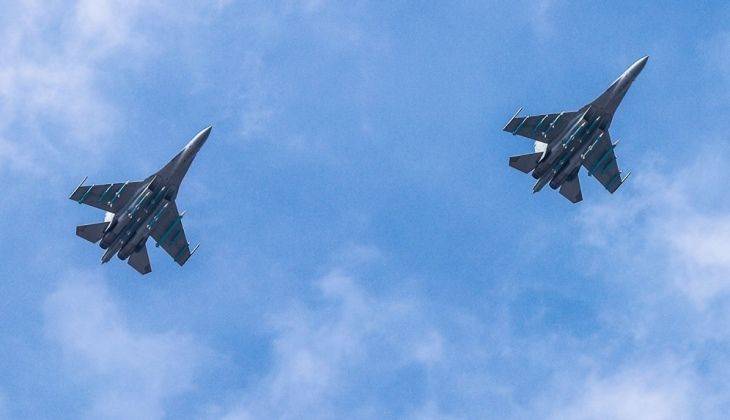
The J-16 has the highest weapons carrying capacity of any Chinese fighter type, and is being procured at a higher rate than any fighter type in the world other than the J-20 and the F-35, with over 450 estimated to now be in service. The size and sophistication of the J-16’s radar is expected to allow the aircraft to guide PL-17 missiles against non-stealth fighter-sized targets at ranges of approximately 400 kilometres. Against targets further away, or against stealth aircraft, the PL-17 is expected to rely on support from offboard sensors for targeting, including from airborne early warning and control (AEW&C) systems such as the KJ-500 and the larger KJ-3000 that is currently under development. China currently fields by far the world’s largest and fastest growing fleet of modern AEW&C systems. The PL-17 is also expected to be able to use targeting data from forward-deployed J-20 and J-35 fifth generation fighters, which may be able to use their stealth capabilities to operate closer to potential targets than the ‘4+ generation’ J-16 safely can.
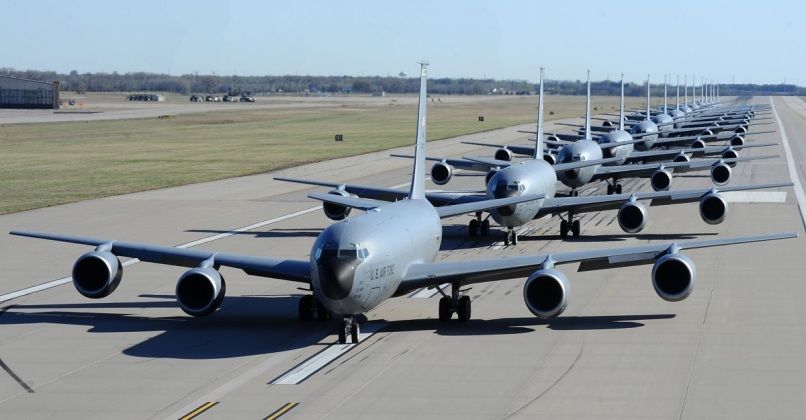
The PL-17 is speculated to be able to benefit from satellite course correction via data link, much as new generations of Chinese surface-to-air missiles currently under development can, although this remains highly uncertain. The missile is expected to play a particularly significant role in any potential conflict in the Pacific theatre due to the extreme reliance of Western air power on large and potentially highly vulnerable support aircraft, primarily AEW&Cs such as the E-3 Sentry, and tankers such as the KC-135. The much smaller radars that Western fighters can accommodate compared to their Chinese and Russian counterparts, and their significantly shorter ranges, are primary factors that make such support vital. The J-16 with the PL-17 is likely the best suited asset in the world to threatening such support aircraft in the air across the Western Pacific, which could seriously constrain Western air operations even without the need for direct engagements with Western combat aircraft. The fielding of a large and growing J-16 fleet equipped with the missiles is highly complementary to the ongoing investments in the rapid expansion of the J-20 stealth fighter fleet.
