
The Su-57’s First Job in the Russian Air Force - Testing Hypersonic Weapons
Military Watch Magazine Editorial Staff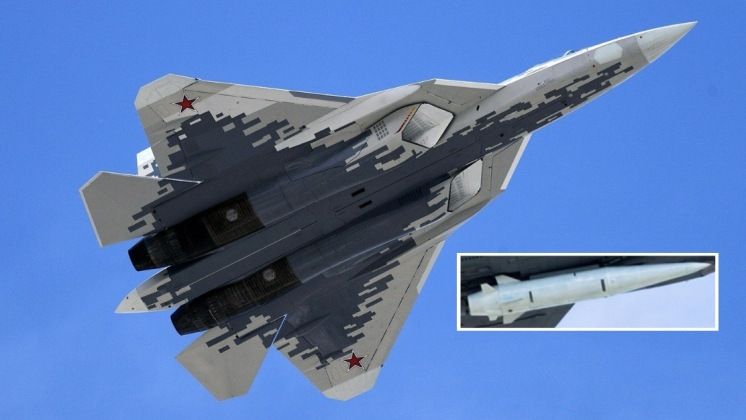
Su-57 Next Generation Fighter and Kh-47M2 Hypersonic Ballistic Missile
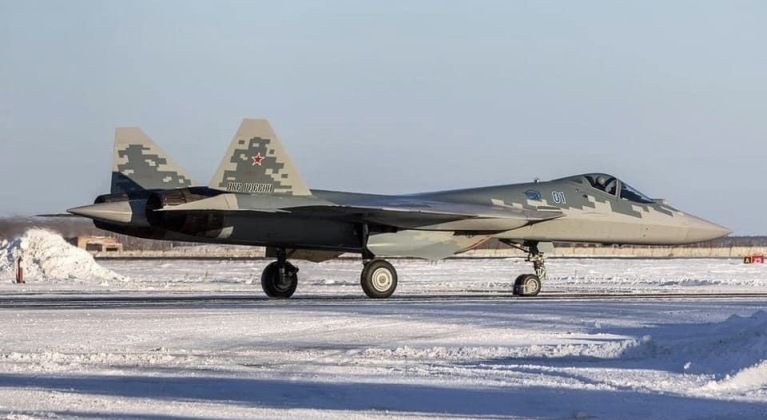
Following its entry into service in the Russian Air Force in December 2020, the first Su-57 next generation fighter in active service has been deployed under the Southern Military District and assigned the role of testing hypersonic weapons. Although the aircraft has been in serial production on an expanded scale since mid-2019, the Su-57 is not expected to enter service in significant numbers until after 2027, with the design scheduled to receive a number of ambitious upgrades until then including the integration of Saturn 30 engines from 2022 which are expected to be around 30% more powerful than those currently in use. The Su-57’s primary purpose is to acquaint the Russian Air Force with operating its first next generation fighter and to provide experience with its new technologies and armaments in the years leading up to the beginning of more widespread deployments, with the aircraft expected to be produced on a larger scale than any other Russian fighter after the conclusion of the current State Armaments Plan 2027. The fighter will by that time ingrate a number of sixth generation technologies to allow it to go head to head with Western next generation aircraft currently under development, including artificial intelligence, options for unmanned flight and possibly directed energy weapons.
The Su-57 is expected to be the first fighter in the world to deploy hypersonic ballistic missiles, following on from the Russian Air Force’s MiG-31 Foxhound interceptors which began to deploy such weapons from early 2018. A miniaturised variant of the Kh-47M2 ballistic missiles - the kind currently deployed by the Foxhound - is currently at prototype stage and is intended for deployment by the Su-57. The first fighter in Russian Air Force service is thought to be assigned the role of testing operations with this mission - where previously prototypes were use for weapons testing. The missile can reportedly impact targets at Mach 10 speeds up to 2000km away and retains very high manoeuvrability, making it extremely difficult to intercept. It is effective against both ground and naval targets, making it a valuable asset for rapid strikes against high value targets such as airfields, carrier strike groups and air defence systems. Aside from the Kh-47M2, the Su-57 also deploys the R-37M air to air missile which is technically hypersonic and can strike targets at Mach 6 speeds. The missile is well optimised for neutralising high value targets such as heavy bombers and AEW aircraft at extreme ranges. Beyond these two platforms, further hypersonic weapons are expected to be deployed by the Su-57 including possibly a hypersonic anti-ship cruise missile as the design further matures.
