
Taiwan Wants Full F-16V Contingent Delivered By 2026
Military Watch Magazine Editorial Staff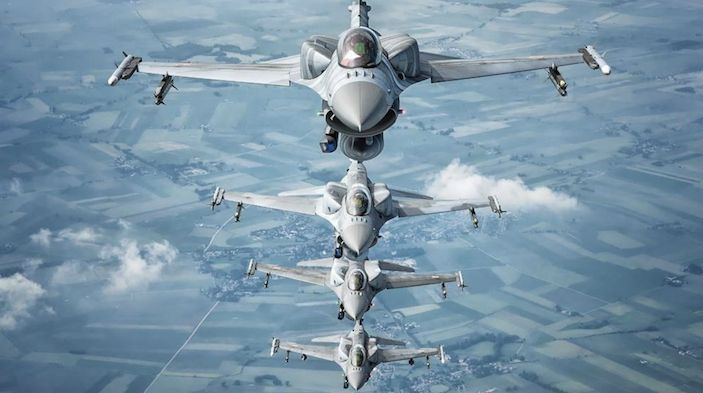
F-16 Fighting Falcons
Taiwan’s Ministry of National Defence has stated that it seeks to ensure the full order for 66 F-16V light fighters will be delivered but he year 2026, following the U.S. State Department’s approval of an $8 billion contract. The F-16A Fighting Falcon and indigenous F-CK Ching Kuo fighters currently form the mainstay of Taiwan’s Air Force with two squadrons of each in service, the former equipped with American AIM-120C air to air missiles and the latter with indigenous hypersonic Sky Sword II missiles for long range air to air engagements. The F-16A first entered service over 41 years ago in 1978, and preparations are being made by a number of states such as Belgium, Singapore and Israel to phase the aircraft and the more modern F-16Cs out of frontline service. Taiwan’s inability to acquire the platform’s next generation replacement, the F-35, has forced it to rely on a variant of the Fighting Falcon with a superior radar, new avionics and more sophisticated electronic warfare systems. The F-16V compromises manoeuvrability relative to the original Fighting Falcon however, and lacks the radar evading capabilities, infra red sensors, distributed aperture systems, powerful AN/APG-81 radar and other prominent technologies reserved for the F-35.
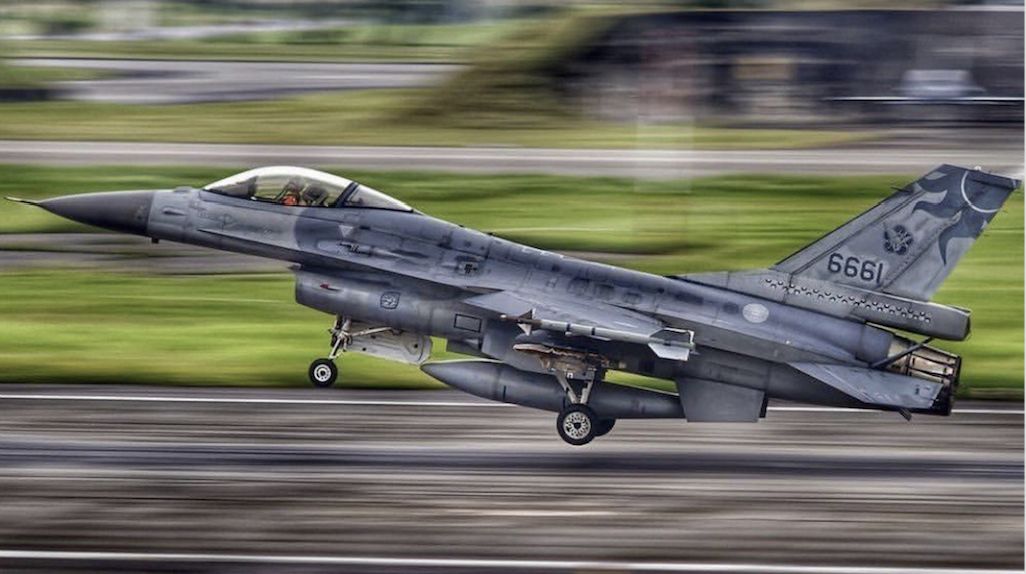
A portion of Taiwan’s fleet of F-16s is currently being upgraded to the F-16V standard domestically, although metal fatigue and the age of the designs means their service lives are limited even with refurbishment. Two squadrons of Fighting Falcons are currently based at Chiayi and Hualien in southwest and eastern Taiwan, and the new squadron will be based at Zhihang Air Force Base in Taitung County on the main island's Southeast. It has been widely speculated that Taiwan's ageing Mirage 2000 fighters will be phased out of service in favour of the F-16V, as the European manufactured jets have experienced an extremely high crash rate and poor reliability - and are the only fighters in the Taiwanese inventory which cannot deploy modern high end air to air missiles such as the AIM-120C and Sky Sword II. It is uncertain whether and when Taiwan’s armed forces will seek further acquisitions of modern fighter jets after the F-16 delivery is complete, but a purchase of the heavier and more capable F-35 or the F-15X may well be pursued to undermine the Chinese mainland’s fast growing advantages in the air.
