
Taiwan's Five Most Powerful Fighter Jets; From AESA Equipped F-16V to Hypersonic Missile Armed Ching Kuo and F-5E
Military Watch Magazine Editorial Staff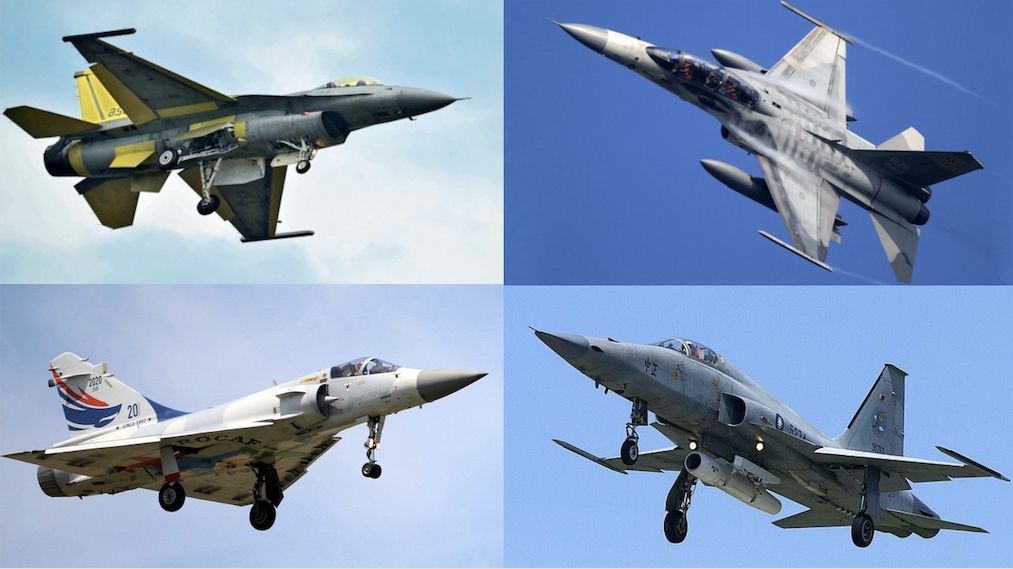
Taiwanese Air Force F-16V, Ching Kuo, F-5E AND Mirage 2000 Fighters
Taiwan’s Air Force, officially the Republic of China Air Force (ROCAF), was one of the most modern in Northeast Asia during the Cold War - acquiring state of the art jets from the United States to counterbalance the Soviet and later indigenous platforms deployed by the Chinese People's Liberation Army (PLA) Air Force across the Taiwan Strait. The ROCAF acquired the first generation F-86 Sabre of Korean War fame in the early 1950s, deployed eight squadrons of the second generation F-104 Starfighter by the mid the 1960s, and began local production facilities for the third generation F-5E in the mid 1970. The service was the first in the world to employ air to air missiles, with its F-86 fighters outmatched by MiG-15 and MiG-17s from the Chinese mainland during the First Taiwan Strait Crisis but managing to gain an edge due to modifications which allowed them to deploy AIM-9 Sidewinder missiles against their adversaries. The ROCAF today fields four major fighter classes in six squadrons, including two each of the F-16 Fighting Falcon and F-CK Ching Kuo and one each of the F-5E Tiger II and Mirage 2000. With Taiwan in 2018 denied permission to purchase the F-35B fifth generation fighter from the United States to respond to the PLA's deployment of its own fifth generation jets a year prior, the fleet is comprised entirely of fourth generation fighters with the exception of the heavily upgraded third generation F-5 squadron. Fighters in service with the ROCAF are all of lightweight, low altitude, short ranged and unspecialised designs, with no dedicated air superiority, strike or attack platforms in service. The capabilities of currently serving Taiwanese fighters are ranked below, alongside an assessment of their ability to contest air superiority over the Taiwan Strait:
1. F-16V Viper
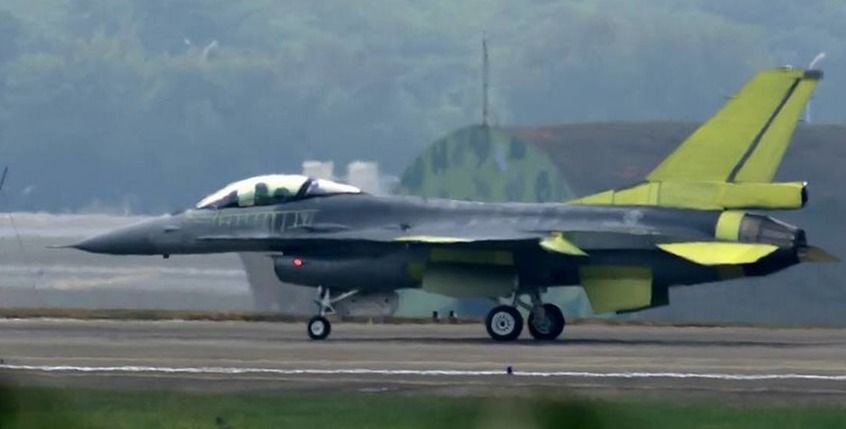
Taiwan’s Air Force took deliver of its first F-16V ‘Viper’ in October 2018, with one of the fleet's F-16A Fighting Falcon purchased in the 1990s upgraded by the state owned Aerospace Industrial Development Corporation under licence to a ‘4+ generation’ standard. Three further Vipers were delivered by the end of the year under the indigenous modernisation program, which integrated newer American technologies onto the fighters under licence. While the fighter’s airframe and engines remained unchanged, the aircraft saw new avionics installed, the cockpits fully refurbished and entirely new electronic warfare systems integrated. An active electronically scanned array (AESA) radar was also installed, the first in Taiwanese service, which not only significantly increased the detection and tracking range of the fighters against enemy aircraft, but also made them considerably more difficult to jam and minimised their radar signature for improved survivability. The F-16V was first unveiled in 2015, and was available either as an upgrade program for older Fighting Falcons or through newly manufactured ‘off the production line’ jets from Block 70 or Block 72 of Lockheed Martin’s F-16 production line.
While the F-16V represents a considerable upgrade over the original Fighting Falcon, in particular relative to the older F-16A which Taiwan previously deployed, the fighter lacks the capabilities of more sophisticated F-16 variants such as the F-2, F-16E or F-21 - all of which deploy redesigned airframes and in the case of the last two also integrate new and more powerful General Electric F110-GE-132 engines. The greater weight of new electronic systems without changes to the fighter’s airframe reduces the F-16V’s thrust/weight ratio relative to the original F-16A for poorer manoeuvrability. In addition, the cost of the new fighters is extremely high and only slightly lower than the stealthy fifth generation F-35A, with electronic warfare systems and sensors highly comparable to the new fighter. While today fielded in small numbers, the F-16V is set to form the backbone of the Taiwanese fleet with the existing inventory of F-16A jets set to be upgraded to this standard while a further two squadrons worth of fighters are set to be acquired off the production line under an $8 billion contract. Should the fighters eventually gain compatibility with the AIM-120D air to air missile, an elite platform currently reserved exclusively for the F-22 Raptors of the U.S. Air Force, this will provide the F-16V with a fighting chance against heavier and better armed jets deployed by the People’s Liberation Army Air Force of the Chinese mainland.
2. F-CK Ching Kuo
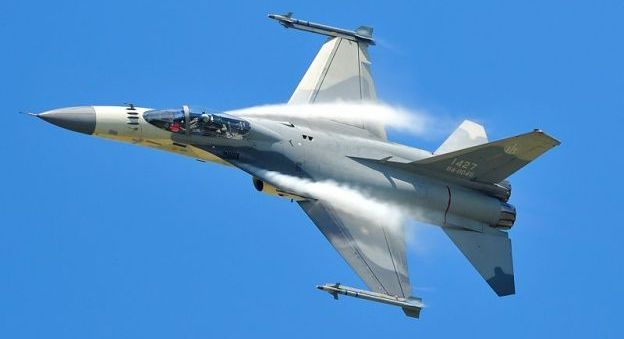
The F-CK Ching Kuo entered service in the Taiwanese Air Force in 1994, and the program to develop the platform indigenously was initiated at a time when Western defence manufacturers refused to provide Taipei with fourth generation fighters to modernise its fleet. Although four squadrons worth of the aircraft were initially planned, America’s eventual consent to provide F-16 Fighting Falcons, albeit of the already out of date F-16A variant, led to a smaller production run of the indigenous jets which ended win 1999. The Ching Kuo was been regularly upgraded in Taiwanese service, most recently under the Hsiang Zhan upgrade program in 2018 which saw the fighters' radars, avionics, engines and weapons systems extensively modernised. This included integration of three colour head up displays (HUD), new 32 bit flight control computers, Golden Dragon CD-53 multi mode pulse doppler radars and full glass cockpits which were all integrated onto the Ching Kuo's airframe. Perhaps the most significant asset of the fighters, however is their integration of indigenous missiles including the Wan Chien radar evading long range cruise missile and the Sky Sword II hypersonic anti aircraft missile. The Sky Sword II retains a 100km engagement range and is the only missile of its kind in the world capable of reaching hypersonic speeds - outperforming in this respect both the American AIM-120C and the PL-12 and R-77 deployed by fighters from the Chinese mainland.
While marginally more costly to operate than the F-16 due to its twin indigenous Honeywell/ITEC F125-70 Turbofans, which between them cost more to maintain than the Fighting Falcon’s single F110 engine, the Ching Kuo retains considerably capability advantages largely due to its ability to easily integrate indigenous upgrades. The fighter is capable of operating at higher altitudes than the F-16 at around 17km, and retains more sophisticated sensors relative to the F-16A. Although it is outmatched by the latest Chinese PLA fighter of the same weight range the J-10C, which entered service in mid 2018, the Ching Kuo is likely to continue to evolve into a more capable platform which will gradually place it on a closer par with the F-16V. As Taiwanese air to air and cruise missile technologies continue to advance rapidly, the versatility of the Ching Kuo and the design's simplicity make it an ideal platform for their integration.
3. F-16A Fighting Falcon
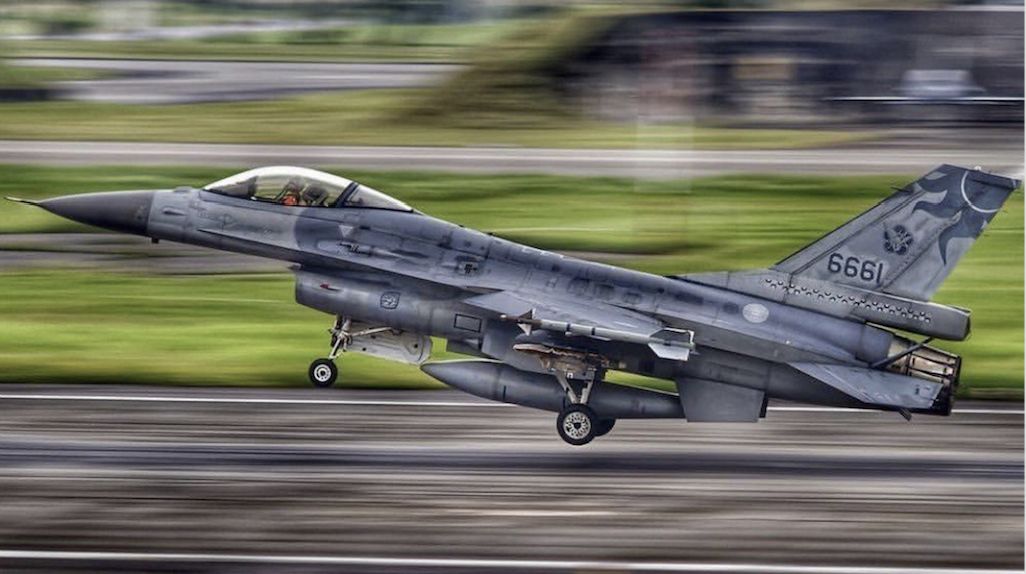
The most widely deployed fighter in the Taiwanese fleet, The F-16A is the oldest and least capable production variant of the Fighting Falcon which first entered service over 40 years ago in 1978. While many leading operators including the United States, Israel and Egypt have already begun to retire this older F-16 variant from service, in the Taiwanese fleet it has instead been upgraded to incorporate superior beyond visual range capabilities. According to a number of sources, the F-16A retains a manoeuvrability advantage over later variants due to its lighter fuel capacity and electronics which serve to reduce its weight considerably and make it a nimble dogfighter. With the aircraft integrating indigenous AIM-120C air to air missiles from the early 2000s, which though slower than the Sky Sword II retained a formidable 105km range, Taiwan’s Fighting Falcons were better able to counter the PL-12 and R-77 equipped jets of the Chinese mainland. As with most lightweight single engine jets, the fighters are limited in their weapons payload, range and operational altitude as well as the weight of the sensors they can carry which limits their potential in air to air combat - particularly when faced with advanced Chinese heavyweight air superiority fighters such as the J-11B which today form the backbone of the PLA Air Fleet and significantly outperform the Fighting Falcon across the spectrum. The Taiwanese F-16 fleet’s age and high numbers of operational hours have taken a wear on the airframes and increased maintenance costs significantly, while reducing levels of combat readiness in recent years. Planned refurbishment and upgrades of these jets to the F-16V standard, however, should increase their service lives considerably and place them in a far better position to contest air superiority over the Taiwan Strait.
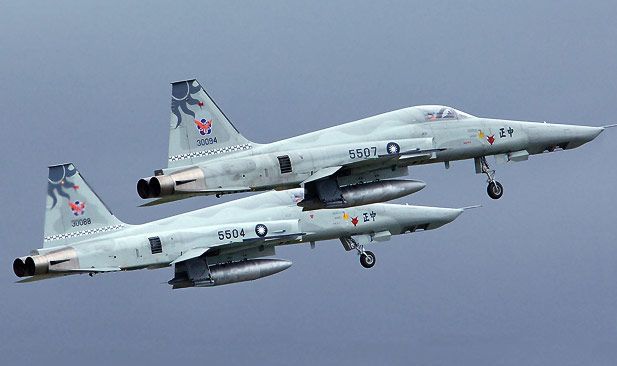
4. F-5E Tiger II
Acquired in the 1970s and manufactured domestically under licence, the F-5E Tiger II jets in Taiwanese service are perhaps the most capable variants in the world due to the considerable upgrades they have received. The aircraft are highly prized for their high sortie rate, low operational costs and low maintenance requirements, and have been modified to integrate advanced hypersonic Sky Sword II air to air missiles. The fighter’s airframe retains a respectable speed, altitude and degree of manoeuvrability, which though far from outstanding are considerable for an aircraft of its light weight. While more recent plans to integrate advanced new GD-53 radars from the Ching Kuo fighter onto the F-5E were cancelled due to their cost, the fighter’s ability to operate alongside E-2 Hawkeye AWACS jets which carry the most powerful airborne radars in Taiwanese service, and the Hawkeye’s ability to guide missiles to their targets at extreme ranges and provide vital information to fighter squadrons, helps to heavily compensate for this weakness. While the F-5E is hardly a cutting edge or exceptional jet, in a fleet comprised exclusively of unspecialised lightweight fighters and prizing low maintenance it continues to provide a robust contribution to Taiwanese aerial warfare capabilities.
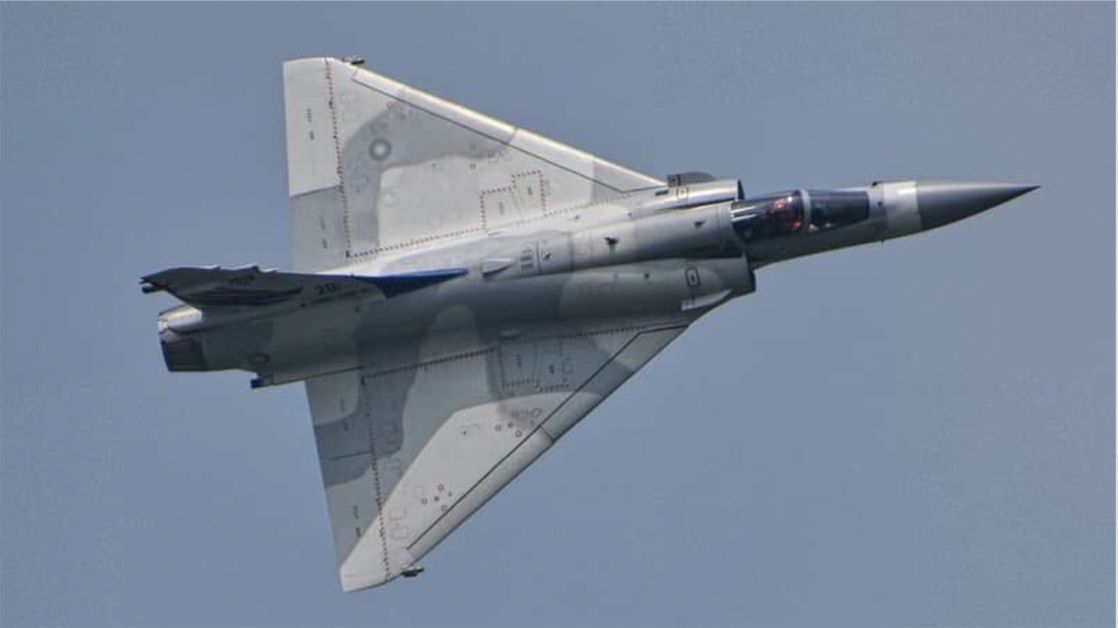
5. Mirage 2000
Taiwan acquired 60 French Mirage 2000 fighters in the 1990s, but with a high crash rate, limited ability to integrate upgrades and limited air to air capabilities to begin with these fighters have not aged well relative to their American and indigenously manufactured counterparts. The Mirage 2000’s inability to incorporate upgrades as readily as other jets has left the French platform at the lower end of the ROCAF’s fighter fleet, while its inability to deploy the same high end munitions deployed by other Taiwanese jets has seriously impaired its beyond visual range capabilities. The Mirage can deploy a single long range air to air munition, the MICA, of which each can carry six. 960 of these missiles were initially purchased to equip Taiwanese Mirage 2000 fighters, with their 80km range at the time representing the longest ranged air to air capability in the ROCAF. With the MICA having entered service in 1996 however, and the Mirage not compatible with more advanced American or Taiwanese munitions which have been developed more recently, the French jets are increasingly unable to contend with fighters armed with modern long range air to air munitions as the AIM-120C armed F-16 and Sky Sword II armed Ching Kuo and F-5E can. At Mach 4, the French munition is not only shorter ranged but also considerably slower than its indigenous counterpart - with the Sky Sword II able to engage targets at Mach 5 and at ranges of 100km.
The Mirage 2000 further suffers from a considerably lower manoeuvrability and poorer thrust/weight ratio relative to both the F-16 and Ching Kuo, with its SNECMA M53-P2 turbofan is far less capable than its counterpart powering the F-16. Several aircraft have reportedly developed cracks due to poor manufacturing techniques in France, and a significant proportion of the fleet have crashed. The Mirage 2000 is set to see an early retirement, which demonstrates the importance of versatility, reliability and upgradability - all traits for which American combat aircraft are widely prized in which French fighters have often fallen short. It is highly likely that the French jets will be outlived by the F-5E in service, which was far from expected when Taiwan first invested in the costly jets. Taiwan’s fleet would likely have been better served with an acquisition of a further F-16 or Ching Kuo squadron in place of the Mirage, and further acquisitions of European jets in future generations remains unlikely as a result.
