
Su-57 Next Generation Fighter Sees Widespread Interest in Southeast Asia - Rosoboronexport CEO
Military Watch Magazine Editorial Staff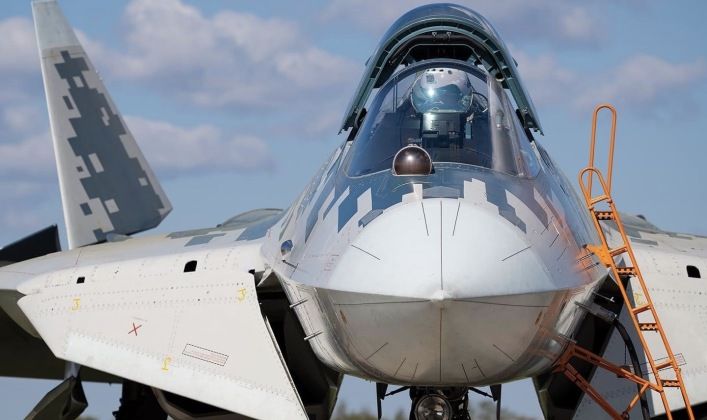
Prototype Su-57 Next Generation Fighter
Russia’s Su-57 next generation fighter jet entered serial production from 2019, and as the only heavyweight fighter of is generation to have been made available for export it has seen considerable foreign interest from Asia and the Arab world in particular. CEO of Russian state arms exporter Rosoboronexport, Aleksandr Mikheyev, has confirmed that the aircraft has received significant interest from Southeast Asian countries, some of which have begun negotiations to acquire the aircraft. He stated to this effect: “We are holding negotiations with several countries. We see requests and interest. Southeast Asia, four or five countries [show their interest].” Three countries in the region which have expressed an interest in the fighter in the past include Vietnam, Myanmar and Malaysia, with Vietnam being the first in the world reported to be interested in the aircraft. Other possible clients including Indonesia, which deploys the Su-57’s fourth generation predecessors the Su-27 and Su-30, and possibly Thailand which operates one of the most capable air forces in the region but, unlike the others mentioned, does not operate any heavyweight fighters which the Su-57 could be an obvious replacement for.
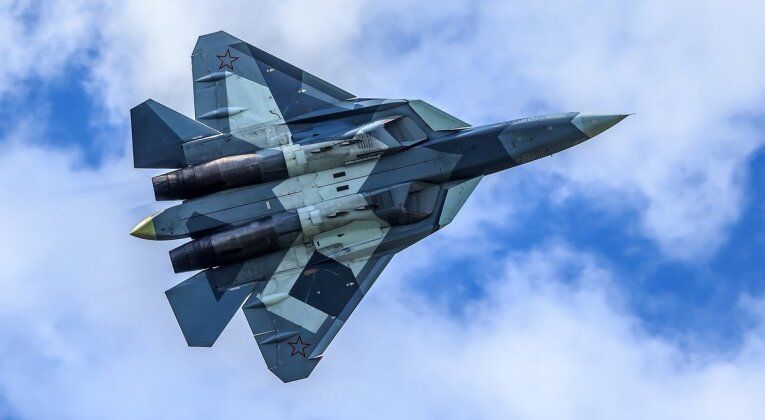
The Su-57’s air to air combat capabilities are generally considered superior to any other fighter on export markets, with the American F-X having yet to enter service and China’s J-20 being reserved for domestic use exclusively. For many clients such as Vietnam and Malaysia, countering advanced Chinese fighters including the J-20 itself will likely be the Russian jet's primary purpose. The Su-57 is expected to see more foreign interest as it begins to be fielded in larger numbers by the Russian Air Force itself, which currently deploys just a single airframe for testing purposes, with the rate of deliveries to the military set to increase considerably after 2024 and moreso after 2027. The Su-57’s technologies are also expected to mature significantly leading up to 2027, including the integration of new avionics and weaponry as well as the Saturn 30 engine - which is expected to be the most powerful deployed by any twin engine fighter in the world. The fighter is prized for its very large and powerful sensor suite, its high endurances and its access to a wide range of advanced weaponry. Unlike the Chinese J-20 or the American F-22, the Su-57 was designed to be equally capable in strike and anti shipping roles as well as in air to air combat, and can deploy high diameter missiles including miniaturised ballistic missiles for such missions.
