
Striking NATO From Syria? Russia’s Newly Expanded Mediterranean Airbase Hosts First Tu-22M Bombers
Military Watch Magazine Editorial Staff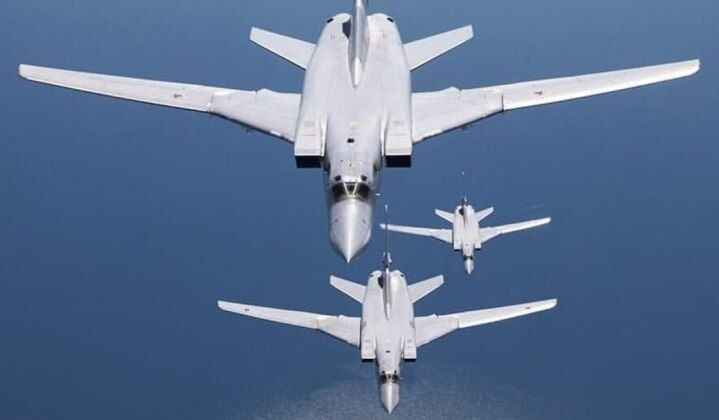
Russian Tu-22M Bombers
Following reports in February that Russia was expanding its sole airbase in the Middle East - Khmeimim Airbase in Syria’s Latakia governate close to the Mediterranean coast - the country has reportedly deployed Tu-22M long range bombers to the facility for the first time. Expansion efforts saw the base’s two runways expanded by around 300 metres, and with the prior length already having been sufficient to accommodate almost any kind of Russian combat jet these efforts were interpreted as intended to facilitate deployment of the country’s very largest and heaviest aircraft which required more space to take off when fully armed. The Tu-22M is one of three classes of Russian bomber in service, alongside the heavier intercontinental range Tu-95 and Tu-160, although it can also boast an intercontinental range if refuelling in the air - which the latest Tu-22M3M variant is capable of. The bomber is one of the most versatile in the world, and as well as strategic nuclear attacks it is also capable of operating in a tactical role with both precision guided and standard unguided weapons - as well as in the capacity of a maritime strike bomber using a range of formidable armaments such as the Kh-32.
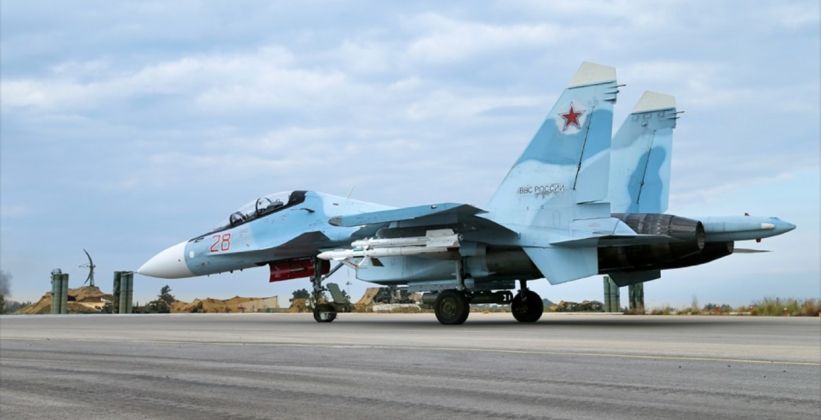
Tu-22Ms previously carried out a number of operations in the Syrian theatre from November 2015, when they were deployed as part of an escalation in Russian support for the Syrian government’s counterinsurgency efforts, and deployed primarily from Mozdok Airbase in North Ossetia which was Russia’s southernmost facility that could accommodate the large aircraft. The bombers also very briefly deployed for missions in Syria from Iran’s Hamedan airbase, although controversy in Iran regarding allowing foreign forces to use its facilities prevented this from continuing. Khmeimim Airbase itself was established in late 2015 by building up Khmeimim Airport in the area, and has since hosted almost every class of Russian fighter jet in service including Su-24M and Su-34 strike fighters, which have conducted the bulk of operations against Islamist insurgents in the theatre, as well as Su-30SM and MiG-29SMT multirole jets, Su-35 and Su-27SM3 air superiority fighters, and even prototype Su-57 next generation fighters which were deployed multiple times for combat testing purposes.
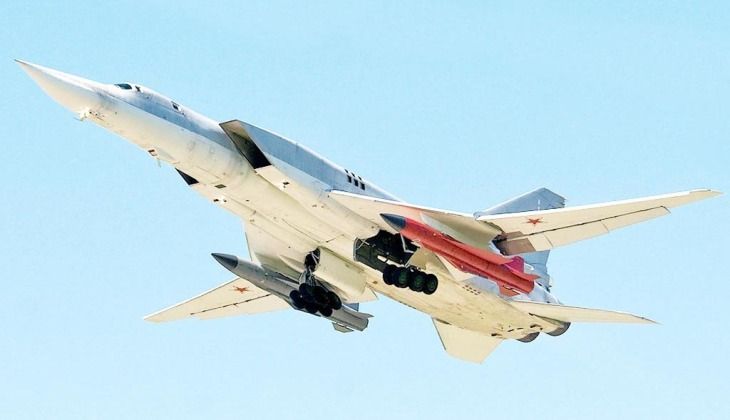
As a higher end asset, the Tu-22M’s deployment reflects growing confidence that the security situation in Syria has stabilised, as such costly long range aircraft are seldom deployed to bases close to dangerous front lines. Khmeimim Airbase previously came under attack multiple times by jihadist insurgents, often operating with extensive Turkish support, although the capabilities of these insurgents to strike has since diminished considerably. The Tu-22M deployment will multiply manifold the firepower at Khmeimim Airbase, and provide Russia with an ideal position to strike NATO targets from Europe’s less well defended southern flank. The Russian Air Force deploys over 60 Tu-22M bombers, with many more in reserve, and has simultaneously invested in expanding facilities in the Arctic to accommodate the aircraft. More frequent flights over the Mediterranean by Russian bombers could provide a cost effective means of stretching NATO resources and forcing the Western alliance to divert more assets to defending its south, which could be highly beneficial to Russia's own security situation.
