
Russian Su-57 Stealth Fighters Engage in Strike Missions in Syria; May Return to Middle East Soon for Further Combat Tests
Military Watch Magazine Editorial Staff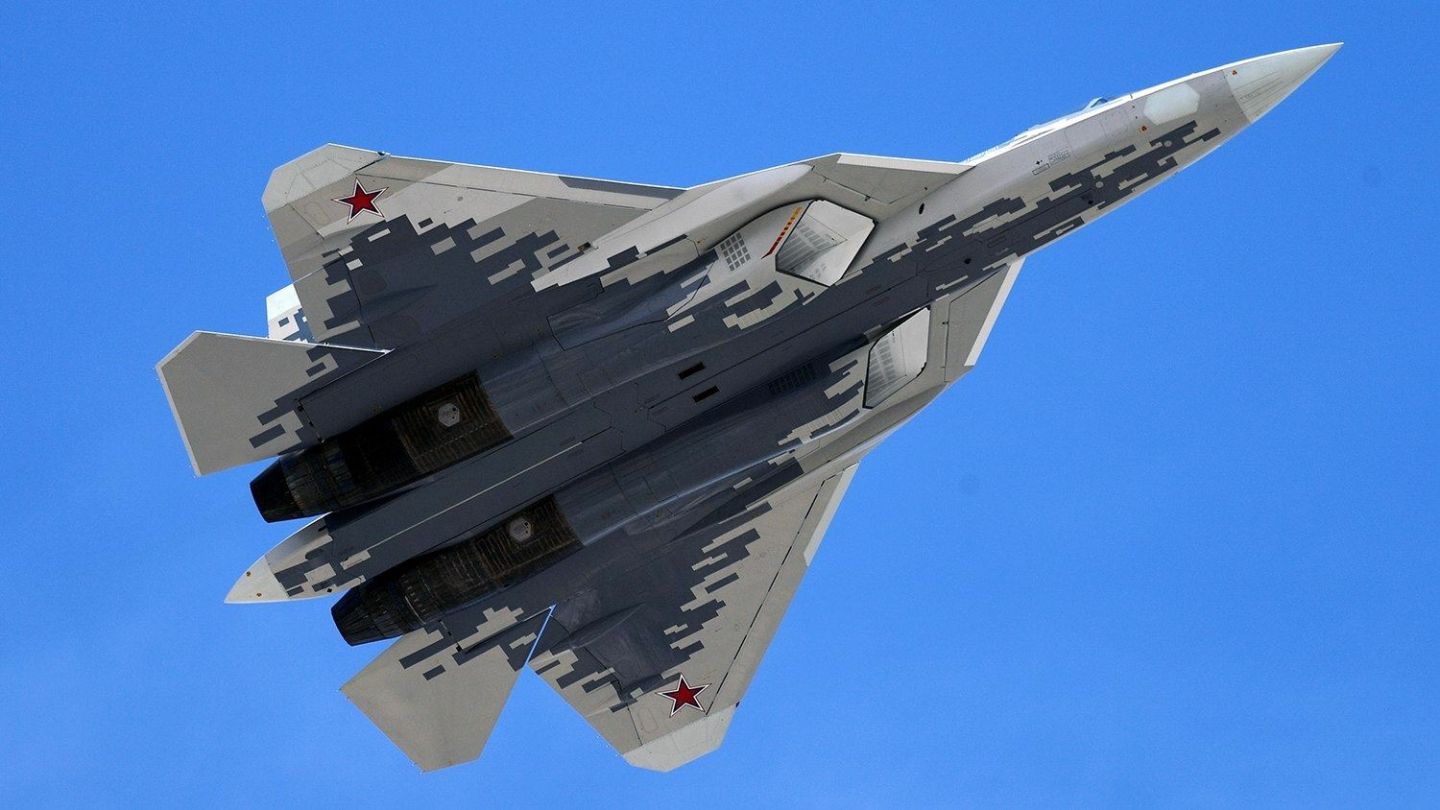
Su-57 Fifth Generation Air Superiority Fighter
Following reports and the emergence of unofficial footage confirming the deployment of Su-57 fifth generation fighters by the Russian military to Syria, the Russian Defence Ministry has nine months later elaborated further on the nature of the fighters' mission. Four Su-57 twin engine stealth jets were reportedly deployed to the Middle Eastern country, operating alongside a larger air contingent comprised of some of the country’s most advanced combat jets - including the ‘4++ generation’ Su-35 air superiority fighters and Su-34 strike fighters which both entered service from 2014. The Su-57, while not officially yet in service as a fully operational fighter in the Russian military, has demonstrated its readiness for low intensity combat. Whether it is as of yet ready for high end air superiority roles or penetration of heavily defended enemy airspace, missions for which it was intended which the Syrian conflict could not simulate, remains to be seen.
The Su-57’s deployment to Syria served a number of purposes, including a response to the deployment of its American counterpart, the F-22 Raptor, and a perceived need by the Russian armed forces to demonstrate a combat capability for a next generation air superiority fighter in the aftermath of the American F-22 and Chinese J-20’s entry into service. By demonstrating that the Su-57 was well on its way to becoming fully combat ready, Russia could also increase interest in the fighter from foreign clients - India in particular which continues to negotiate for the acquisition of the fighters under a joint manufacturing deal through the FGFA program. With Russia’s armed forces having benefitted considerably from combat experience in the Syrian theatre, an example being the Air Force's Su-35 air superiority fighters which have undergone a number of modifications based on lessons learned from combat operations, it is likely that deployment of the Su-57 to Syria could lead to a smoother entry into active service in the Russian armed forces.
The Russian Defence Ministry released footage of two Su-57 fighters flying in formation over Syria, landing and taking off from Khmeimim airbase in western Latakia province. The length of the deployment remains unknown, but some Western sources speculate that it could have been as short as two days. In that time, the fighters reportedly carried out over ten sorties against islamist militant targets. This represented the very first combat mission of the Russian fighters, and of any fifth generation fighter manufactured outside the United States (while China’s J-20 is fully combat ready, the country as of yet has not had an opportunity to test its capabilities.) Combat operations more than anything provided an opportunity to evaluate the Su-57’s basic flight performance and its flight control, communications, and other mission systems - as well as its suitability to operate in an extremely hot or desert climate, a particularly critical requirement for the Indian Air Force. Footage did not show the fighters carrying munitions externally, indicating that, like the American Raptors operating in the area, they relied solely on their internal payloads to carry out attacks and thus retained a sleek radar evading profile.
Footage of a Su-57 fighter launching what appeared a Kh-59MK2 cruise missile from its internal bay, which reportedly occurred in, February 2018, has also been released by the Russian Defence Ministry - but did not clearly indicate whether or not the combat test had been carried out in Syria. It remains likely however that the weapons test did occur in that theatre given the timing of the test and the benefits of carrying it out against real enemy targets to better evaluate its performance. Deploying the Su-57 for combat, while a major coup against the fighter program’s Western detractors who have repeatedly projected that Russian military aviation is bound to fail in its attempt to deploy such a sophisticated combat platform, there is also a considerable risk that the jet could be destroyed during its combat mission. While the ability of islamist groups, allegedly operating with massive Western support, to destroy fighters in the air, remains limited - jihadists in Syria have in the past had some success using drones and artillery against Russian airbases - damaging combat jets on the ground when they are most vulnerable. While Russian Pantsir-S1 air defence combat vehicles have been highly successful in repelling such attacks, the incentives for Russia’s adversaries to cause damage to these high profile fighters in particular in Syria remains high - forcing the military to balance these risks with the benefits of a combat deployment to the region.
