
Russia Doubles Stealthy Cruise Missile Payload of Tu-95 Bombers with Lethal New Tu-95MSM Variant
Military Watch Magazine Editorial Staff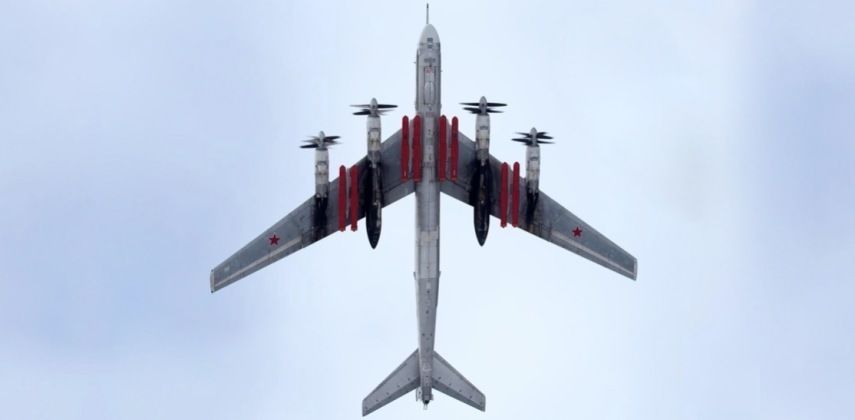
Tu-95 With Eight Kh-101/102 Radar Evading Cruise Missiles
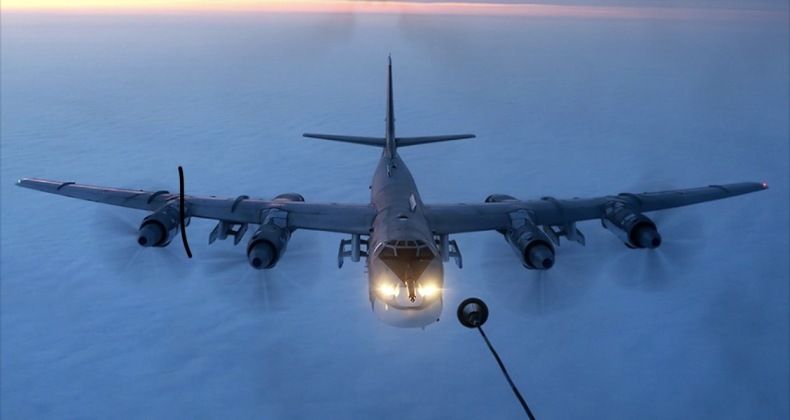
Amid a wider effort to quickly modernise its strategic forces, the Russian Air Force has inducted a new class of strategic bomber into service - the Tu-95MSM. The bomber represents an extensive improvement over older Tu-95 variants, with the airframes having been modernised by Russia’s United Aircraft Corporation and integrating new flight control and navigation and communications systems. The Tu-95 is one of three bomber classes in the Russian fleet, alongside the newer Tu-160 which is currently in serial production and is over twice as fast, and the lighter Tu-22M which has a tactical rather than a strategic role and is more limited in its range. Although the original Tu-95 saw its first flight during the Korean War in 1952, the aircraft currently in service were all built in between 1982 and 1993 meaning they are rather new compared to those which comprise the majority of the Russian and American fleets. The aircraft were notably redesigned at this time to serve primarily as cruise missile carriers, allowing them to engage enemy targets from well beyond retaliation range using long ranged missiles.
Perhaps the most notable improvement to the Tu-95 design under the latest upgrade has been the effective doubling of its missile payload from four to eight large cruise missiles. CEO of the United Aircraft Corporation Yuri Slyusar stated regarding this increase to the bomber’s firepower: “A possibility has appeared to carry eight instead of four missiles, i.e. to increase its weapon payload two-fold and extend the aircraft’s service life considerably.” Without new engines or fuel tanks however, this change will come at the expense of the Tu-95’s endurance - although its range is still more than long enough to carry out missile strikes against any potential target worldwide. Although the Tu-95 in the 1980s had deployed the Kh-55 cruise missile, these have since been replaced by the Kh-101/102 platforms which integrate a range of new technologies including a stealth profile - with a radar cross section of 0.01 square meters, and a much longer range. The Kh-101 carries a conventional warhead which can either be a high explosive, penetrating or a cluster munition, while the Kh-102 integrates a 250kT tactical nuclear warhead. The Kh-101 has been combat tested against Islamic State targets in Syria and demonstrated a very high level of precision. The missiles have an estimated range of between 3,500km and 5,500km, and with each Tu-95 bomber deploying eight of them they will allow the Russian Air Force to deploy massive missile support against targets across Europe, Asia, the Arctic and North America.
