
Russian Navy’s New Su-30SM2 Fighters Lead Baltic Fleet Exercises Simulating Strikes on NATO Targets
Military Watch Magazine Editorial Staff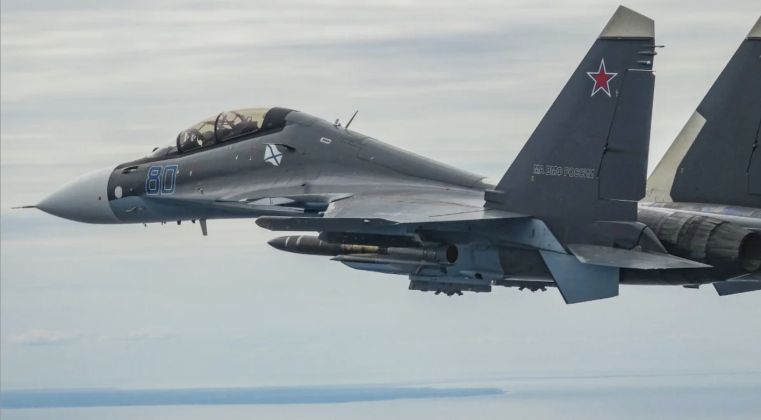
Russian Navy Su-30SM2 Fighter with Kh-31 Missile During Engagement with French Rafales Over the Baltic Sea
The Russian Navy Baltic Fleet has deployed Su-30SM2 fighters to lead exercises simulating strikes on NATO targets, following multiple close engagements between the aircraft and fighters from hostile NATO member states. “Overall, over 10 aircraft and about 100 flight and ground personnel from a composite air regiment of the Fleet’s large naval aviation formation are involved in accomplishing missions,” the Fleet’s press office stated. Over 10 fighters participated in the exercises, including older Su-24M strike fighters, with the aircraft simulating strikes on NATO members’ military convoys, command posts, manpower concentrations, military-industrial installations and warships. "Overall, the crews of Su-24M tactical frontline bombers and Su-30SM2 multirole fighter jets will have to strike over 50 various targets, make launches of aircraft rockets and carry out bombing runs," the Fleet press office’s statement revealed. It added that exercises aim to refine the pilots’ flight skills, practice interoperability and accomplish various elements in a single tactical scenario, noting that they would rely experience gained in the Russian-Ukrainian War.
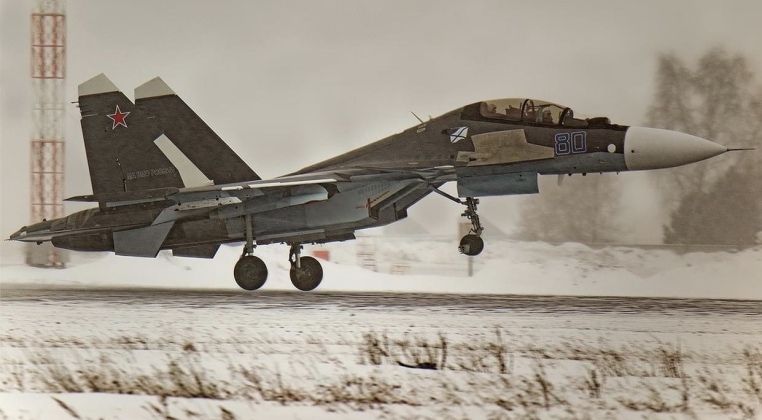
Su-30SM2 fighters are operated by the 4th Guards Naval Attack Aviation Regiment based at Chernyakhovsk Air Base in Kaliningrad, which in early 2022 became the first regiment to transition to the new fighter type. In early February 2025 Su-30SM2 fighters were deployed for operations over the Baltic region with an unusual weapons configuration, which included a mixed load of Kh-31 anti-radiation missiles and RBK-500 cluster bombs rather than air-to-air missiles. Footage released by the Spanish Ministry of Defence revealed this loadout, after Spanish Air Force F-18 fighters operating from Siauliai Air Base were scrambled to intercept them. In the first week of April French Air Force Rafale fighters assumed a new rotation for Baltic Air Policing, arriving at Siauliai Air Base in Lithuania to replace the Spanish F-18s. Rafales engaged Russian Su-30SM2 fighters, as well as an accompanying Il-20M electronic intelligence aircraft, in mid-April, and have since been involved in multiple engagements with Russian fighters, in most cases Su-30SM2s.
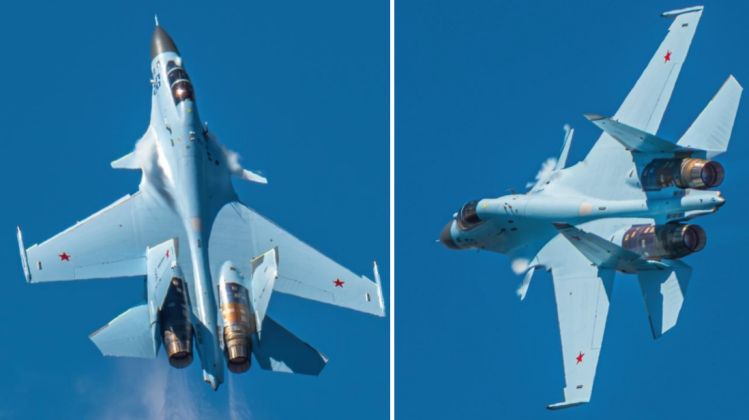
The Su-30SM2 is the most advanced evolution of Russia’s twin-seat Su-30 fighter design, and was developed as part of a broader push to standardise systems across Russia’s fighter fleet, while also reducing maintenance costs and simplifying logistics and significantly improving combat performance. Its primary improvement over the baseline Su-30SM is the integration of the AL-41F-1S engine, the same powerplant used by the Su-35 air superiority fighter, which is the most powerful ever integrated onto a fourth generation fighter type. The engines provide approximately 16 percent more thrust than the older Su-30SM’s AL-31FP, while also having a substantially longer service life, improved fuel efficiency, and lower maintenance requirements. New armaments developed for the fighter type, in particular the R-77M next generation air-to-air missile and R-37M heavyweight long range air-to-air missile, have over the past four years significantly improved its beyond visual range air-to-air performance.
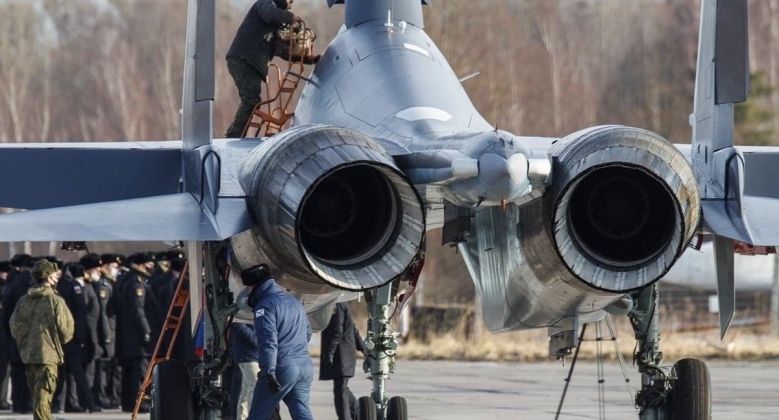
The Russian Navy in November 2025 received a new batch of Su-30SM2 fighters, with a Navy pilot observing at the time that they were “among the most advanced combat aircraft of the Russian Armed Forces. They protect the country’s frontiers along the entire border perimeter.” The Su-30, Su-34 and Su-35 are all derivatives of the Soviet Su-27 air superiority fighter, with the upgrades and design changes made to develop the Su-30 being by far the most conservative of the three reflecting its older design. The Su-30SM variant incorporated multiple features from Soviet fighter programs that were cancelled after the state’s disintegration. Loosely based on the Su-27PU heavy interceptor design, the aircraft used a particularly wide range of technologies from the cancelled Su-27M and Su-37 air superiority fighter programs, including use of the Su-37's N011M radar, which was one of the first ever electronically scanned array radars integrated onto a fighter, as well as the Su-27M’s controlled canards, AL-31FP engines and thrust vectoring nozzles.
